Tilt and Trim Trouble: What to Replace and How to Tell
A trim motor that clicks and quits is usually not the trim motor. Diagnose the relay, fluid, and pump before you buy, and match the exact part when you do.
A trim system that won't raise your motor can strand you at the ramp or keep you out of shallow water. Diagnosing it right saves real money, because the fix might be a cheap relay, a quart of fluid, or a full assembly, and those are very different purchases.
Here is how the system works, how to figure out which piece failed, and what to look for in a replacement.
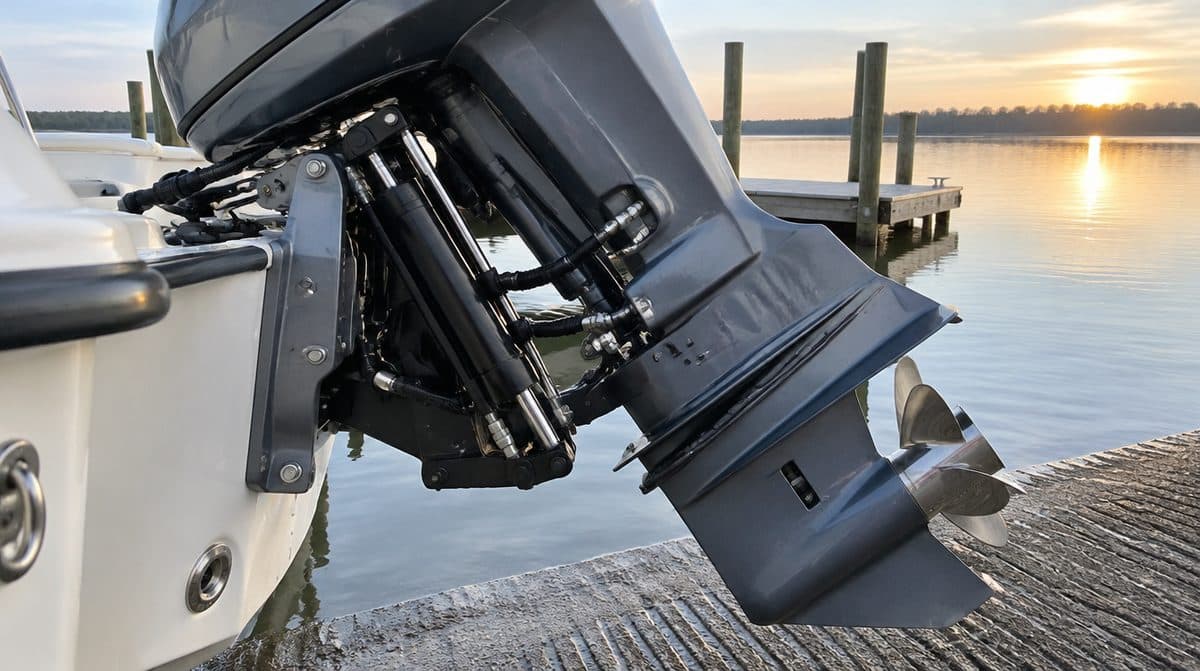
How tilt and trim actually works The system is three parts working in a chain. An electric motor, fed by heavy leads from the battery through a relay, spins a small hydraulic pump. The pump pushes fluid into one or more rams, and the rams physically lift the engine. Press the switch down and the fluid flows the other way. Every failure you will ever chase lives in one of those links: electrical supply, electric motor, hydraulic pump, or the rams and seals.
That chain gives you the diagnostic order for free. Start at the battery and work toward the rams, because the cheap failures are at the front of the chain and the expensive ones are at the back.
Diagnose before you buy anything Listen to the system; it tells on itself.
- Click but no movement: the relay is engaging but the motor is not running. Suspect the relay, corroded connections, or low voltage before the motor itself.
- No click at all: no power is arriving. Check the fuse, the switch, and the wiring first. Our marine fuse and breaker guide covers the protection side of that circuit.
- Motor runs but the engine will not lift, or lifts then sags: that is hydraulic. Think low fluid, a failed pump, or leaking seals in the rams.
- Lifts weakly or only without load: tired pump or internal leakage.
Ten minutes with a voltmeter at the trim motor leads settles most of it. Battery voltage present while the switch is held and the motor stays silent means the motor is dead. No voltage means the problem is upstream and the motor is innocent.
Match your exact engine Tilt/trim motors and pumps are specific to engine make, model, and year. Match the exact part, since fitment and wiring vary. Two outboards from the same builder a few years apart can use different bolt patterns, different wire counts, and different shaft styles, and none of it interchanges. Pull the model and serial from your engine's ID plate and buy against that, not against a photo that looks right. Product listings spell out the engine families they fit, including details like two-wire versus three-wire hookups and bolt count, and those details are the fitment.
Motor only vs. full unit Sometimes only the electric motor fails and you replace just that. Other times the pump or full assembly is gone. Diagnose which part before buying.
The electric motor is the part that suffers most, since it sits exposed under the engine bracket catching spray. If your hydraulics held pressure fine until the motor went silent, a motor-only swap is the economical fix: unbolt the old motor from the pump, keep the hydraulics intact, and bolt on the new one. But if the system sags overnight, weeps fluid, or lifts weakly even when the motor sounds healthy, the pump or ram seals are involved, and a motor alone will not cure it. Price both paths before committing, because on an older unit with multiple tired parts, the full assembly is often the saner buy than chasing failures one component at a time.
Quality and seals Look for sealed, corrosion-resistant units. Salt and moisture are what kill these, so seal quality drives lifespan. A trim motor lives in the splash zone behind the transom, gets dunked, and sits wet for days. Quality replacements use sealed housings, stainless hardware, and proper O-rings where the motor meets the pump; bargain units save their pennies in exactly those places. Original-equipment-quality replacement brands exist precisely because this part dies from environment, not from work.
Replacement realities The job itself is friendlier than it looks. Support the engine before you touch anything: trim it up and set the tilt lock, plus a block or a strap, because an engine dropping on your hands is not a learning experience anyone needs twice. Disconnect the battery before touching the leads. Expect the mounting bolts to argue after years in salt, so soak them with penetrating oil the night before. When the new unit is in, refill with the fluid your engine maker specifies and cycle the system up and down several times to purge air until the movement is smooth and quiet. Then find the manual release valve on your new unit and learn it at the dock, because that little screw is what lets you tilt the engine by hand when something fails twenty miles from the ramp.
Maintenance that actually helps Rinse the bracket area with fresh water after salt use, check fluid once a season, and keep the ram shafts clean; grit on a shaft grinds seals. Hit the electrical connections with dielectric grease, and exercise the system through full travel now and then during the offseason so seals stay wet. None of this takes ten minutes, and it is the difference between a unit that lasts and one that dies young.
Signs the end is near - Slower lifting than it used to manage, especially under load. - The engine drifts down while trailered or docked overnight. - Fluid weeping at the ram seals or pump body. - Groaning, grinding, or a motor that needs a tap on the housing to wake up.
From the Water If the trim motor clicks but won't move, check the relay and connections first. A cheap relay fails far more often than the motor. Carry a spare relay in the boat's toolkit; it weighs nothing, and swapping one at the ramp has saved more trips than any part this inexpensive has a right to.
Where to Get It Everything in this guide is stocked at Boat Supplies Direct, the Nautical Network marine parts store.
In stock as this guide goes up: - ARCO Marine original equipment quality tilt trim motor for Yamaha 2007-2019 - ARCO Marine replacement outboard tilt trim motor for Yamaha, 2-wire, 3-bolt, flat blade shaft - ARCO Marine replacement tilt trim motor and reservoir for Mercury, Mariner, and Force
Browse the full range: - Shop tilt trim motors - Read the full buying guide, including FAQs
More from the Wire
 Buying Guides
October 18, 2026
Starting vs. Deep Cycle: The Battery Mistake That Strands Boaters
Starting, deep cycle, or dual purpose, and flooded, AGM, or lithium. How to pick the battery type that will not leave you stranded.
Read more Buying Guides
October 18, 2026
The Onboard Charger: Cheap Insurance for Expensive Batteries
Batteries die young when they sit half-charged. How to size an onboard charger by amps, banks, and chemistry.
Read more Buying Guides
October 18, 2026
Battery Switches and Isolators: Never Get Stranded by a Dead Battery
The switch and isolator setup that keeps your starting battery ready while the house bank runs your gear.
Read more