Shrink Wrap, Covered, or Indoor: What Winter Storage Actually Buys You
Every winter storage option is really a moisture-management strategy. Here is what each one does well, where each fails, and how to pick for your boat and your winter.
Winter storage decisions get made in the fall rush, usually on price alone. But the real question is not what storage costs, it is what each option protects against, because every choice here is a moisture and UV strategy wearing a price tag.
Shrink wrap: great shell, needs to breathe
Professionally applied shrink wrap sheds rain and snow brilliantly and gives the hull a tight shell against the weather. Its weakness is what it traps: a wrapped boat without vents becomes a greenhouse, and the mildew you find in May grew in that trapped humidity all winter. Good wrap jobs include vents, and the best add moisture absorbers or a framed structure that keeps the wrap off the gelcoat. Wrap is also single-season by design, so the cost repeats every year. If you go this route, the time to book is now; wrappers' calendars fill with the first cold snap.
Covers and biminis: the reusable middle
A fitted winter cover costs more than one season of wrap but pays for itself across several, and a quality breathable cover manages condensation better than unvented plastic. The failure mode is fit and support: a cover that pools water or chafes at the bow rail does its own damage by March. Frames matter as much as fabric. Our bimini and boat cover guide covers materials and fit; a summer bimini alone, for the record, is not winter protection for anything but the helm seat.
Outdoor yard storage: the baseline
Blocked outside on stands, wrapped or covered, is the default across most of the country and perfectly adequate for most boats when the prep underneath is right: fuel treated, water drained, batteries managed, drain plug out with the bow slightly up so rainwater leaves instead of pooling over the transom. The boat survives outdoor winters fine. Neglected prep is what does not.
Indoor: what the premium actually buys
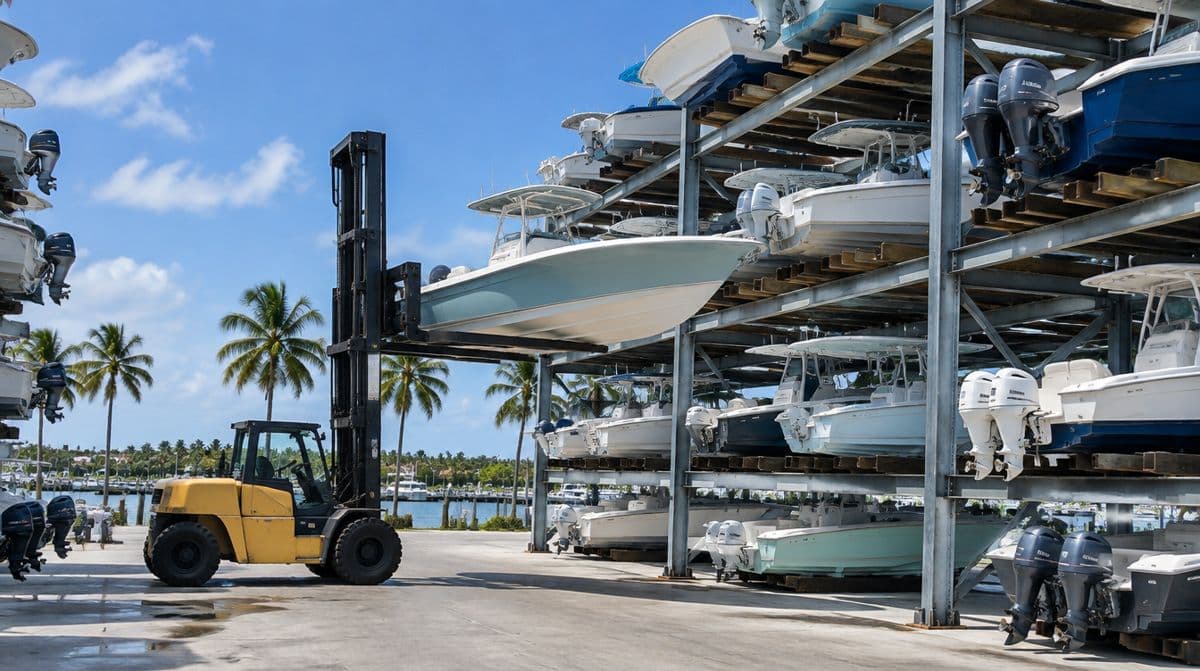
True indoor storage, inside a building rather than under a shed roof, takes sun, precipitation, windblown debris, and most of the freeze-thaw cycling out of the equation entirely. For boats with significant brightwork, electronics, or canvas, and for owners tired of spring oxidation, the premium often costs less than the detailing it replaces. Heated indoor goes a step further and relaxes how perfect the water-drain steps have to be, though it should never replace them. We keep a live national list of facilities whose own websites state true indoor storage, covered sheds excluded, at indoor boat storage on Waypoint, and many hurricane-prone yards combine it with storm programs listed on our hurricane haul-out page.
How to choose in one paragraph
Match the option to the boat, not the neighbor's boat. A well-waxed aluminum fishing boat shrugs off an outdoor winter under a decent cover. A boat with teak, canvas, and a tower full of electronics earns its indoor slip. And whatever you choose, remember the storage method protects the outside; the winterization underneath protects the parts that actually cost money. One without the other is half a plan.
More from the Wire
 Ownership
September 28, 2026
Shrink-Wrap, Indoor Storage, or Staying In the Water: The Real Winter Tradeoffs
The honest differences between shrink-wrapped outdoor storage, indoor racks, and wintering in the slip: moisture, ventilation, battery access, and what each choice asks of you.
Read more Ownership
September 27, 2026
Taking the Boat South for Winter: The Snowbird Playbook
Truck transport, a captained ICW delivery, or running it south yourself: what each option really involves, plus the insurance clause every snowbird should read before casting off.
Read more Ownership
September 16, 2026
Boat Storage in Florida: Wet Slip, Dry Stack, or Trailer at Home
Where your boat lives decides half its maintenance and most of its hurricane plan. What wet slips, dry stacks, and home trailers each really mean for a Florida owner.
Read more