Shrink-Wrap, Indoor Storage, or Staying In the Water: The Real Winter Tradeoffs
The honest differences between shrink-wrapped outdoor storage, indoor racks, and wintering in the slip: moisture, ventilation, battery access, and what each choice asks of you.
Every northern boat spends the winter one of three ways: wrapped on stands in a yard, tucked into a shed, or riding out the season in the water. None of them is wrong. Each one trades money for protection and convenience in a different ratio, and the right answer depends on your boat, your budget, and how often you want to lay hands on it between now and April.
Shrink-wrap outside: the default for a reason
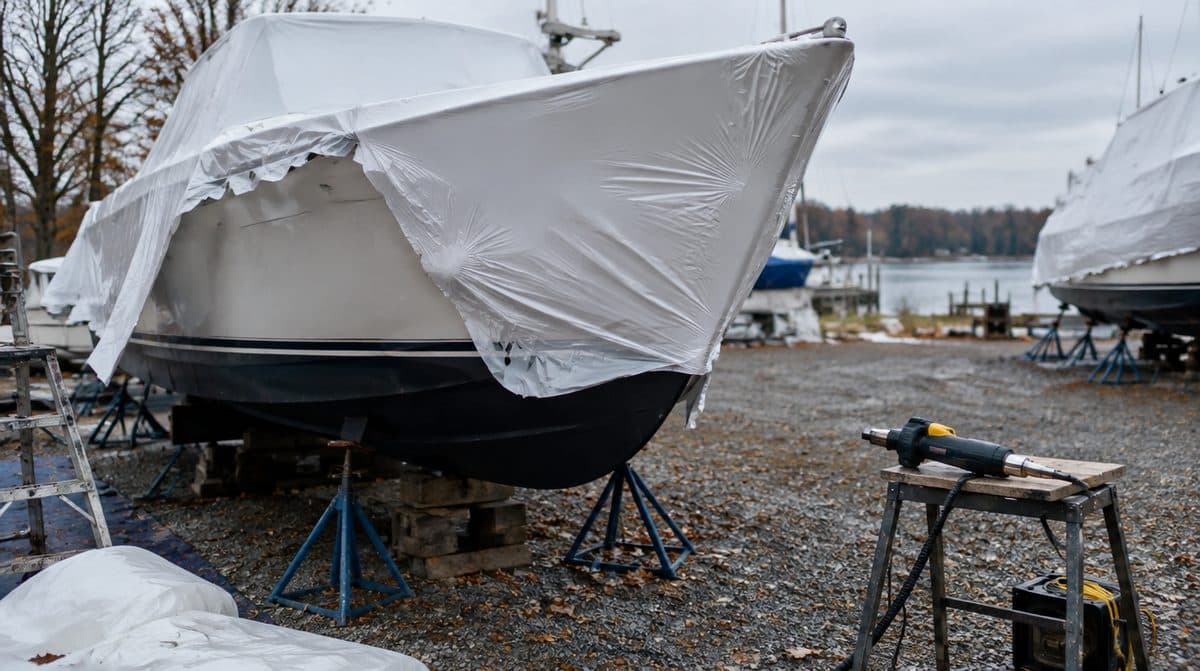
Outdoor storage under shrink-wrap is the workhorse option, generally the least expensive of the three, and done well it sheds snow and rain beautifully. The catch is the microclimate you just built. A sealed wrap with a damp bilge underneath becomes a greenhouse, and mildew loves nothing more. Vents are not optional: a wrap needs enough of them to keep air moving, the cabin should be left open inside the boat, and everything soft that can go home should go home. The other honest cost is access. Cutting a zipper door into the wrap is easy; climbing a ladder in February to check on things is less charming than it sounds.
Indoor storage: the gentlest winter
A shed or rack building takes the weather out of the equation entirely. No UV, no snow load, no wrap to buy and dispose of each year, and the boat comes out of winter cleaner than it went in. Heated space adds freeze protection for systems; unheated indoor space still beats outdoors by a wide margin. You pay for all of that, in general terms the most of the three options, and space is finite, which is why sheds fill up on a waiting list basis. Access varies by yard, so ask before you sign: some let you work on your own boat all winter, some do not.
Staying in the water
Wintering in the slip keeps the boat usable on that one freak warm weekend and skips haul-out and blocking entirely, which is why liveaboards and hardy fishermen choose it. It is also the option with the most moving parts: a bubbler or de-icer where ice forms, doubled lines, a bilge pump you genuinely trust, and shore power that stays on. The boat is working all winter instead of sleeping, and someone needs to check on it regularly. In serious ice country, most owners and yards treat this as the specialist's choice, not the default.
Batteries decide more than you think
Wherever the boat sleeps, the batteries need a plan. In the water, they must stay aboard and charged, because the bilge pump depends on them. On land, you choose: leave them aboard on a maintainer if the yard allows shore power, or pull them and store them home where they are easy to charge. A wrapped boat with no power cord and batteries left connected is the classic spring surprise, so if that is your setup, disconnect them fully or take them with you.
Picking your winter
Match the option to the boat. New gelcoat, lots of canvas, and a flexible budget point indoors. A solid trailer boat or mid-size cruiser does fine wrapped and vented. A stout, attended liveaboard can winter wet. Waypoint lists storage yards and marinas around Annapolis and the Chesapeake and on Long Island, checked against each business's own website. On Bear Creek near Baltimore, Anchor Bay East Marina offers winter storage and shrink wrapping with dual travel lifts. On the Eastern Shore, Campbell's Boatyards in Oxford has indoor dry storage alongside its repair trades, and out east, Sag Harbor Yacht Yard & Marina has been storing boats on a site that traces its roots to 1797. Pick the winter your boat deserves, and book it before the first frost does it for you.
More from the Wire
 Ownership
September 27, 2026
Hurricane Prep for Boat Owners: Write the Plan Before the Cone Shows Up
Haul or stay, doubled lines, stripped canvas, and the insurance fine print: the hurricane decisions Florida boat owners should make in May, not at the storm briefing.
Read more Ownership
September 26, 2026
E10 and Your Marine Engine: Phase Separation, Storage, and Stabilizer Habits
Why the same gas your truck burns happily can wreck a boat engine: what E10 does in a vented marine tank, how phase separation works, and the habits that prevent it.
Read more Ownership
September 25, 2026
Marine Batteries, Explained: Starting vs Deep Cycle, and Why Boats Eat Them
Starting, deep cycle, or dual purpose; flooded, AGM, or lithium. A plain-words guide to picking marine batteries and keeping them alive in Florida heat.
Read more