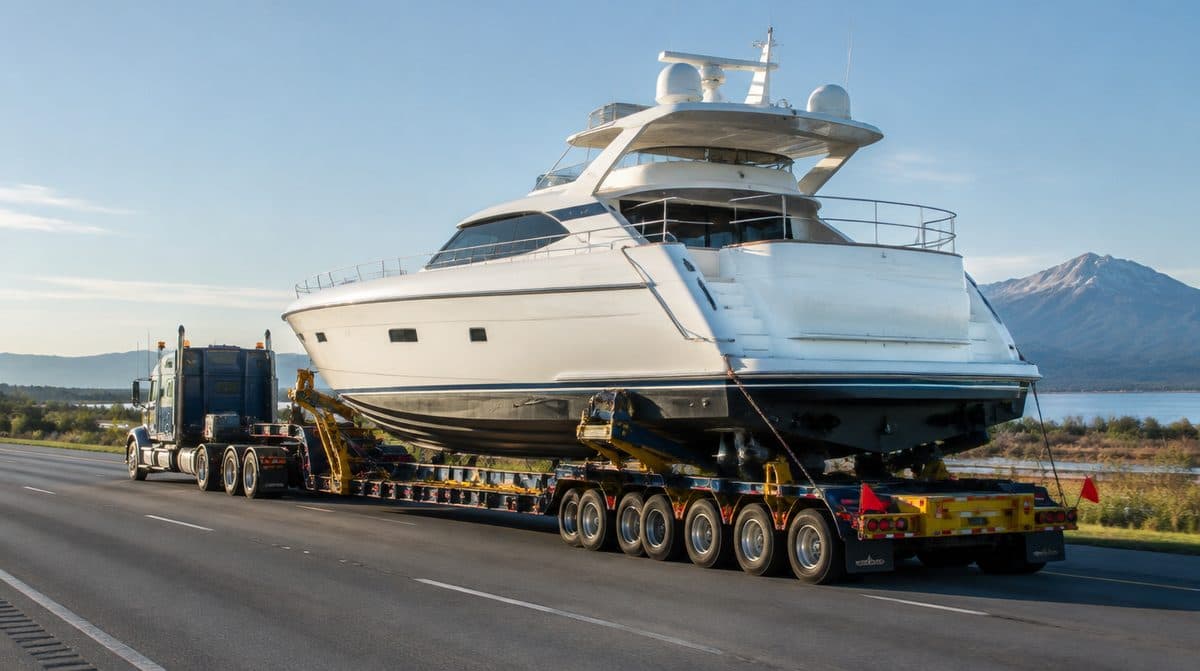
Taking the Boat South for Winter: The Snowbird Playbook
Truck transport, a captained ICW delivery, or running it south yourself: what each option really involves, plus the insurance clause every snowbird should read before casting off.
Every fall a fleet of northern boats quietly heads for Florida, some on trucks, some down the Intracoastal with a captain aboard, and some with their owners living the delivery as a vacation. All three ways work. They differ in money, time, wear on the boat, and how much of your own life you want to spend doing it, so here is the honest comparison.
Option one: put it on a truck
Trucking is the fast, predictable route: the boat leaves a northern yard this week and splashes in Florida the next. It skips a thousand miles of engine hours, weather windows, and lock-and-bridge patience. The tradeoffs are prep and dimensions. The boat has to come apart for the road, canvas off, electronics and arches down, everything secured, and beam and height drive the price through permits and escorts. Our full guide to how hauling works covers that math. Waypoint lists transport pros who run these moves constantly, among them We Will Transport It out of Fort Lauderdale, which handles overland hauling and permit coordination nationwide, and U.S. Boat Transport in Volusia County, which has moved powerboats, sailboats, and yachts nationwide for over 25 years and arranges state permits and escort vehicles.
Option two: hire a delivery crew
A captained delivery sends the boat south on its own bottom while you fly over it. The boat arrives commissioned and shaken down, and an experienced delivery captain turns the trip into a rolling survey, surfacing the weak impeller or the tired battery before it becomes your February problem. You pay for the captain's time, fuel, dockage, and crew, and you should expect a professional to carry a real license and insurance; our guide to when you need a licensed captain explains the credentials. Outfits like Yacht Delivery Pros run captained on-the-water deliveries with cargo insurance, and many transport companies quote both road and water options against each other.
Option three: run it yourself
The owner-run trip down the ICW is a bucket-list experience, two to four unhurried weeks of marsh sunrises and marina towns. It is also real work: daily passage planning, shoaling and bridge schedules, fall cold fronts, and an engine that has to show up every single day. Take it on if you have the time, a sound boat, and some coastal experience aboard, and consider a captain for the first leg as training. Be realistic that this choice converts money saved into vacation spent.
Read the policy before you point the bow south
Insurance is the snowbird detail that bites hardest. Many marine policies restrict where the boat may be during hurricane season, and the restriction has teeth: Claims Journal reported a federal appeals court enforcing a Geico Marine policy that excluded coverage south of Cape Hatteras between June 1 and November 1, denying the claim of an owner whose boat was damaged in Florida inside those dates. Cruising World has described how these navigation limits vary by policy, with boundary lines anywhere from Norfolk to Jacksonville. The practical move: read your declarations page, call your agent, and time the trip, or buy the endorsement, accordingly.
Whichever way your boat goes south, line up the people early, because fall is their rush hour. Waypoint lists transport and delivery pros in the Northeast and around Fort Lauderdale, every listing checked against the business's own website. The boat should reach Florida the same way you plan to: relaxed.
More from the Wire
 Ownership
September 27, 2026
Hurricane Prep for Boat Owners: Write the Plan Before the Cone Shows Up
Haul or stay, doubled lines, stripped canvas, and the insurance fine print: the hurricane decisions Florida boat owners should make in May, not at the storm briefing.
Read more Ownership
September 26, 2026
E10 and Your Marine Engine: Phase Separation, Storage, and Stabilizer Habits
Why the same gas your truck burns happily can wreck a boat engine: what E10 does in a vented marine tank, how phase separation works, and the habits that prevent it.
Read more Ownership
September 25, 2026
Marine Batteries, Explained: Starting vs Deep Cycle, and Why Boats Eat Them
Starting, deep cycle, or dual purpose; flooded, AGM, or lithium. A plain-words guide to picking marine batteries and keeping them alive in Florida heat.
Read more