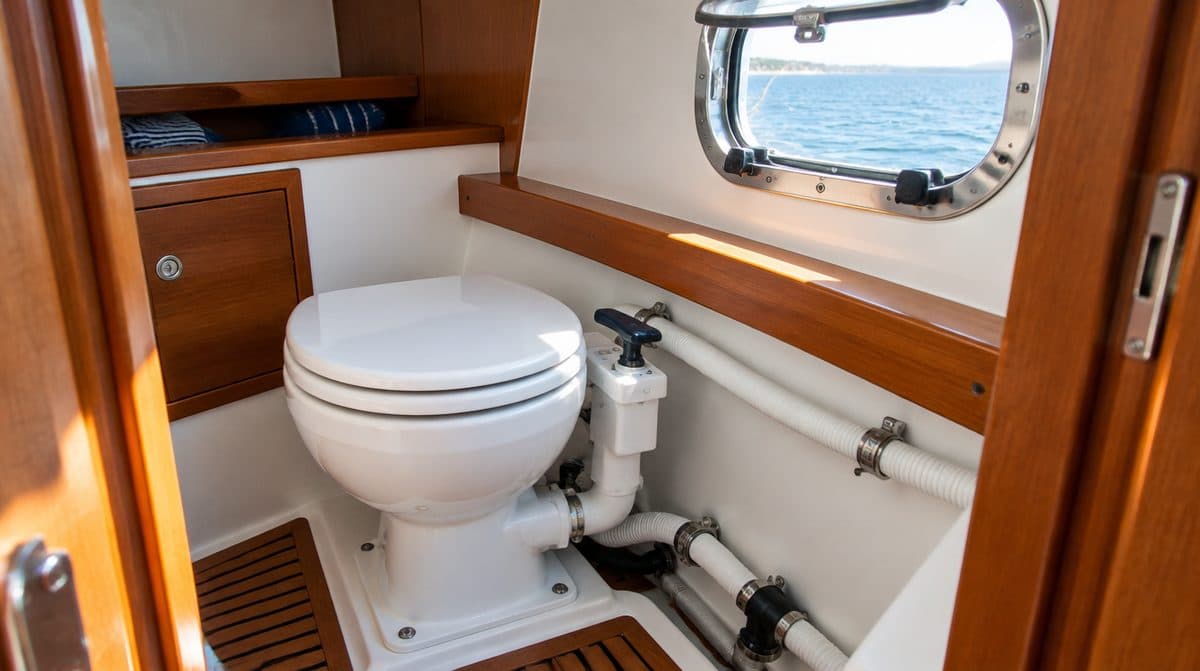
Marine Toilets: Manual vs. Electric and How to Choose
Manual or electric, raw water or fresh: the head you pick decides how many afternoons you spend fixing it. How to choose one everyone aboard can live with.
The head is the one system everyone aboard uses and nobody wants to fix. Picking the right one up front saves a lot of unpleasant afternoons.
The choice really comes down to two questions: who pushes the water through (you or a motor), and what kind of water does the flushing. Get those two right for your boat and your crew, and the head fades into the background, which is exactly where you want it.
Manual vs. electric
- Manual: hand-pumped, reliable, no power draw, cheaper. Great backup and for simple boats.
- Electric: push-button flush, more comfortable, needs power and draws more current.
Manual heads earn their reputation the honest way: fewer parts, nothing to corrode in a control circuit, and they keep working when the battery is flat. Electric heads win on crew comfort, and with guests aboard that matters more than any spec sheet. Nobody needs a lesson to push a button, and the macerating flush on an electric head sends waste downstream in a form your hoses and holding tank handle far more gracefully.
Fresh flush vs. raw water
- Raw-water flush uses seawater, simple but can bring odor into the bowl over time.
- Freshwater flush uses tank water, cleaner and less odor, but uses your freshwater.
The odor problem with raw water is biology. Seawater is full of tiny organisms that die in the intake hose between uses, and that is the swampy smell waiting for you after a week away from the boat. Freshwater flush sidesteps it entirely, at the cost of drawing down your tank a little with every push of the button. Weekenders with dock water close at hand rarely miss it; long-range cruisers budget tankage for it.
How the whole system hangs together
The bowl is just the visible end. Behind it sit the flush pump (your arm or a motor), the hose runs, the holding tank, and the way waste eventually leaves the boat: a deck pump-out fitting at the marina or, where legal offshore, an overboard discharge, often through a Y-valve and a macerator pump (we cover those in our macerator pump guide). When you shop for a toilet you are really shopping for the front end of that system, and it has to speak the same language as the rest of it: hose diameters, tank fittings, and discharge routing all have to line up.
Fit your system
Match the head to your holding tank and discharge setup, and confirm the footprint fits the space and existing hose connections. Then sit in the compartment and think it through: bowl height, knee room, elbow room, and the full swing of the pump handle on a manual head all matter in a space the size of a phone booth. Compact-bowl models exist for exactly this reason, and household-size bowls exist for boats with room to spare. If you are replacing an existing head, photograph the old hose connections before you pull anything, and measure the bolt pattern; matching those two details can turn a weekend project into an hour with a screwdriver.
Installation realities
If the bowl sits below or near the waterline, vented loops in the intake and discharge lines are not optional. They are what stops the sea from quietly siphoning aboard through your toilet while you sleep, and sailboats heeled over on passage count as below the waterline too. Use proper sanitation hose for every run, double-clamp connections below the waterline, and keep the runs short with gentle bends. Leave real access around the base bolts and hose connections, because this is the one installation on the boat you will absolutely revisit someday.
Maintenance and lifespan
Marine toilets reward small, boring habits. Flush enough water to clear the entire hose run, not just the bowl. Lubricate the pump the way the maker says to. Replace the joker valve (the rubber one-way valve in the discharge) when flushing gets weak or odor creeps backward; it is the most common wear part on almost every head. Rinse raw-water systems through with fresh water before the boat sits for a while. Seals and valves are consumables, and most big-brand heads have service kits that keep an old unit flushing like a new one for years.
Mistakes to avoid
Do not put anything in a marine head that has not been eaten first or is not marine-rated paper. Household paper and wipes, including the ones labeled flushable, are how holding tanks and hoses die young. Do not ignore a stiffening pump handle; that is a lubrication or valve warning, not a strength contest. And do not run an electric head with the intake seacock closed, because the flush pump will happily burn itself dry while you wonder about the noise.
From the Water Brief guests before they use the head. Most clogs come from people flushing things the system was never designed to handle. Thirty seconds of friendly instruction at the dock beats an hour with rubber gloves at anchor, and seasoned skippers keep a small, cheerful sign posted in the head so nobody has to remember the speech.
Where to Get It Everything in this guide is stocked at Boat Supplies Direct, the Nautical Network marine parts store. Orders ship free all year with Dock Pass, the $49 a year shipping pass.
In stock as this guide goes up: - Jabsco Electric Marine Toilet with Compact Bowl (12V) - Jabsco Y-Valve - GROCO Bronze Vented Loop (1 inch hose)
Browse the full range: - Shop sanitation - Read the full buying guide, including FAQs
More from the Wire
 Buying Guides
October 29, 2026
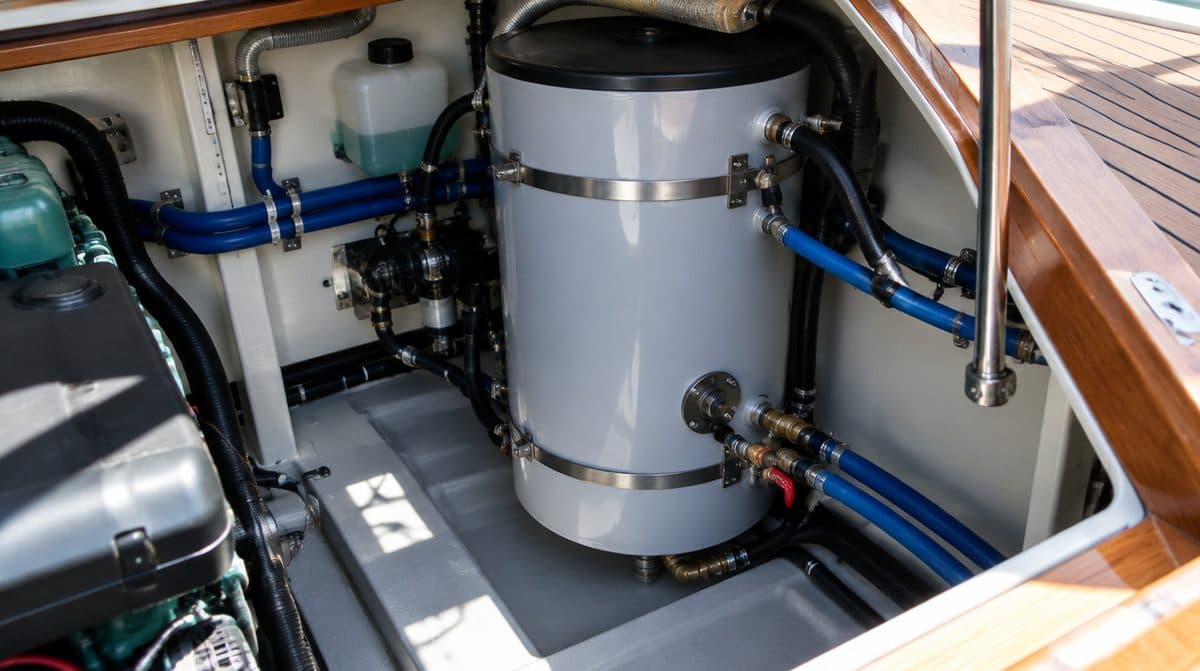
Hot Showers Aboard: A Marine Water Heater Guide
Hot water underway is free once your heater has an engine loop. Tank sizes, heating sources, and what to measure before you order one.
Read more Buying Guides
October 19, 2026
Marine Autopilots: Let the Boat Steer While You Watch the Water
The control head is the easy part. The drive unit behind your steering is where autopilots get mismatched, and where the money goes right or wrong.
Read more Buying Guides
October 19, 2026
Fishfinders and Transducers: Seeing What's Really Down There
The screen gets the glory, but the transducer decides what you actually see. Frequency, power, and mounting, explained by what shows up on the water.
Read more