Hull Cleaners: Getting Rid of the Waterline Stain
Boat soap won't touch the waterline mustache. Which hull cleaner actually dissolves it, and how to use the strong stuff without wrecking your wax.
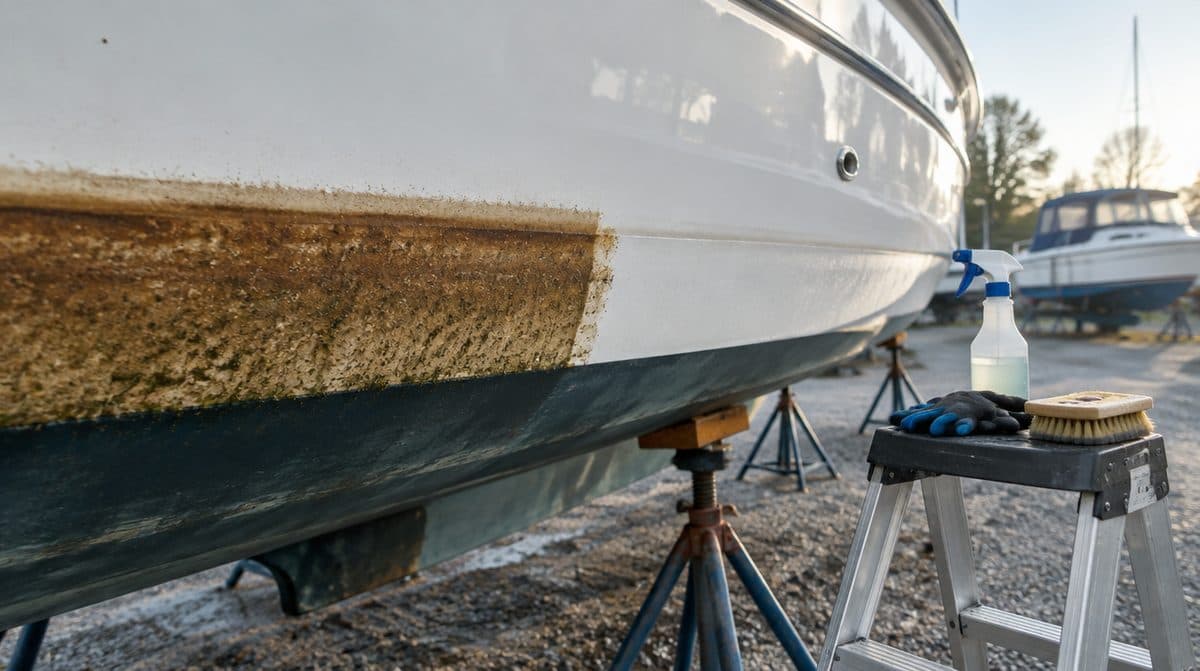
That brown stain at the waterline doesn't come off with regular boat soap. You can scrub until your shoulder gives out and the mustache will still be there, grinning back at you from the gelcoat. The right hull cleaner takes it off in minutes, and knowing which bottle to grab (and how to use it without stripping half your wax job) is most of the battle.
Why the Waterline Stain Happens
The waterline stain isn't dirt in the normal sense. It's a blend of tannins from leaves and other organic matter in the water, dissolved minerals like iron, and the thin film of scum that floats on the surface of every harbor, river, and lake. Gelcoat looks glassy, but it's actually slightly porous. Leave a hull sitting in that soup for a season and those compounds soak into the surface and bond with it.
That's why soap does nothing. Boat soap lifts dirt that sits on top of a surface. The waterline stain is in the surface. You need chemistry that dissolves the staining compounds themselves, which is exactly what a dedicated hull cleaner does.
Match the Cleaner to the Stain
- General wash: boat soap for routine dirt and salt.
- Waterline stains and rust: a hull cleaner or stain remover formulated for the brown waterline mustache.
- Heavy oxidation: a cleaner plus polish.
The order matters. Always start with a regular soap wash so you're not wasting strong cleaner on ordinary grime. Then hit the stains with the dedicated product. If the hull still looks dull and chalky after the stain is gone, that's oxidation, and no cleaner fixes oxidation. That calls for a polish, which is a separate job.
Acid-Based vs. Gentle
Strong hull cleaners cut tough waterline stains fast but need care. Most of the heavy hitters are acid-based, and the acid is what dissolves mineral and tannin staining on contact. You'll see the stain literally melt away, often without any scrubbing at all. The trade-off is that you're handling an aggressive chemical: wear gloves and eye protection, work in ventilated conditions, and keep it off anything you don't want etched, including painted boot stripes, metal through-hulls, and your trailer.
Gentler cleaners are safer for frequent use. They take more dwell time and sometimes a second application, but they're kinder to your hands, your wax, and the surfaces around the work area. A sensible approach for most boats: a gentle cleaner for the regular freshen-up, and a strong acid-based cleaner once or twice a season when the mustache has really set in.
Gel formulas are worth a look for vertical hull sides. Liquid runs off; gel clings and keeps the chemistry working where you put it.
How to Apply It Without Making a Mess
Work in sections a few feet wide. Apply the cleaner with a brush, pad, or sprayer, let it dwell for the time on the label, and watch the stain dissolve. Light agitation with a soft brush or mitt helps on stubborn patches, but resist the urge to scrub hard. If you find yourself leaning into it, the chemistry needs more time or you need a stronger product, not more muscle.
Never let the cleaner dry on the hull. Dried cleaner can leave its own marks, which is a special kind of irritating when the whole point was removing marks. On a hot day, work smaller sections and keep a hose handy.
Rinse thoroughly when each section is done, and flood the ground under the boat too. Acid runoff and trailer parts are not friends.
Rinse and Protect
After cleaning stains, protect the gelcoat with wax or sealant so stains do not grip as fast next time. This step gets skipped constantly and it's the one that saves you work next season. Strong cleaners take the wax off along with the stain, which leaves the gelcoat pores wide open, and an unprotected hull stains faster than it did before. Seal it with a quality wax, polymer sealant, or ceramic product and the next waterline cleanup will be a wipe instead of a project. If the hull also needs its shine back, our boat wax and polish guide walks through that side of the job.
Mistakes to Avoid
Household acids and bathroom cleaners: they can remove the stain and also dull the gelcoat, corrode fittings, and void your sense of smell. Marine hull cleaners are formulated for gelcoat for a reason.
Working in direct hot sun: the cleaner flashes dry before it can work.
Skipping gloves: oxalic and similar acids are unkind to skin, and you usually don't notice until later.
Scrubbing with abrasive pads: you'll win the battle with the stain and lose the gelcoat's gloss. Let the chemical do the cutting.
Cleaning without re-protecting: see above. Bare gelcoat is a stain magnet.
When the Stain Won't Budge
If repeated applications of a strong hull cleaner barely move the stain, you're probably fighting oxidation stained all the way through the chalky layer, and the fix is polishing compound and a buffer, not more cleaner. Deep rust weeps from embedded hardware can also keep re-staining the same spot; the real fix there is rebedding the fitting, because the stain is a symptom, not the disease.
From the Water
Apply hull cleaner from the bottom up and rinse from the top down. It keeps runs from streaking the clean areas. A drip of strong cleaner running down a dirty hull etches a bright clean stripe, and you'll spend the rest of the afternoon chasing streaks you created yourself.
Where to Get It
Everything in this guide is stocked at Boat Supplies Direct, the Nautical Network marine parts store.
In stock as this guide goes up: - Xanigo Marine Abrasive Cleaning Mitt for knocking loose scum off the waterline before the chemicals come out - Gtechniq Marine Ceramic Top 50ml to seal the gelcoat once it's clean so the mustache grips slower next time - Gtechniq Marine MF2 Zero Scratch Microfiber Drying Towel for swirl-free wipe-downs after the rinse
Browse the full range: - Shop cleaning and care - Read the full buying guide, including FAQs
More from the Wire
 Buying Guides
October 18, 2026
Starting vs. Deep Cycle: The Battery Mistake That Strands Boaters
Starting, deep cycle, or dual purpose, and flooded, AGM, or lithium. How to pick the battery type that will not leave you stranded.
Read more Buying Guides
October 18, 2026
The Onboard Charger: Cheap Insurance for Expensive Batteries
Batteries die young when they sit half-charged. How to size an onboard charger by amps, banks, and chemistry.
Read more Buying Guides
October 18, 2026
Battery Switches and Isolators: Never Get Stranded by a Dead Battery
The switch and isolator setup that keeps your starting battery ready while the house bank runs your gear.
Read more