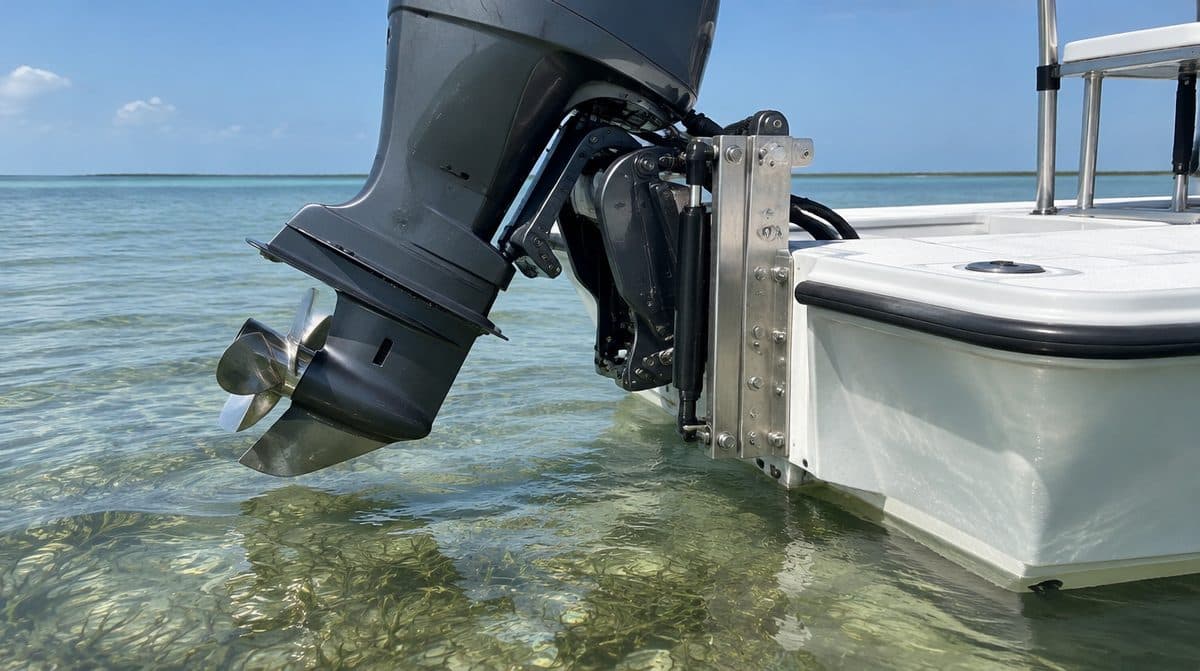
Jack Plates: More Speed, Better Hole Shot, Skinnier Water
Engine height is the tuning knob most boats never get to touch. What setback actually does, when hydraulic beats manual, and how to dial in a jack plate without starving your water pump.
Flats and bay boat owners swear by them for a reason. A jack plate lets you fine-tune engine height for speed and shallow running, and once you have run a boat with one, a fixed transom mount feels like a car with the seat welded in place.
Here is what a jack plate actually does, how to pick between manual and hydraulic, and how to set one up without cooking your powerhead.
What a jack plate actually does Your engine's trim changes its angle. A jack plate changes its height, straight up and down, which is a completely different adjustment. Raising the engine lifts the gearcase closer to the surface, which cuts lower-unit drag, frees up speed, and lets you run and launch in water that would stop the same boat with a transom-mounted engine. Lowering it buries the prop for bite when you need grip in rough water or a heavy-load hole shot. Trim angle and engine height work together, but height is the adjustment most boats never get, and that is the gap a jack plate fills.
Setback Setback is how far back the plate moves the engine. More setback often improves top speed and bite in rough water. Match setback to your hull and goals.
Moving the engine aft puts the prop in cleaner, less turbulent water that has had a moment to recover after leaving the hull. It also shifts weight aft, which helps some hulls carry the bow and hurts others that are stern-heavy already. Smaller setbacks suit most bay boats and skiffs; bigger setbacks show up on performance hulls chasing top-end numbers. Your hull maker's forums and rigging shops know what your specific boat likes, and that beats guessing.
One more practical note: setback changes where the engine sits relative to the transom, so check that your steering, cables, and hoses have the slack to follow the engine aft before you buy.
Manual vs. hydraulic - Manual: set once, affordable, fine for a fixed sweet spot. You adjust it with tools at the dock, find the height your boat likes, and leave it there. - Hydraulic: adjust on the fly from the helm, great for running shallow and dialing in performance.
The honest question is whether you will actually adjust it underway. If you fish skinny water, the answer is constantly: plate up to idle across a flat, plate down to run home. If you just want to correct a factory engine height that was never quite right, a manual plate does that for a lot less money. Hydraulic plates earn their cost on boats that change loads and water depth all day.
Horsepower rating The jack plate must be rated for your engine's horsepower and weight. Never under-rate it. The plate carries the entire engine and every pound of thrust it makes, cantilevered off your transom and levered further by the setback. An under-rated plate flexes, and flex becomes cracks. Check the plate's rating against your engine's spec sheet, and when in doubt, step up.
Dialing it in Setup is a process, not a bolt-on. Start with the plate low, pick a safe stretch of water, and raise the engine in small steps across repeated runs. Watch three things: water pressure, RPM, and how the hull feels. As the engine comes up, drag drops, speed creeps up, and steering lightens. Go too far and the prop starts to slip in turns and the water pressure sags. Engine height also changes how your prop behaves, since a raised gearcase runs in surface-mixed water where blade geometry matters more. Dialing plate height and prop together is the real tune, and our boat propeller guide covers the other half of that equation.
Installation realities Mounting a plate means drilling or reusing transom holes, bedding every bolt in marine sealant, and torquing against backing structure, because this joint carries more load than anything else on the boat. Hydraulic plates add a pump, hoses, a helm switch, and wiring that wants proper marine terminals and a protected circuit. None of it is exotic work, but the stakes are high enough that if transom holes make you nervous, pay a rigger and sleep well.
Maintenance and lifespan Jack plates live in spray and, on trailered boats, road grime. Rinse the plate with fresh water after salt trips, grease the slides or rollers on schedule, and cycle hydraulic plates through their full travel regularly so seals stay wet. Inspect the mounting bolts each season for torque and corrosion. An anodized, well-greased plate outlasts the engine hanging on it; a neglected one seizes into an expensive fixed mount.
Signs of trouble - A hydraulic plate that drifts down over a day on the water: internal seal wear. - Groaning or chattering during adjustment: dry slides begging for grease. - Corrosion blooming at the mounting hardware or white powder on the aluminum. - Play you can feel by grabbing the gearcase and pushing: worn slides or loose bolts, and neither improves on its own.
Mistakes to avoid - Raising the engine until it ventilates in turns, then calling that the setting. Back off to where it grips. - Ignoring water pressure because the boat feels fine. The water pump does not care how it feels. - Buying more setback than your splashwell, cables, and weight distribution can live with. - Skipping the sealant on transom bolts. Water in a transom core is the most expensive mistake on this page.
From the Water Raise the engine in small steps while watching water pressure. When pressure drops, you've gone too high, so back it down a notch. Make one change at a time and give each setting a full run before judging it, because wind chop and load shifts can fake you into chasing the wrong variable.
Where to Get It Everything in this guide is stocked at Boat Supplies Direct, the Nautical Network marine parts store.
In stock as this guide goes up: - Bob's Machine 8 inch setback Action Series hydraulic jack plate, gloss black - Bob's Machine 12 inch setback Action Series hydraulic jack plate, gloss black - Bob's Machine 6 inch Extreme Gen 3 Action Series jack plate, silver
Browse the full range: - Shop jack plates - Read the full buying guide, including FAQs
More from the Wire
 Buying Guides
October 18, 2026
Starting vs. Deep Cycle: The Battery Mistake That Strands Boaters
Starting, deep cycle, or dual purpose, and flooded, AGM, or lithium. How to pick the battery type that will not leave you stranded.
Read more Buying Guides
October 18, 2026
The Onboard Charger: Cheap Insurance for Expensive Batteries
Batteries die young when they sit half-charged. How to size an onboard charger by amps, banks, and chemistry.
Read more Buying Guides
October 18, 2026
Battery Switches and Isolators: Never Get Stranded by a Dead Battery
The switch and isolator setup that keeps your starting battery ready while the house bank runs your gear.
Read more