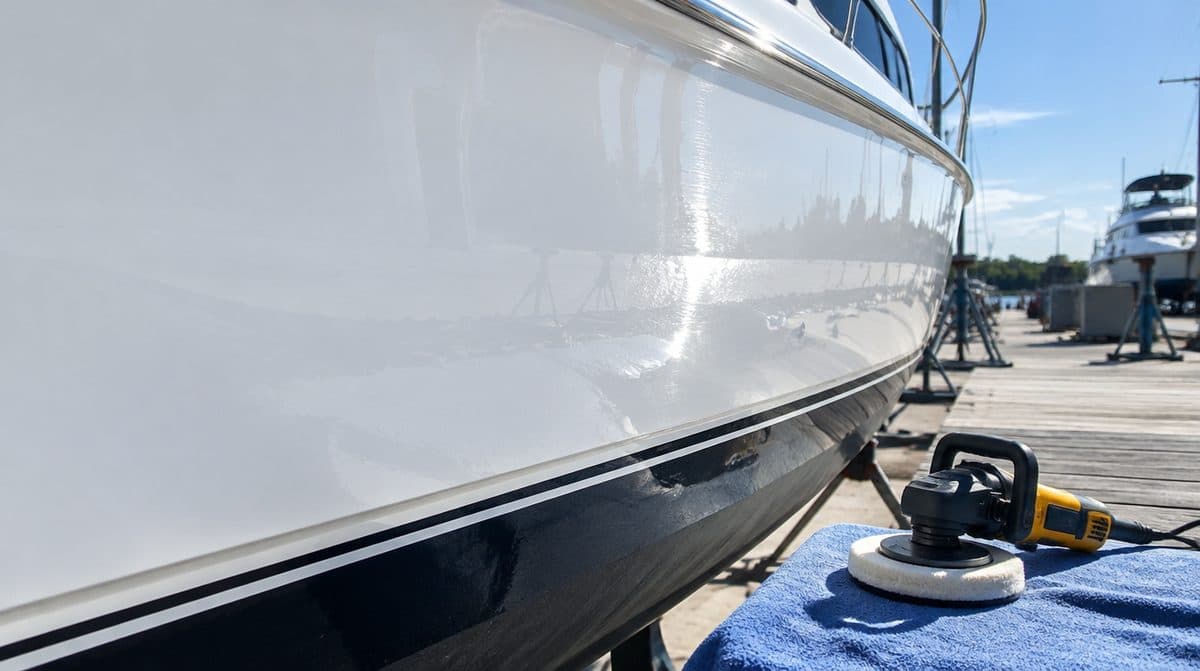
Boat Wax and Polish: Keep Your Gelcoat Looking New
Compound, polish, and wax in the right order: how to take oxidation off, protect gelcoat from the sun, and keep it looking new.
Chalky, dull gelcoat makes even a newer boat look tired. The right polish and wax bring the shine back and protect it from the sun. The difference between a boat that turns heads at the ramp and one that looks ten years older than it is usually comes down to a few afternoons of work a season and knowing which product to reach for in what order. This guide sorts out compounds, polishes, waxes, and sealants so you stop guessing at the marine care shelf.
What gelcoat is and why it chalks Gelcoat is the pigmented resin skin on the outside of a fiberglass hull. It is not paint; it is thicker, harder, and porous. Sunlight is its enemy. UV breaks down the resin at the surface, leaving a microscopic layer of dead, crumbly material that scatters light instead of reflecting it. That is the chalk that comes off white on your hand when you rub a neglected hull. The process only moves in one direction, and every season of bare, unprotected gelcoat burns off a little more of a layer that has a finite thickness. Protection is cheap. Gelcoat is not.
Polish vs. wax vs. sealant - Polish/compound: removes oxidation and restores shine on dull gelcoat. - Wax: protects and adds gloss, needs reapplication. - Synthetic sealant/ceramic: longer-lasting protection than traditional wax.
If your gelcoat is dull and chalky, polish first, then protect with wax or sealant.
The logic is restore, then protect, and the products split along that line. Compounds and polishes are abrasives. They physically shave off the dead, oxidized layer to expose fresh gelcoat underneath, with compounds cutting aggressively and polishes finishing fine. Waxes and sealants are the opposite: they remove nothing and instead leave a sacrificial barrier that takes the UV, salt, and grime so the gelcoat does not. Traditional wax gives a warm, deep gloss and is forgiving to apply, but it wears away and needs regular renewal. Synthetic sealants and ceramic coatings bond to the surface and hold up longer between applications. Whatever you choose, the barrier is the point. Shine without protection is a countdown.
Match the product to the condition - Light maintenance: wax or sealant. - Moderate oxidation: polish then wax. - Heavy oxidation: compound, polish, then protect.
Diagnose before you buy. Run a dry hand over the hull in sunlight. If the surface is glossy and your hand glides, you are in maintenance territory: wash and wax. If it looks hazy, feels slightly rough, and leaves a faint chalk dust on your palm, you need a polish to cut the dead layer before any wax will look right. If the hull is flat, milky, and chalks heavily, start with a compound, refine with polish, then protect. One more test worth knowing: if water stops beading on the hull, the old wax is gone and the clock on bare gelcoat is running.
Machine or by hand You can wax a small boat by hand, and plenty of people do. But removing real oxidation by hand is miserable work, and this is where a dual action polisher earns its keep. The dual action motion oscillates as it spins, which makes it far more forgiving than a rotary machine: it resists burning through gelcoat on edges and corners, and it works compound and polish evenly without swirl marks. Pair the machine with the right pad for the job, more aggressive pads for compounding and softer ones for polishing and finishing, and let the machine and the abrasive do the work. Light, overlapping passes beat leaning on it.
Technique that works A few habits separate a clean result from a streaky one. Wash the boat first, because polishing over salt and grit just grinds it in. Tape off rubrails, decals, and nonskid so you are not cleaning compound out of texture for a week. Work one small section at a time and finish it before moving on. Apply wax thin: a coat you can barely see wipes off easily and protects exactly as well as a thick smear that takes three towels to remove. Keep fresh microfiber towels on hand and flip or swap them often. On nonskid decks, skip the wax; a slippery deck is a bad trade for shine, and dedicated nonskid cleaners handle that surface.
How often Protect at least once or twice a season, more in strong sun like Florida. UV is what kills gelcoat.
Let the water tell you between calendar dates. When beading fades and the hull starts holding dirt and water spots instead of rinsing clean, the protection has worn through and it is time for another coat. Vertical hull sides shed water and hold wax longer; horizontal surfaces like decks and hatch tops face the sun directly and give up their protection first, so hit them more often. A quick freshwater rinse after salt trips stretches the life of whatever protection is on the boat. And if the boat lives on a lift or trailer in full sun, a cover is the cheapest UV protection you can buy.
Mistakes to avoid - Waxing over oxidation. You get a few weeks of shine over a dead layer, then it is dull again. Cut first, protect second. - Working in direct sun on a hot hull. - Using aggressive compound on healthy gelcoat because it seems faster. Use the least aggressive product that fixes the problem. - Letting dried compound and wax build up in corners, around fittings, and along tape lines. - Quitting after the polish step. Freshly polished gelcoat is bare and unprotected, and it oxidizes faster than you think.
If the hull is badly chalked and the job has outgrown your weekend, a verified detailer near you can do the heavy restoration and leave you with a surface that is easy to maintain.
From the Water Work in the shade, one small section at a time. Wax applied in direct sun dries too fast and streaks. If the hull is too hot to hold your hand on, it is too hot to wax, so chase the shade around the boat or work early and late.
Where to Get It Everything in this guide is stocked at Boat Supplies Direct, the Nautical Network marine parts store.
In stock as this guide goes up: - Shurhold dual action polisher - Shurhold dual action polisher starter kit - Meguiar's Ultra Pro finishing polish, 16 oz
Browse the full range: - Shop cleaning and care - Read the full buying guide, including FAQs
More from the Wire
 Buying Guides
October 18, 2026
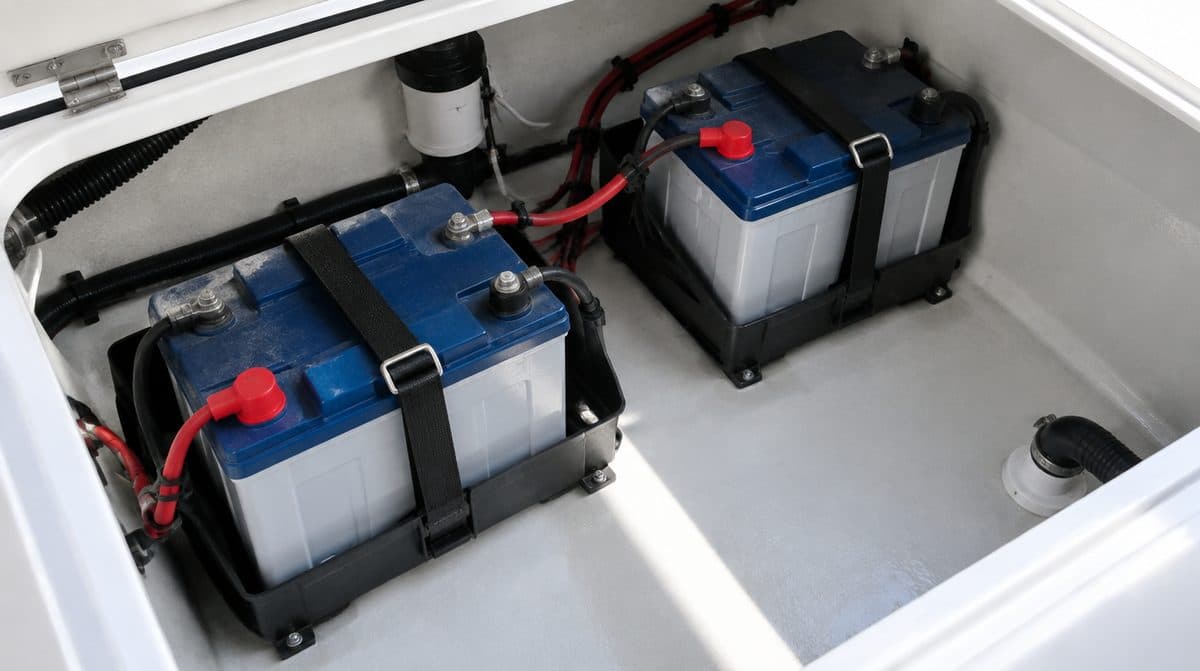
Starting vs. Deep Cycle: The Battery Mistake That Strands Boaters
Starting, deep cycle, or dual purpose, and flooded, AGM, or lithium. How to pick the battery type that will not leave you stranded.
Read more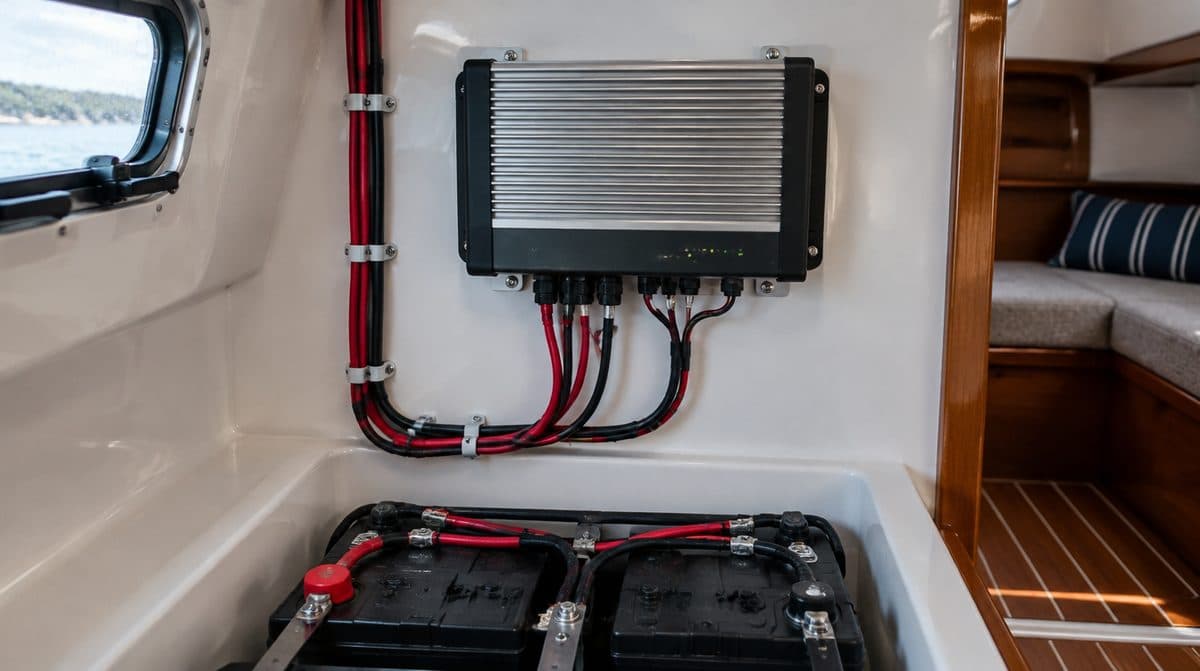 Buying Guides
October 18, 2026
The Onboard Charger: Cheap Insurance for Expensive Batteries
Batteries die young when they sit half-charged. How to size an onboard charger by amps, banks, and chemistry.
Read more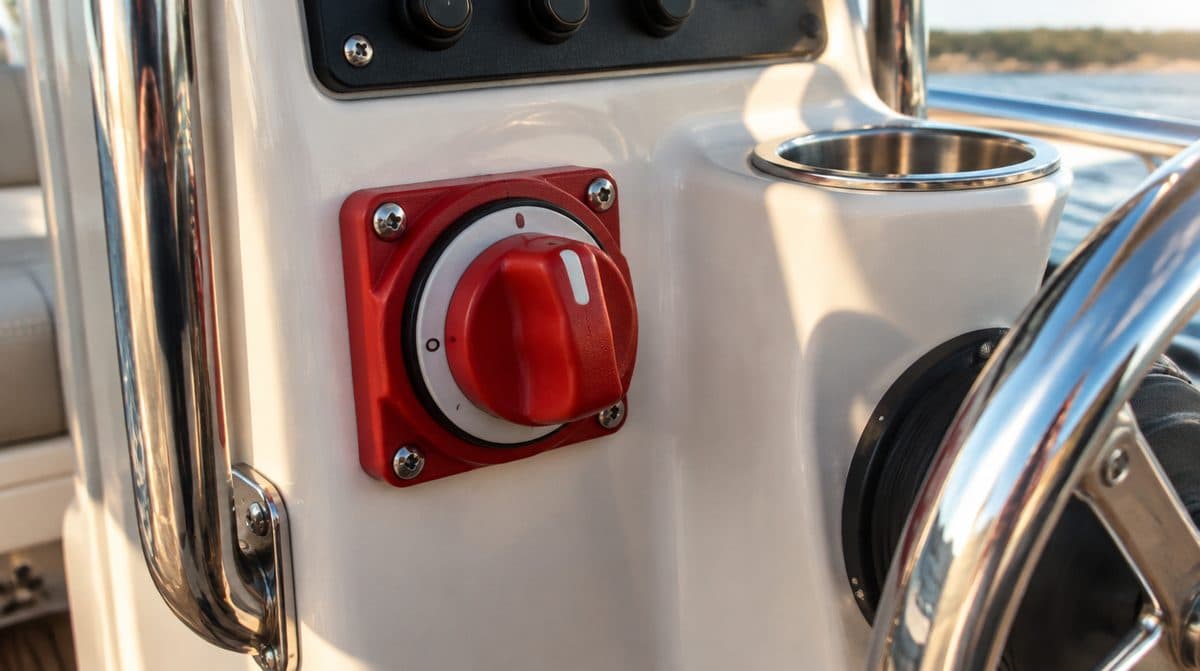 Buying Guides
October 18, 2026
Battery Switches and Isolators: Never Get Stranded by a Dead Battery
The switch and isolator setup that keeps your starting battery ready while the house bank runs your gear.
Read more