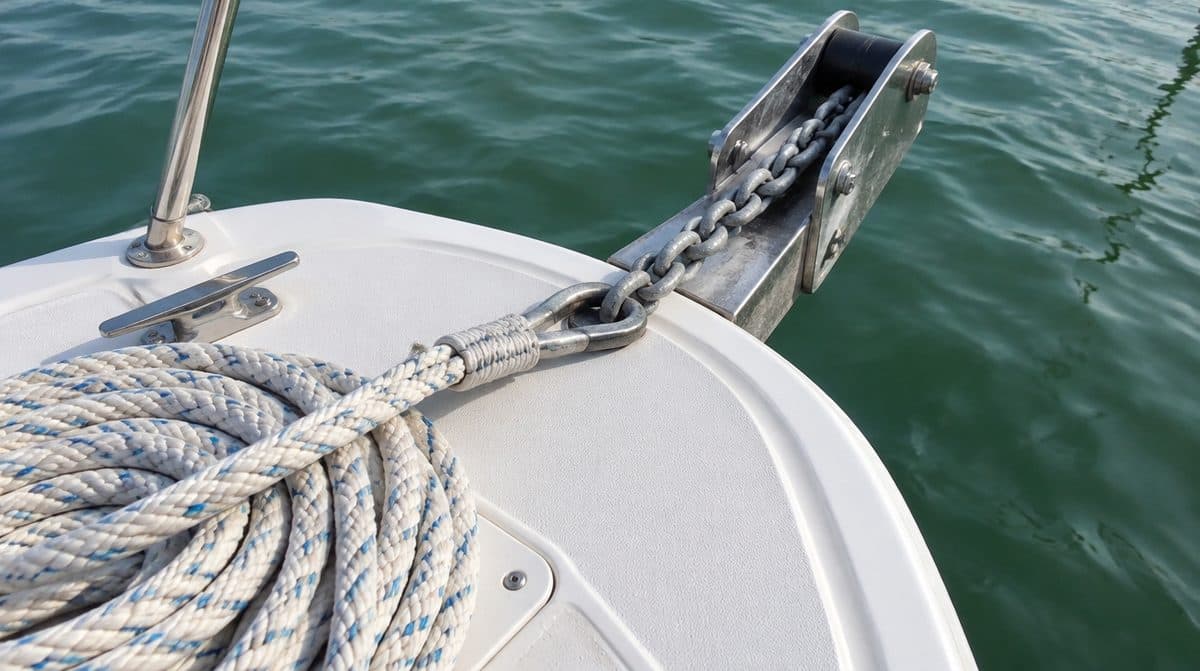
Anchor Rode and Chain: The Half of Your Anchor System Nobody Talks About
The anchor gets the credit, but the rode does the work. Chain length, scope math, and nylon stretch: the unglamorous half of the system that decides whether you stay put.
Boaters obsess over anchors and ignore what connects them to the boat. The anchor gets the brand loyalty, the forum arguments, and the shiny spot on the bow, while the rode sits in the locker doing most of the actual work. Then the boat drags at 2 a.m., the anchor gets blamed, and the real culprit was the rode all along: too little chain, too little scope, or line that gave up quietly over a few seasons.
The rode is often why a good anchor fails. Here is how to get this half of the system right.
What the Rode Actually Does
The rode's job is sneakier than just connecting anchor to boat. Anchors hold because they dig in, and they dig in only when the pull on them is low and horizontal, along the bottom. The weight of chain near the anchor sags into a curve that keeps the pull angle flat, so gusts lift the sag before they ever tug the anchor's shank upward. Meanwhile, the nylon portion of the rode stretches under load, absorbing the jolt of every wave and gust instead of transmitting it to the anchor as a sharp yank.
Flat pull angle plus shock absorption: that is the whole trick, and every buying decision below serves one or both.
All Chain vs. Rope-Chain Combo
- All chain gives maximum holding and chafe resistance. It cannot be sawn through by rock or coral, and its weight keeps the pull angle low in almost any conditions. The costs are real: it is heavy in the bow, and it needs a windlass on most boats. Cruisers who anchor every night in unknown bottoms lean this way.
- Rope and chain combo pairs a length of chain at the anchor with nylon line above it. It is lighter, easier to handle, cheaper, and kinder to your bow and back. This is the common recreational setup for good reason, and ready-made rodes with the splice already done take the hardest part off your plate.
The chain near the anchor lowers the pull angle so the anchor digs in instead of pulling out. That is why even the lightest combo rode still starts with chain.
How Much Chain
A common starting point is a boat-length of chain, or at least several feet, between anchor and line. More chain improves holding, full stop. The chain is also your chafe guard where the rode meets the bottom, so rocky or shelly anchorages argue for more of it. If your anchoring is calm lakes and sand, the lower end of the range serves fine; if you overnight out, err longer.
Scope: The Simple Math That Keeps You Put
Carry enough total rode for 7 to 1 scope in your usual depths, meaning 7 feet of rode per foot of water plus bow height.
Work one example and the rule sticks. Say you usually anchor in 10 feet of water and your bow roller sits 4 feet above the waterline. That is 14 feet of effective depth, and 14 times 7 is 98 feet of rode to lay out for a proper overnight set. If the deepest spot you ever anchor is 20 feet, the same math says 24 times 7, or 168 feet, which tells you a 200 foot rode fits your boating and a 150 foot rode would leave you short exactly when the wind comes up. Buy rode for the depths you actually visit, not the ones you usually visit.
Size to Boat and Anchor
Match chain and line diameter to your boat size and anchor. Heavier boats and bigger anchors load the rode harder, and the rode should never be the weakest link in the chain of gear between bottom and bow. Use nylon line specifically, not polyester or anything labeled general purpose, because nylon's shock-absorbing stretch is the feature you are paying for. Three-strand and plaited brait both work; brait flakes into a locker more compactly and resists hockling, which is why ready-made rodes often use it.
One more compatibility check: if you have a windlass, or plan to add one, your chain size and rope diameter must match its gypsy exactly. Our windlass buying guide covers that pairing; buying rode and windlass as a matched set saves real grief.
Splices, Shackles, and Connections
Every connection is a potential weak point. The rope-to-chain splice should be a proper tapered splice that runs through a windlass gypsy smoothly, which is a strong argument for pre-spliced rodes if you do not splice yourself. At the anchor end, use a shackle sized to the chain, and seize the pin with stainless wire or a zip tie so it cannot back out, because a shackle pin working loose is the most preventable way to donate an anchor to the sea floor.
Maintenance and When to Replace
Rinse the rode with fresh water when you can, and let it dry before it goes back in the locker for long storage. Inspect the nylon for chafe, fuzzing, stiffness, and glazed spots, especially where it rides the bow roller and chocks. Inspect chain for rust that is more than surface deep, and watch the links nearest the anchor, which work hardest. Retire line that has gone stiff or shiny, re-splice when the splice looks tired, and flip an all-chain rode end for end to spread the wear. Rode is cheap compared to anything it fails to hold.
Mistakes to Avoid
- Buying a great anchor and hanging it on bargain rode.
- Anchoring on short scope because letting out line feels like work.
- Skipping chain entirely because the anchor sets fine on a calm day.
- Letting the shackle pin go unseized.
- Storing wet nylon in a sealed locker all season.
From the Water
Mark your rode every 25 feet with colored markers. Knowing exactly how much line is out makes setting proper scope easy. It also turns scope into a habit the whole crew can run: call the depth, do the multiplication, and pay out to the right mark instead of guessing from how the pile looks.
Where to Get It
Everything in this guide is stocked at Boat Supplies Direct, the Nautical Network marine parts store.
In stock as this guide goes up: - Maxwell anchor rode, 15 feet of 5/16 inch chain spliced to 150 feet of 5/8 inch nylon brait - Maxwell anchor rode, 15 feet of 1/4 inch chain spliced to 150 feet of 1/2 inch nylon brait - Quick anchor rode, 15 feet of 7mm chain and 300 feet of 1/2 inch rope
Browse the full range: - Shop rope and chain - Read the full buying guide, including FAQs
More from the Wire
 Buying Guides
October 18, 2026
Starting vs. Deep Cycle: The Battery Mistake That Strands Boaters
Starting, deep cycle, or dual purpose, and flooded, AGM, or lithium. How to pick the battery type that will not leave you stranded.
Read more Buying Guides
October 18, 2026
The Onboard Charger: Cheap Insurance for Expensive Batteries
Batteries die young when they sit half-charged. How to size an onboard charger by amps, banks, and chemistry.
Read more Buying Guides
October 18, 2026
Battery Switches and Isolators: Never Get Stranded by a Dead Battery
The switch and isolator setup that keeps your starting battery ready while the house bank runs your gear.
Read more