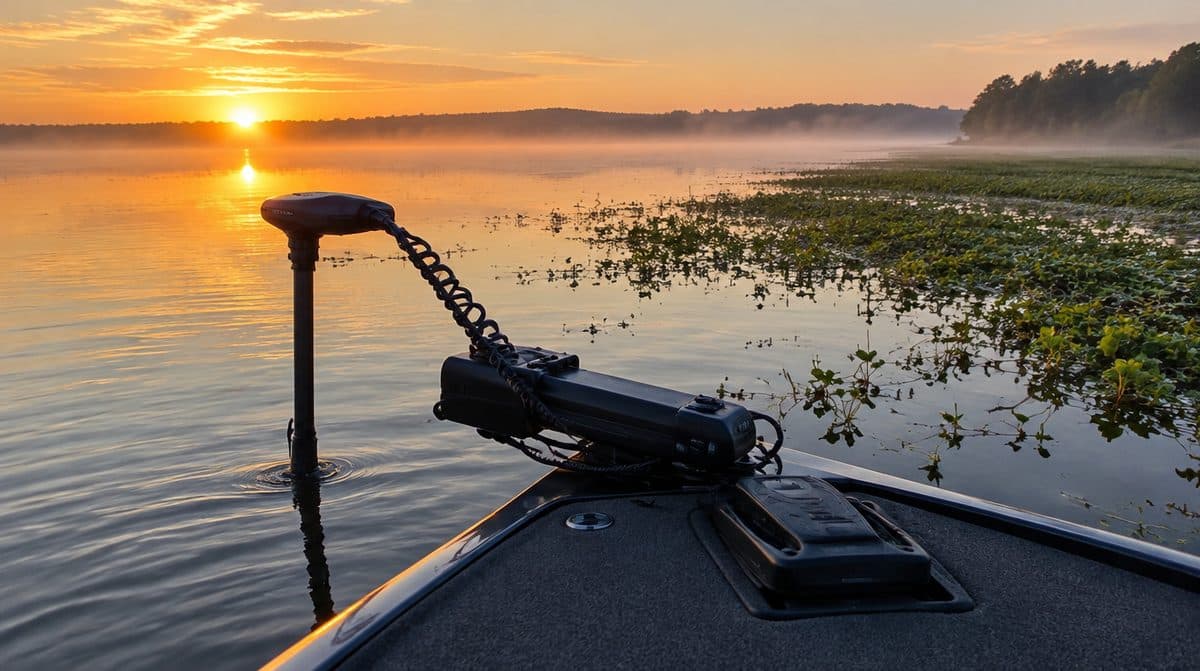
Trolling Motors Explained: Thrust, Shaft Length, and Holding Your Spot
Thrust, shaft length, and voltage are three numbers that decide whether you hold the spot or drift off it. Here is how to get all three right the first time.
The anglers catching fish on the same spot all day aren't lucky. They're holding position, and a properly sized trolling motor is how they do it. The purchase comes down to three numbers, thrust, shaft length, and voltage, and the sizing rules are refreshingly simple once you see them.
Thrust: Size to Your Boat Weight
Thrust is measured in pounds. The rule of thumb is a minimum of 2 pounds of thrust for every 100 pounds of fully loaded boat weight (boat, gear, fuel, and people). More thrust helps in wind and current.
- Up to 2,500 lb loaded: 40 to 55 lb thrust
- 2,500 to 3,500 lb: 55 to 80 lb thrust
- 3,500 lb and up: 80 lb thrust or more
When in doubt, size up. You can always run a bigger motor slower, but you cannot add thrust you did not buy.
One thing worth understanding: thrust is not speed. Extra thrust buys you authority, which is the ability to hold the bow where you want it when the wind pipes up or the current starts pulling. A motor with headroom holds a spot at a relaxed power setting and sips battery. A motor running flat out just to stay put is loud, hot, and done by lunchtime.
A Worked Sizing Example
Say your boat is listed at 1,700 pounds dry. Add fuel, batteries, a loaded cooler, tackle, and two people, and you are realistically pushing 2,400 pounds on the water. At 2 pounds of thrust per 100 pounds, that is 48 pounds of thrust as a bare minimum, which lands you in the 40 to 55 pound band with almost no headroom left. If you fish windy lakes or rivers with current, that is exactly the boat that should step up to the next band and cruise at half power instead of maxing out a smaller motor.
Shaft Length: Measure the Bow
Too short and the prop ventilates and cavitates in waves. Too long and it is awkward to stow. Measure from the mounting surface on the bow to the waterline, then add about 20 inches so the motor head stays dry and the prop stays submerged in chop. Rougher water calls for a longer shaft.
Measure with the boat in the water and loaded normally, not on the trailer, because bow height changes with load. If you fish big open water where the bow rises and falls in waves, lean long. A shaft with a little extra length can be stowed; a prop that keeps sucking air every time the bow lifts cannot be fixed.
Voltage: 12V, 24V, or 36V
Higher thrust motors need more power, supplied by more batteries:
- Up to 55 lb thrust: usually 12V (1 battery)
- 55 to 80 lb thrust: 24V (2 batteries)
- 80 lb and up: 36V (3 batteries)
Plan battery space and weight before you buy.
This is the part people skip and regret. A higher-voltage motor means more batteries, which means locker space, added weight in the boat, and a charger that can handle the whole bank. Use deep-cycle batteries made for long, steady draws, not a starting battery borrowed from the outboard, and plan how the bank will get recharged after a full day. Our marine battery guide walks through the chemistry choices and sizing.
Bow Mount vs. Transom Mount
- Bow mount gives the best boat control and is standard for serious fishing boats. It pulls the boat rather than pushing it.
- Transom mount is simpler and cheaper, better for small boats, canoes, and dinghies.
Pulling from the bow is like leading a dog by the leash from the front: the boat follows obediently. Pushing from the transom is steering a shopping cart with a stuck wheel, workable but never graceful. If your boat has the deck space for a bow mount, that is the way to go. If you run a jon boat, canoe, or inflatable, a transom mount keeps things simple and light.
Features Worth Paying For
GPS anchor lock (holds your position automatically), foot pedal or wireless control, and a quality prop make a real difference on the water. Spot-lock style features alone are worth the upgrade for many anglers.
Anchor lock changes how you fish: you hit a button and the motor holds the boat on the spot while both hands are busy with a fish or a re-tie. Wireless remotes and foot pedals free you to fish from anywhere in the boat instead of standing at the bow all day. And a good prop matters more than it looks like it should, since a chewed-up blade wastes thrust you paid good money for.
Care and Feeding
Trolling motors are low maintenance, not no maintenance. Rinse the motor after salt or brackish water. Check the prop regularly for fishing line wrapped behind it, which eats seals. Keep battery connections clean and tight, since a corroded terminal quietly steals power the motor needs on a windy day. Stow the motor secured for rough rides; mounts take a beating when the boat launches off waves with the motor flopping.
From the Water
Size your thrust to the boat fully loaded, not empty. Fuel, coolers, gear, and two buddies add up fast, and that's the weight your motor actually has to move. Do the arithmetic honestly before you order, because the water will do it honestly for you after.
Where to Get It
Everything in this guide is stocked at Boat Supplies Direct, the Nautical Network marine parts store.
In stock as this guide goes up: - Garmin Force Freshwater Trolling Motor, 57 inch shaft, a bow mount with wireless control and GPS anchor hold
Browse the full range: - Shop trolling motors - Read the full buying guide, including FAQs
More from the Wire
 Buying Guides
October 18, 2026
Starting vs. Deep Cycle: The Battery Mistake That Strands Boaters
Starting, deep cycle, or dual purpose, and flooded, AGM, or lithium. How to pick the battery type that will not leave you stranded.
Read more Buying Guides
October 18, 2026
The Onboard Charger: Cheap Insurance for Expensive Batteries
Batteries die young when they sit half-charged. How to size an onboard charger by amps, banks, and chemistry.
Read more Buying Guides
October 18, 2026
Battery Switches and Isolators: Never Get Stranded by a Dead Battery
The switch and isolator setup that keeps your starting battery ready while the house bank runs your gear.
Read more