Fishing Line and Leader: Picking the Right Line for the Bite
Braid, mono, and fluoro are not rivals, they are three different tools. How to match main line, leader, and pound test to the fish in front of you.
Every dollar you put into the boat, the rods, and the tackle funnels down to a single strand between you and the fish. Pick it right and the gear disappears. Pick it wrong and you spend the ride home rehearsing the story of the one that broke off at the boat. Line is cheap compared to everything above it in the chain, so here is how the main types actually differ and how to build a setup that holds.
Monofilament: The Forgiving All-Rounder
Mono is nylon line, and it has been dragging fish over gunwales for generations. It stretches, which cushions hard strikes and surging runs, and that forgiveness covers plenty of sins in your drag setting and your hookset. It floats, which suits topwater baits and keeps trolled lines riding high. It ties easily, costs little enough to respool often, and handles abrasion respectably. The price of all that comfort is stretch when you need a solid hookset in deep water, a thicker diameter for a given strength, and a limited lifespan: sunlight and heat slowly weaken nylon whether you fish it or not.
Fluorocarbon: Invisible Where It Counts
Fluorocarbon bends light almost the way water does, which is a lab way of saying fish have a hard time seeing it. It sinks, it stretches less than mono, and it resists abrasion well, which makes it the natural choice around rocks, pilings, and rough-mouthed fish. You can spool a whole reel with it, but it is stiff and expensive in quantity, so the smarter play is to use it where it matters: as the last stretch of line before the bait.
Braid: Thin, Strong, and Honest
Braided line is woven from fibers so strong that a given pound test comes out far thinner than mono of the same strength. Thin line means more capacity on the reel, longer casts, and less water resistance when you fish deep. Braid has essentially no stretch, so every tick and bump telegraphs straight to your hand and hooksets arrive instantly. That honesty cuts both ways: with no cushion in the line, your drag and your rod have to absorb the surges. Braid is also visible in the water and slick to knot, which is exactly why it almost always fishes behind a leader.
Building a Leader System
The modern all-around setup is braid main line with a fluorocarbon leader: braid for feel, distance, and capacity, fluoro for stealth and abrasion resistance at the business end. Join the two with a slim connection like an FG knot or a uni-to-uni, tied patiently and seated under steady pressure. For toothy fish, step up to heavy mono or wire; a fish that bites through fluorocarbon does not care how invisible it was. Leader length is a judgment call. Go longer in clear water and around pressured fish, shorter when you want easy casting and fast rigging.
Picking a Pound Test
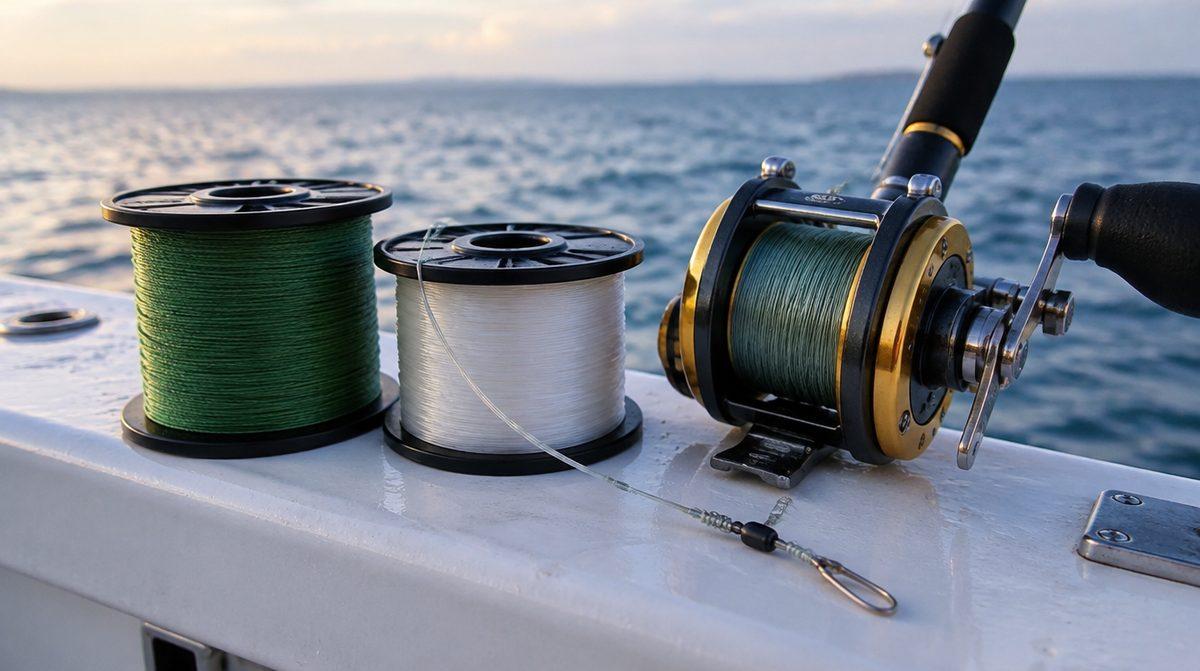
Match line strength to the fish, the structure, and the water. Heavier line around rocks, wrecks, and big fish buys you the power to pull hard and turn a fish before it reaches cover. Lighter line in clear, open water draws more bites and casts farther. The spools in this collection run from light inshore tests up to heavy offshore braid, so build around the heaviest fish you realistically expect, not the one in your daydreams.
Lead Core for Trolling Depth
Lead core is a specialty line with a soft metal center inside a woven sheath, built to take trolled baits down without downriggers or heavy inline weights. Metered versions change color at regular intervals, so once a bait gets bit you can note how many colors were out and put it right back in the same zone. It is a niche tool, but for trolling to fish suspended well below the surface, it is a simple and repeatable one.
When to Respool
Line is a wear item, not a lifetime purchase. Mono ages in sunlight, takes coil memory from the spool, and deserves regular replacement on any reel that gets used. Braid lasts far longer, but it frays against structure and fades, so check the working end often and trim back anything rough. Fluorocarbon leaders collect nicks from teeth, gill plates, and bottom contact: run your fingers down the leader after every fish and retie at the first roughness you feel.
Mistakes to Avoid
- Spooling braid straight onto a bare spool so the whole pack slips and spins. Lay down a short mono backing or a wrap of tape first.
- Fishing a leader two sizes too light because it held last time.
- Leaving the same mono on a reel season after season because it still looks shiny.
- Overfilling the spool until wind knots eat the first cast of the day.
- Trusting a braid knot you have never practiced at the kitchen table.
From the Water
Strip and replace the first 20 to 30 feet of mono every few trips. That's where nicks, sun damage, and twist pile up. The working end takes nearly all the abuse while the rest of the spool stays fresh, so trimming it back costs you almost nothing and quietly prevents the heartbreak break-offs. Make it a ritual while the boat drips dry on the trailer.
Where to Get It
Everything in this guide is stocked at Boat Supplies Direct, the Nautical Network marine parts store. Orders ship free all year with Dock Pass, the $49 a year shipping pass.
In stock as this guide goes up: - Sufix 832 Advanced Superline Braid, 30 lb, Coastal Camo, 600 yds - Sufix Advance Monofilament, 20 lb, Low-Vis Green, 330 yds - Sufix Performance Lead Core, 12 lb, 10-Color Metered, 200 yds
Browse the full range: - Shop lines and leaders - Read the full buying guide, including FAQs
More from the Wire
 Buying Guides
November 10, 2026
Boarding Ladders: Getting Back Aboard Safely From the Water
The hardest part of any swim is the last three feet. How to size a boarding ladder so you can actually climb it, plus mounts, materials, and the solo-swimmer test.
Read more Buying Guides
October 19, 2026
Trolling Motors Explained: Thrust, Shaft Length, and Holding Your Spot
Thrust, shaft length, and voltage are three numbers that decide whether you hold the spot or drift off it. Here is how to get all three right the first time.
Read more Buying Guides
October 19, 2026
Engine Controls: The Throttle and Shift That Command Your Boat
That mushy shift lever is trying to tell you something. How to match a control to your engine, pick single or dual lever, and measure cables right the first time.
Read more