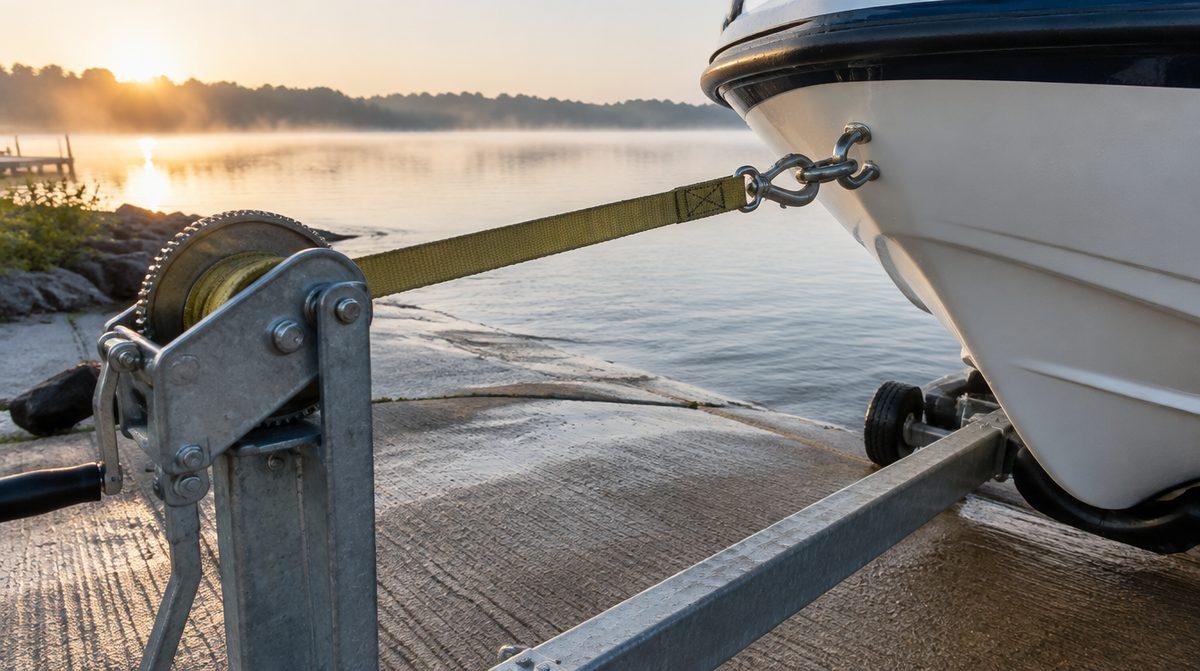
Trailer Winches: Loading Without the Struggle
Your arms are the wrong tool for dragging a boat up a ramp. How to size a trailer winch, when two speeds beat one, and when to just go electric.
Cranking a heavy boat onto a trailer shouldn't be a workout, and it definitely shouldn't be a gamble. The right winch makes loading quick, controlled, and safe, even solo, even on a lousy ramp. Here's how to pick one that matches your boat instead of fighting it.
How a Trailer Winch Actually Works
A winch is a leverage machine. The handle is one lever, the gears between the handle and the drum are another, and together they multiply your effort into pulling force at the strap. Lower gearing means each crank moves less strap but pulls harder; higher gearing moves the boat quickly when the pulling is easy. That's the whole appeal of a two-speed: a fast gear for skating the boat across the water and a low gear for grinding it up the last few feet of bunk. The ratchet pawl holds the drum between cranks, so you can rest without the boat sliding back down.
Pulling Capacity: A Worked Example
A winch should be rated above your loaded boat weight, with headroom for pulling up a ramp against gravity. Heavier boats need more pulling power or a two-speed winch.
Run the numbers on your own rig. Say your boat, motor, fuel, and gear add up to about 2,000 pounds. On a good day, with the trailer deep enough and the boat floating most of the way on, the strap only sees a fraction of that. But on a steep ramp, in shallow water, with the hull grounding on the bunks early, the load on the strap climbs fast. A winch rated comfortably above that 2,000 pounds handles the bad day; a winch sized for the good day leaves you cranking with both hands and a prayer. When in doubt, buy the next rating up or step up to two speeds.
Manual, Two-Speed, or Electric
- Manual: hand-cranked, affordable, fine for lighter boats.
- Two-speed manual: low gear for the hard part, high gear for speed.
- Electric: push-button, best for heavy boats or frequent solo launching.
Electric winches earn their keep when the boat is heavy or when you launch alone a lot. Plan the installation like any other DC circuit: wire gauge sized for the run to the tow vehicle battery, a circuit breaker, and clean, protected connections. And keep the emergency hand crank where you can actually find it, because batteries pick their moments.
Strap vs. Cable
Strap is safer and easier on hands than steel cable and does not develop dangerous frays. Replace a worn strap before it fails. Steel cable develops broken strands that slice hands and gloves, and it stores more snap-back energy under load. Webbing shows its wear honestly: fuzzy edges, cut spots, UV fade, chewed stitching at the hook. When you see any of those, a replacement strap is cheap and a failure at the ramp is not.
Mounting and Setup
The winch stand should put the strap in line with the bow eye, pulling level or slightly upward as the boat comes home to the bow stop. A strap pulling sharply downward tries to drive the bow under the stop; a strap pulling from too high lifts the bow off the bunks. Bolt the winch down with the hardware the manufacturer specifies, make sure the stand doesn't flex under load, and set the bow stop so the boat lands in the same spot every time. Loading gets dramatically easier when the geometry does the work.
Maintenance and Lifespan
Grease the gear teeth and drum shaft now and then, check that the ratchet pawl snaps in crisply, and rinse everything after a saltwater weekend. Inspect the strap end to end a few times a year, especially where it wraps the drum and at the hook stitching, and let it dry before it sits. A winch lives outdoors on a trailer full time, and a little grease plus an occasional once-over buys years.
Signs It Needs Replacing
A pawl that slips under load is disqualifying today, not eventually. The same goes for a bent frame, chipped gear teeth, a drum that wobbles on its shaft, or corrosion that has moved past surface rust into flaking metal. A winch is holding your boat at the top of a wet concrete slope; retire a suspect one without ceremony.
Mistakes to Avoid
- Treating the winch as a tie-down. The winch positions the boat; the bow safety chain and proper transom straps hold it on the road. Our trailer tie-down guide covers that half of the job.
- Sizing for the calm-day launch instead of the steep-ramp, low-water day.
- Extending the handle with a pipe for extra leverage. If you need a cheater bar, you need a bigger winch.
- Letting the strap pile up on one side of the drum until it jams against the frame.
From the Water
Stand to the side of the winch, never directly behind the strap. If something lets go under load, it snaps back toward the winch. A loaded strap stores real energy, and hooks, pawls, and bow eyes fail without warning. Make standing clear a habit for passengers and kids too, since they tend to gather right behind you while you crank.
Where to Get It
Everything in this guide is stocked at Boat Supplies Direct, the Nautical Network marine parts store. Orders ship free all year with Dock Pass, the $49 a year shipping pass.
In stock as this guide goes up: - Load Rite Single-Speed Trailer Winch, 1100 lb with 20 Foot Strap: right-sized for jon boats, dinghies, and personal watercraft. - Load Rite Two-Speed Trailer Winch, 3200 lb with 25 Foot Heavy Duty Strap: low gear for steep ramps, high gear for everything else. - Powerwinch 912 Trailer Winch: push-button electric loading for heavier boats and solo launchers.
Browse the full range: - Shop trailer winches - Read the full buying guide, including FAQs
More from the Wire
 Buying Guides
November 6, 2026
Marine First Aid Kits: Ready When Help Is Hours Away
Offshore, the nearest clinic is measured in hours. How to size a first aid kit to your crew and range, and the one tool fishing boats always forget.
Read more Buying Guides
October 19, 2026
Trailer Maintenance: Keep Your Boat Off the Side of the Highway
Your boat logs more miles on asphalt than on water, and the trailer only gets noticed when it quits. Bearings, straps, bunks, and lights: how to keep all four from ending your day on the shoulder.
Read more Buying Guides
October 19, 2026
Galvanic Isolators: Stop the Dock From Eating Your Boat
If your anodes vanish at the marina but last on the mooring, the dock is the suspect. What a galvanic isolator actually does, and how to size one without giving up your safety ground.
Read more