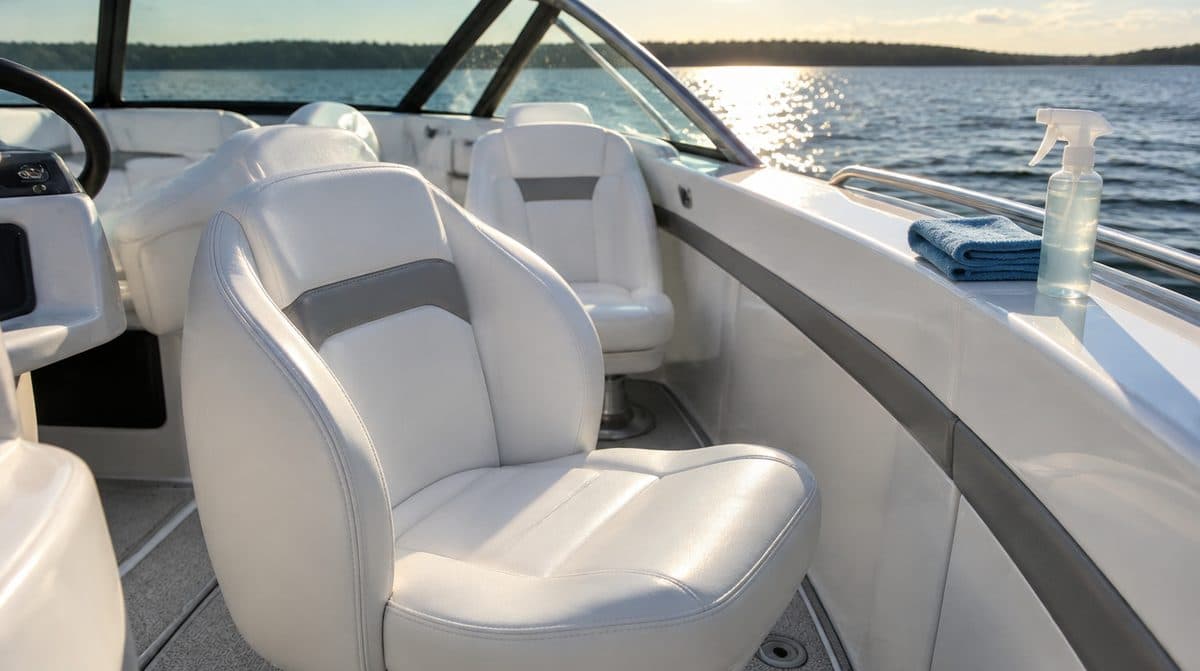
Marine Vinyl Care: Seats That Don't Crack or Mildew
Sunscreen is quietly eating your boat seats. The cleaner, the protectant, and the five-minute routine that keeps marine vinyl from cracking.
Sun, salt, and sunscreen are brutal on boat upholstery. The seats are usually the first thing on a boat to look old, and almost always the easiest thing to keep looking new. Simple care, done consistently, keeps marine vinyl soft, bright, and crack-free for years. Neglect it for a couple of seasons and you're shopping for new cushions.
What Actually Kills Marine Vinyl
Marine vinyl is tougher than the stuff in your car, but it has the same enemies. UV is the big one: sunlight slowly cooks the plasticizers out of the vinyl, the compounds that keep it flexible, and once they're gone the surface stiffens and cracks. Nothing glues a cracked seat back together.
The second killer is chemistry you bring aboard yourself. Sunscreen, bug spray, and body oils sit on the surface and slowly break it down, and some sunscreen ingredients leave yellow or orange stains that never fully come out. The third is biology: mildew feeds on the dirt, salt, and skin oils sitting on and in the seams, not on the vinyl itself. A clean seat gives mildew nothing to eat.
Clean, Then Protect
- Marine vinyl cleaner: lifts dirt, sunscreen, and grime without drying the vinyl.
- Vinyl protectant: adds UV protection and keeps the vinyl supple so it does not crack.
Those two products are the whole system, and the order is the point. Cleaning without protecting leaves the vinyl bare to the sun. Protecting without cleaning seals the grime in. Do both and the seats stay ahead of the damage.
Avoid harsh household cleaners and bleach, which dry out and crack marine vinyl. Bleach deserves special mention because it works so convincingly: the mildew vanishes, the seat looks great, and six months later the stitching lets go and the surface starts checking like old paint. Degreasers and magic-eraser style pads do similar quiet damage by stripping the topcoat. If a product doesn't say it's safe for marine vinyl, assume it isn't.
The Mildew Problem
For mildew stains, use a marine vinyl mildew remover made for the job, then protect. These are formulated to kill the growth and lift the stain without the collateral damage of chlorine bleach. Give the product time to dwell, agitate gently with a soft brush, and repeat rather than scrubbing harder.
Keeping seats clean and protected prevents mildew from taking hold in the first place, and so does airflow. Mildew loves a damp, closed boat. Prop cushions up on edge when you leave, crack the cover vents, and don't snap a cover down over wet seats. If mildew keeps winning the rematch, it's often growing in the foam or backing underneath, which means moisture is getting in through a failed seam.
Stitching, Seams, and the Spots Everyone Misses
The flat panels are easy. The failures start in the details: the stitching, the piping, the pleats, and the shaded undersides where moisture lingers. Work cleaner into the seams with a soft brush, because that's where sunscreen and grime collect and where mildew gets its first foothold. Hit the hidden surfaces too, including seat backs, hinge areas, and the underside of flip-up bolsters. And check the snaps and hardware while you're there; a corroded snap tears vinyl when you force it.
A Routine That Actually Works
Wipe down after use, clean regularly, and protect every few weeks in strong sun. Consistency beats occasional heavy scrubbing. In practice that looks like this: a freshwater wipe-down at the end of each day on the water, a proper clean with vinyl cleaner every few weeks, and a coat of protectant after each cleaning during the high-sun months. The wipe-down takes five minutes with a bucket of fresh water and a soft towel, and it removes the salt, sunscreen, and grime before any of it has time to bond.
Shade is the other half of the routine. Vinyl that lives under a bimini or a cover ages at a fraction of the rate of vinyl that bakes all day, and our bimini top and boat cover guide covers that side of the equation.
When Vinyl Is Past Saving
Know the difference between dirty and dead. Stains, dullness, and surface mildew are recoverable. Cracking, hard brittle panels, and vinyl that's lost its stretch are not; once the plasticizers are gone, no conditioner brings them back. Small tears and seam failures can be repaired or re-stitched by an upholstery shop, and catching them early keeps water out of the foam underneath. If the foam is already waterlogged and sour, budget for new cushions and then protect them properly from day one, which is a lot cheaper than learning the lesson twice.
From the Water
Wipe sunscreen off the seats at the end of the day. Many sunscreen ingredients stain and break down marine vinyl. The spray-on stuff is the worst offender because it overshoots the person and mists everything downwind, so if your crew uses it, assume every seat caught some.
Where to Get It
Everything in this guide is stocked at Boat Supplies Direct, the Nautical Network marine parts store.
In stock as this guide goes up: - Gtechniq Marine MF2 Zero Scratch Microfiber Drying Towel for the end-of-day freshwater wipe-down that does most of the protecting - Shurhold Pad Cleaning & Utility Brush for working cleaner into seams, piping, and stitching without tearing anything up
Browse the full range: - Shop cleaning and care - Read the full buying guide, including FAQs
More from the Wire
 Buying Guides
October 18, 2026
Starting vs. Deep Cycle: The Battery Mistake That Strands Boaters
Starting, deep cycle, or dual purpose, and flooded, AGM, or lithium. How to pick the battery type that will not leave you stranded.
Read more Buying Guides
October 18, 2026
The Onboard Charger: Cheap Insurance for Expensive Batteries
Batteries die young when they sit half-charged. How to size an onboard charger by amps, banks, and chemistry.
Read more Buying Guides
October 18, 2026
Battery Switches and Isolators: Never Get Stranded by a Dead Battery
The switch and isolator setup that keeps your starting battery ready while the house bank runs your gear.
Read more