Marine Coolers: Ice That Lasts and Drinks That Stay Cold
A boat is the worst place on earth to keep ice. How to size a cooler by trip, when rotomolded is worth the weight, and why electric coolers skip the ice run entirely.
Warm drinks and spoiled bait ruin a day fast. A good cooler, sized right, keeps everything cold from launch to sunset, and the difference between the cooler that does and the cooler that doesn't comes down to a few choices you make before you ever buy ice.
A boat is honestly the worst place on earth to keep ice. Full sun, radiant heat off the water and deck, a lid that gets opened forty times a day. The cooler has to fight all of it. Here's how to pick one that wins.
Size by Trip
- Half day / couple: 20 to 45 quart
- Full day / family: 45 to 75 quart
- Overnight or big catch: 75 quart and up
Remember ice takes room, so size up from what you think you need. A cooler packed properly is a good portion ice, and the drinks and food fit in what's left. The classic mistake is buying a cooler that holds exactly your food and drinks, then discovering on the dock that the ice has nowhere to go.
Size has a tradeoff on a boat, though: a big cooler full of ice and drinks is genuinely heavy, and it takes up deck real estate. If it won't fit through the transom door or under the leaning post, the biggest cooler in the catalog is the wrong cooler for you. Measure your spot before you shop.
Why Rotomolded Coolers Hold Ice for Days
Rotomolded coolers with thick insulation and gasket seals hold ice for days. Standard coolers are lighter and cheaper but hold ice for hours to a day. The difference isn't marketing, it's construction.
Rotomolding builds the cooler as one continuous molded shell, then fills the cavity with thick foam insulation. There are no thin spots, no seams for heat to sneak through, and the lid closes on a rubber gasket with latches that pull it tight. Heat's only way in is through inches of foam, so the ice just sits there, smug, for days.
A standard blow molded cooler has thinner walls, a looser lid, and little or no gasket. For an afternoon at the sandbar with the lid mostly shut, that's genuinely fine, and you'll appreciate carrying half the weight. Match the cooler to the trips you actually take, not the expedition you imagine taking.
Electric Coolers: Skip the Ice Entirely
There's a third option worth knowing about: 12 volt electric coolers that refrigerate instead of insulate. No ice at all, which means no melt water, no soggy sandwiches, and the full interior volume goes to food and drinks. Set the temperature and it holds, all weekend if you keep it powered.
The tradeoffs are cost and power. An electric cooler draws from your boat's battery bank, so it belongs on boats with house power to spare, and it's worth understanding your battery capacity before you commit; our marine battery guide walks through exactly that. For overnighting, long weekends, or anyone tired of the ice run before every trip, an electric cooler is a genuine upgrade.
Features That Matter on a Boat
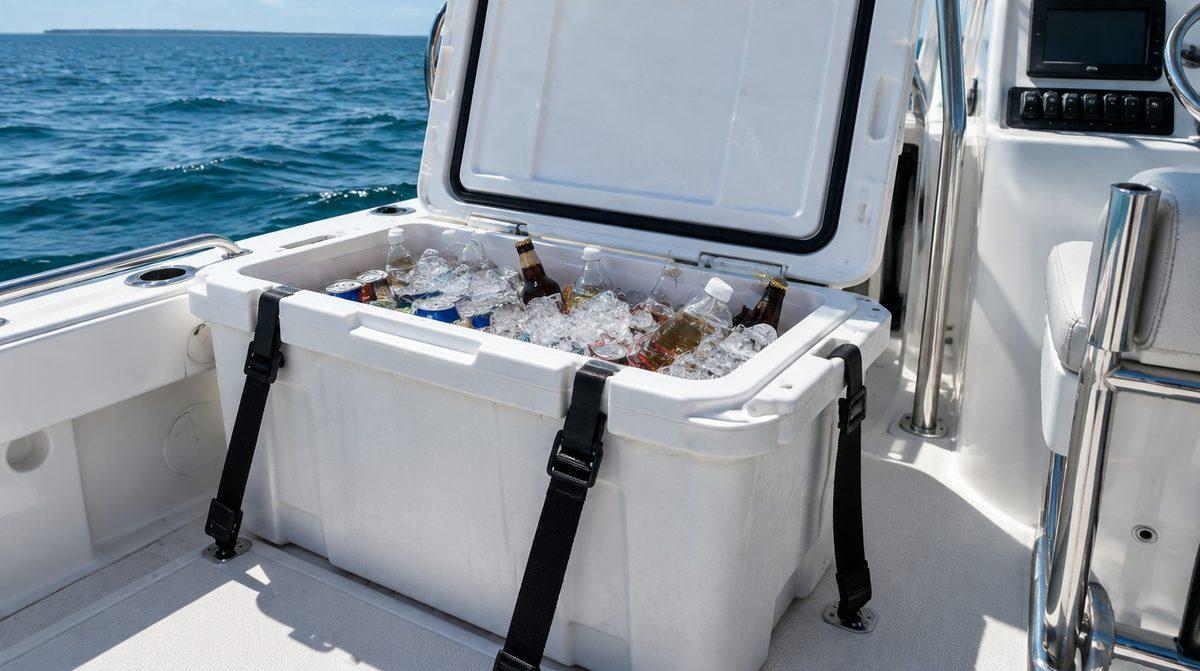
Non-slip feet, tie-down points, dry storage, and a seat cushion option. Some double as a casting platform or leaning spot. On a moving boat these aren't extras, they're the difference between a cooler and a loose projectile.
Non-slip feet keep the cooler planted when you cross a wake. Molded tie-down slots let you strap it down properly, which you should, because a loaded cooler sliding across the cockpit in a beam sea is a shin injury with a handle. A drain plug you can reach without flipping the cooler matters more than it sounds. And if the cooler will live in front of the helm or along a gunwale, a cushion kit turns it into honest seating.
For anglers, a dedicated insulated fish bag deserves a mention: it swallows a big catch that would never fit in a hard cooler, then rolls up flat when you're done.
Keeping It Cold Longer
Technique matters as much as hardware. Pre-chill everything going in, because room temperature drinks will chew through ice just getting down to temperature. Use block ice or frozen water jugs for the long haul and cubes for fast chilling, and keep melt water in the cooler, since cold water preserves ice better than warm air does. Open the lid like it costs you money, because it does. Park the cooler in shade when you can, and throw a wet towel over it when you can't.
Maintenance and Lifespan
A good cooler outlives boats if you treat it decently. Rinse it with fresh water after every salt trip, latches and hinges included. Wash the inside with mild soap before storage so it doesn't ferment over the winter, and store it with the lid cracked open so the gasket doesn't take a set and the interior can't grow anything ambitious. Check the gasket each season: if it's cracked or compressed flat, ice retention quietly falls off a cliff, and a replacement gasket is cheap insurance.
From the Water
Pre-chill the cooler with a bag of ice the night before. Starting cold makes the next day's ice last far longer. A warm cooler burns its first bag of ice just cooling down its own insulation, so sacrifice a cheap bag overnight and let the good ice spend its day working on the drinks instead.
Where to Get It
Everything in this guide is stocked at Boat Supplies Direct, the Nautical Network marine parts store. Orders ship free all year with Dock Pass, the $49 a year shipping pass.
In stock as this guide goes up: - Dometic CFX5 25 Ice-Free 25L Electric Cooler, Black - Kuuma 240 Quart Fish Bag
Browse the full range: - Shop coolers - Read the full buying guide, including FAQs
More from the Wire
 Buying Guides
November 12, 2026
Trailer Winches: Loading Without the Struggle
Your arms are the wrong tool for dragging a boat up a ramp. How to size a trailer winch, when two speeds beat one, and when to just go electric.
Read more Buying Guides
November 20, 2026
Gifts for the Boat Chef and Sandbar Host
Galley gear, coolers, and grills for the person who feeds the crew: coffee at anchor, a marine grill, and stainless cutlery that survives the salt.
Read more Buying Guides
November 13, 2026
Trailer Tie-Downs: Keep Your Boat on the Trailer at Highway Speed
The winch strap is not a tie-down. What actually keeps a boat planted on its trailer at highway speed, front and rear, and when to recheck it.
Read more