Why Your VHF Range Is Disappointing (It's Probably the Antenna)
The radio was never the problem. Height, dB gain, and the corroded connector quietly eating your VHF range.
Boaters spend hours picking a radio and then bolt on whatever antenna came in the box. Your range lives and dies by that antenna. The radio is the easy half of the system: modern fixed-mounts all transmit clean, full-power signals. The antenna is where that power either becomes range or quietly leaks away through cheap cable, corroded connectors, and a mount that's a foot lower than it could be.
Height Beats Watts
VHF is line of sight, so a taller antenna reaches farther, period. A tall antenna on a sailboat masthead can outrange a powerful radio with a short antenna. The signal travels in a straight line, and the horizon is the wall it runs into. Raising the antenna pushes that wall farther away, which is why the single most effective upgrade for range is almost never a different radio. It's getting the antenna higher. Before you shop gain numbers, walk your boat and figure out the highest practical spot you can mount and reach for service: a hardtop, a radar arch, the masthead.
dB Gain, Translated
- 3 dB: shorter, good for sailboats and small boats that heel or rock (wider signal pattern).
- 6 dB: taller, more range for powerboats that stay relatively level.
- 9 dB: longest range, best for large, stable vessels.
Higher gain focuses the signal flatter, which is great on a steady boat but can shoot over the horizon if the boat rocks. Picture the signal as a donut around the antenna. A low-gain antenna makes a plump donut: less reach, but the signal stays usable as the boat heels and pitches. A high-gain antenna squashes that donut into a wide pancake: more reach straight out, but tilt the boat and the pancake points at the sky on one side and the water on the other. That's why sailboats, which live life leaned over, run low gain at the masthead, and why a big, stable sportfisher can cash in on high gain. Match the gain to how your boat moves, not to the biggest number on the shelf.
The Antenna Itself
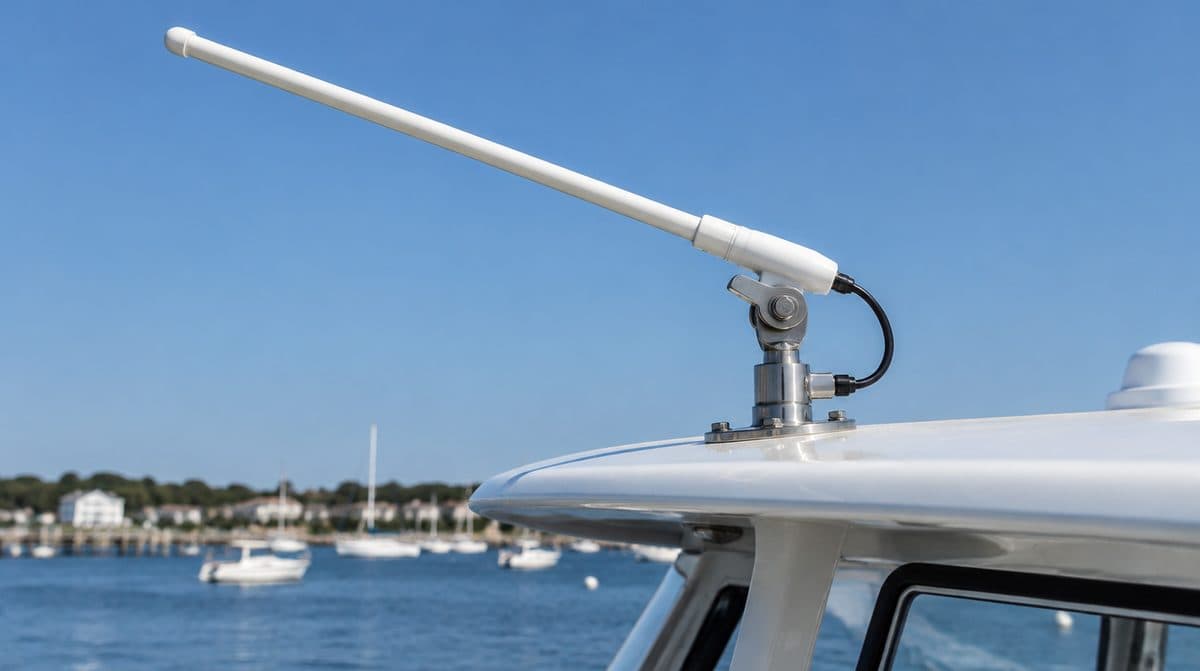
Inside that fiberglass whip, construction quality varies a lot. Better antennas use brass or copper elements and solid ferrules; bargain ones use coaxial cable as the element and plastic fittings that fatigue in the sun. The antenna lives in the worst environment on the boat, whipping back and forth through salt spray with every wave, so this is a place where build quality is not an abstraction. A cracked ferrule or a fatigued element turns into the intermittent, maddening kind of failure that only shows up when the boat is pounding.
Mounting and Cable
Mount as high as practical and use quality coax with good connectors. Cheap cable and corroded connectors kill range. Coax loses signal over distance, and the loss gets worse with thin, bargain cable, so a long run to a masthead or tower deserves thicker, low-loss coax. Keep the run as short and direct as the layout allows, avoid kinks and tight bends, and don't coil twenty spare feet behind the panel. If you have to shorten or extend a run, do it with proper connectors, soldered carefully, and seal every junction with adhesive heat shrink or self-amalgamating tape. Each connector in the line is a small toll booth for your signal and a future corrosion site, so use as few as you can.
A ratchet mount lets you fold the antenna down for bridges, trailering, and covers. Buy a metal one. The nylon versions get brittle in the sun and eventually let your antenna go for a swim at speed.
Signs Your Antenna Is the Problem
The pattern is predictable: people hear you only when you're close, reception gets hissy, transmissions work on calm days and fail when the boat is bouncing, or the problem comes and goes when someone wiggles the cable. Any of those point at the antenna side of the system rather than the radio. Before you replace anything, open the connector at the radio and at any junction, and look for green or white corrosion, loose braid, or water staining. Water wicks down inside coax from the smallest unsealed opening at the top, and once the cable is soaked inside, no connector cleaning will save it. Replace the run.
Testing Without Guesswork
The honest test is a radio check with a station at a known, meaningful distance, on the water, not across the marina. Anyone within a mile will tell you a half-broken antenna sounds fine. If you want to go a step further, a basic SWR meter spliced inline will tell you how much of your transmit power is actually leaving the antenna versus bouncing back down the cable, and it turns an afternoon of guessing into one measurement. If your radio itself is the older problem, or lacks DSC, start with our VHF radio guide and build the system as a pair.
From the Water
Check the connector at the base of your antenna every season. A little green corrosion there can quietly cut your range in half. While you're at it, grab the antenna and give it a gentle shake: a mount that's worked itself loose telegraphs through the whole whip, and five minutes with a wrench now beats fishing an antenna out of your wake later.
Where to Get It Everything in this guide is stocked at Boat Supplies Direct, the Nautical Network marine parts store.
In stock as this guide goes up: - Shop the full VHF collection, radios and antenna setups together
Browse the full range: - Shop VHF - Read the full buying guide, including FAQs
More from the Wire
 Buying Guides
October 18, 2026
Starting vs. Deep Cycle: The Battery Mistake That Strands Boaters
Starting, deep cycle, or dual purpose, and flooded, AGM, or lithium. How to pick the battery type that will not leave you stranded.
Read more Buying Guides
October 18, 2026
The Onboard Charger: Cheap Insurance for Expensive Batteries
Batteries die young when they sit half-charged. How to size an onboard charger by amps, banks, and chemistry.
Read more Buying Guides
October 18, 2026
Battery Switches and Isolators: Never Get Stranded by a Dead Battery
The switch and isolator setup that keeps your starting battery ready while the house bank runs your gear.
Read more