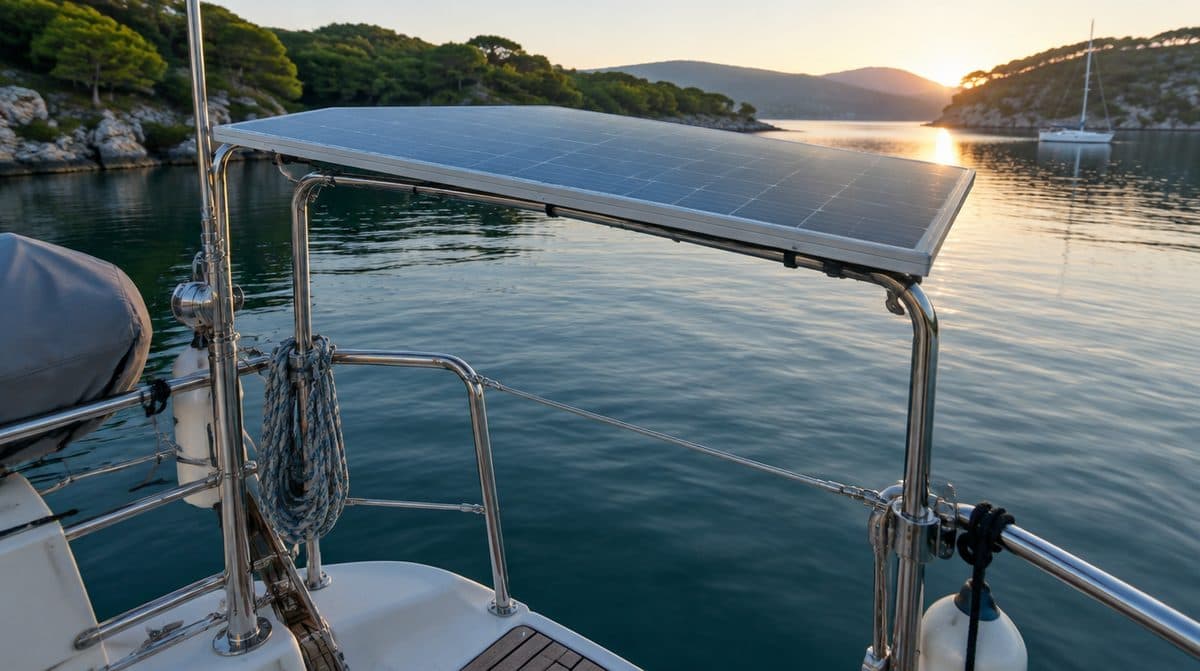
Marine Solar: Free Power While You Sit at Anchor
Free power at anchor: sizing panels in watts and pairing them with the right MPPT charge controller.
Every hour your boat sits in the sun is free energy you could be capturing. Solar keeps batteries topped and stretches your time off the grid, and it does it silently, with no fuel, no fumes, and nothing to start.
How solar works aboard The chain is simple. The panel turns sunlight into DC power, the charge controller conditions that power into a safe charging voltage, and the battery stores it for the fridge, the pumps, and the electronics.
The payoff shows up in two places. At anchor, solar offsets what the house loads are drawing, so you swing on the hook for days instead of hours before the batteries complain. And on the mooring or in the slip, solar keeps the bank topped between trips, which solves a classic battery killer: sitting partially discharged for weeks. Even a modest panel earns its keep as a maintainer.
Watts you need Estimate your daily amp-hour use, then size panels to replace it. More electronics, a fridge, and longer stays mean more watts.
Here is how to run the estimate. List what runs on a typical day on the hook, and for each item multiply its draw in amps by the hours it actually runs. The fridge cycling through the afternoon, the stereo, the lights after dark, the phone chargers, the pumps. Add it up and you have your daily amp-hours.
Now work an example. Say your tally comes to 60 amp-hours a day on a 12 volt system. Multiply amp-hours by voltage and that is 720 watt-hours of energy to put back. If you assume something like five hours of honest, usable sun in a day, the arithmetic points to roughly 150 watts of panel just to break even. Then remember the catch: real output is well below the panel rating because of sun angle, clouds, and heat. So you round up, not down, and treat the number on the box as a best-case figure.
Panel types - Rigid: most efficient and durable, needs flat mounting space. - Flexible/semi-flexible: conform to curved surfaces and biminis, lighter but less durable.
Rigid panels are the glass-faced, aluminum-framed workhorses. They tolerate decades of weather, and mounting them with an air gap underneath keeps them cooler, which matters because a hot panel produces less than a cool one. If you have a hardtop, an arch, or davits with flat real estate, rigid is the default answer.
Flexible and semi-flexible panels solve the problem rigid ones cannot: curved deck surfaces, bimini tops, and places where weight up high is the enemy. The trade is lifespan. Glued flat against a hot deck with no airflow, they run hotter and age faster, and they do not love being walked on no matter what the label implies. They are the right call when they are the only panel that fits, not because they are easier.
You need a charge controller - PWM: cheaper, fine for small systems. - MPPT: more efficient, gets more usable power from the panel, worth it for larger systems.
Never connect a panel straight to batteries without a controller.
The reason is that a panel in full sun pushes a higher voltage than the battery wants, and with nothing in between it will happily overcharge the bank and cook it. The controller is the regulator that makes solar safe.
The PWM versus MPPT choice comes down to how the controller handles the gap between panel voltage and battery voltage. A PWM controller simply pulls the panel down to battery voltage and switches the connection on and off, which is simple and cheap but leaves some of the panel's potential on the table. An MPPT controller tracks the panel's most productive operating point and converts the excess voltage into additional charging current, so more of what the panel makes actually lands in the battery. The bigger the array, the more that difference is worth paying for.
Match the controller to the job. Those numbers in model names like the Victron 150/45 tell you the maximum panel input voltage and the maximum charging output in amps, so size the controller for the array you are installing and the one you might add next season. And set the controller for your battery chemistry, because flooded, AGM, and lithium banks each want a different charge profile. If you are also rethinking the bank itself, our marine battery buying guide covers that side of the system.
Mounting and shade Shade is the silent killer of solar output. The cells inside a panel are wired in series, so one shaded cell throttles the whole string. A shadow from a rod holder, an antenna, or the boom across a corner of the panel costs far more output than the shaded area suggests.
So mount panels where the shadows are not: ahead of or outboard of arches, clear of the boom's arc, away from antennas. If you are running more than one panel and shade is unavoidable, wiring panels in parallel keeps a shadow on one panel from dragging down the others.
Wiring realities This is still a marine electrical installation, so the usual rules apply. Use marine-grade tinned wire sized for the run, keep the controller mounted close to the batteries in a dry, ventilated spot, and put a fuse in the wire between the controller and the battery, close to the battery. Cables that pass through the deck need proper deck glands, and every exterior connection wants a drip loop so water follows the wire down and away instead of into the connector.
Maintenance and signs of trouble Solar maintenance is almost embarrassingly light. Rinse the panels with fresh water when you wash the boat, because salt film and bird droppings are just another kind of shade. Check the connections and the deck glands each season for corrosion and chafe.
Then watch the numbers. Controllers with Bluetooth monitoring show you daily harvest history, and that history is your early warning system: when output sags on clear sunny days, go looking for a dirty panel, a new shadow, a corroded connector, or a panel that is aging out.
Mistakes to avoid - No controller, or a controller too small for the array. - Mounting a beautiful panel squarely in the arch's shadow. - Flexible panels glued to a hot deck when there was room for rigid. - Ignoring the battery side of the system. - Never looking at the output again after installation day.
From the Water Keep panels clean and clear of shadows. Even a rod or antenna shadow across part of a panel can slash its output. Walk the deck at midday once and watch where the shadows actually fall, because the layout that looked clean on paper rarely survives the first sunny afternoon.
Where to Get It Everything in this guide is stocked at Boat Supplies Direct, the Nautical Network marine parts store.
In stock as this guide goes up: - Victron SmartSolar MPPT 150/45 charge controller - Victron SmartSolar MPPT 150/60 charge controller - Xantrex 60 amp MPPT charge controller
Browse the full range: - Shop solar panels - Read the full buying guide, including FAQs
More from the Wire
 Buying Guides
October 18, 2026
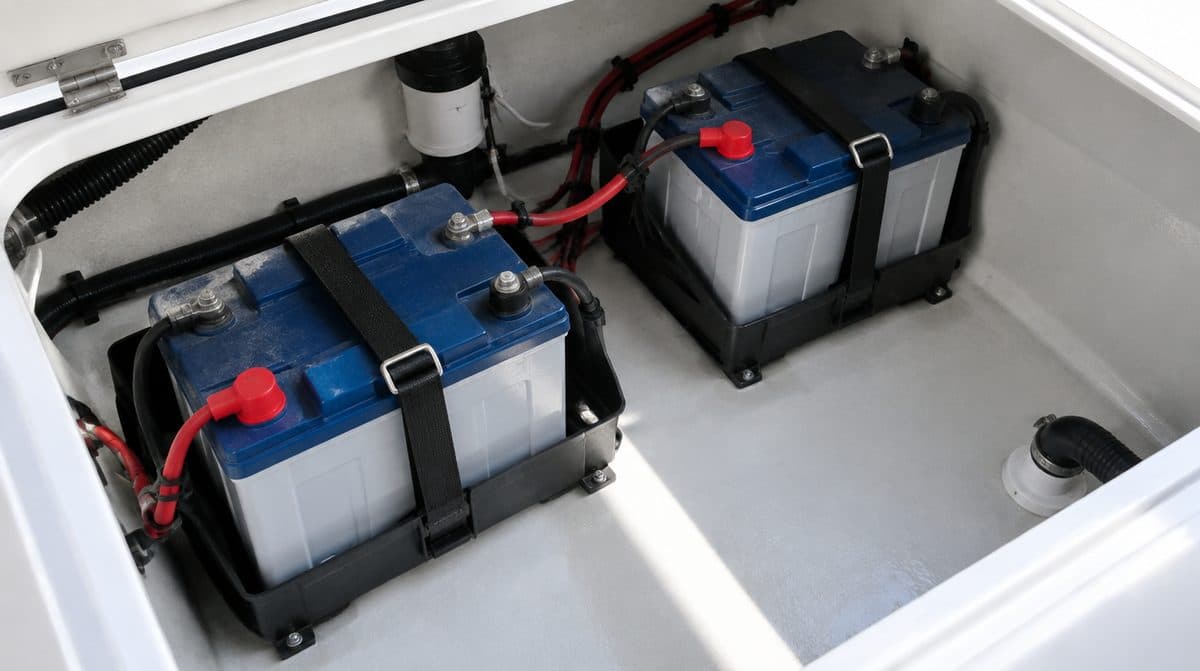
Starting vs. Deep Cycle: The Battery Mistake That Strands Boaters
Starting, deep cycle, or dual purpose, and flooded, AGM, or lithium. How to pick the battery type that will not leave you stranded.
Read more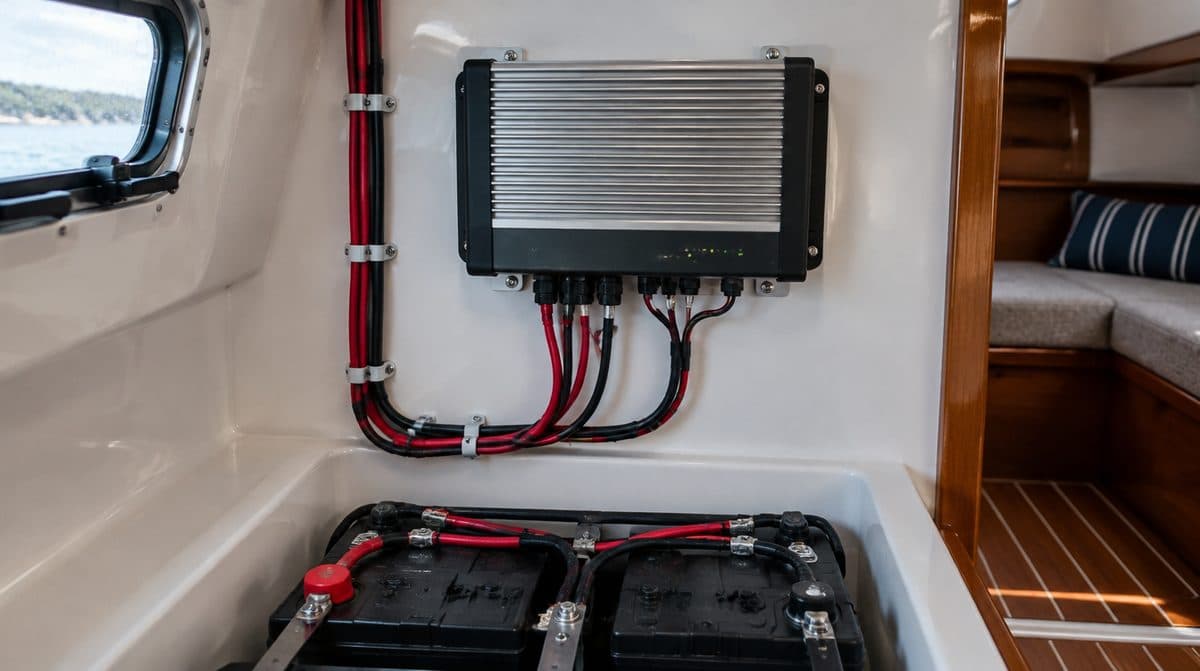 Buying Guides
October 18, 2026
The Onboard Charger: Cheap Insurance for Expensive Batteries
Batteries die young when they sit half-charged. How to size an onboard charger by amps, banks, and chemistry.
Read more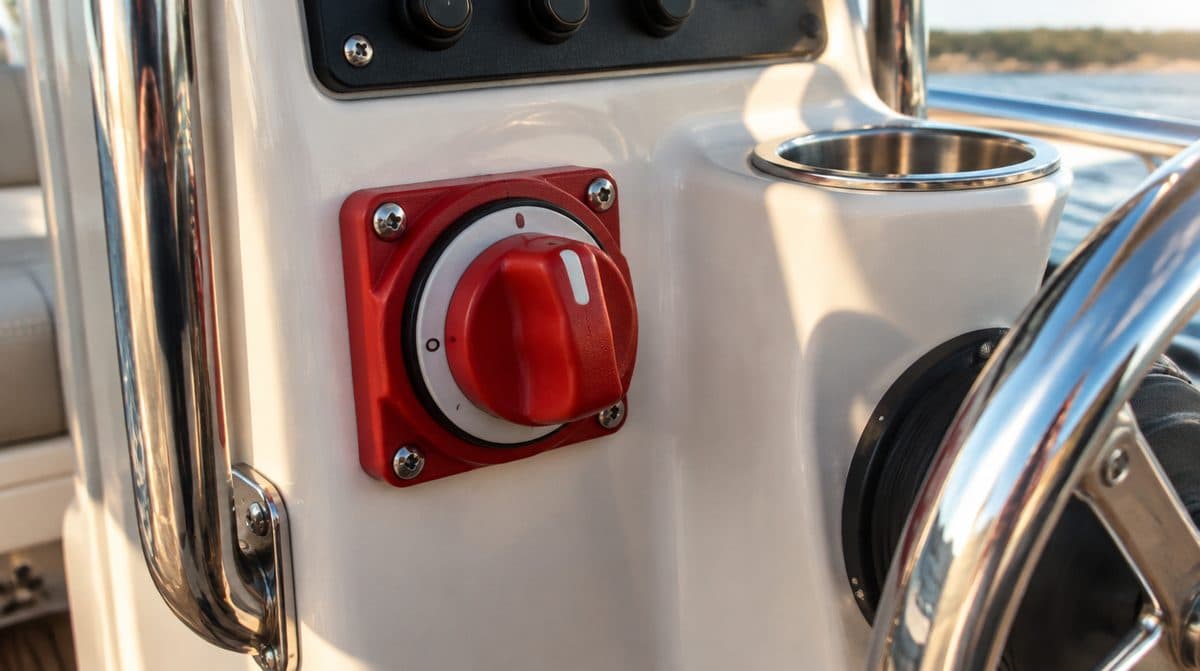 Buying Guides
October 18, 2026
Battery Switches and Isolators: Never Get Stranded by a Dead Battery
The switch and isolator setup that keeps your starting battery ready while the house bank runs your gear.
Read more