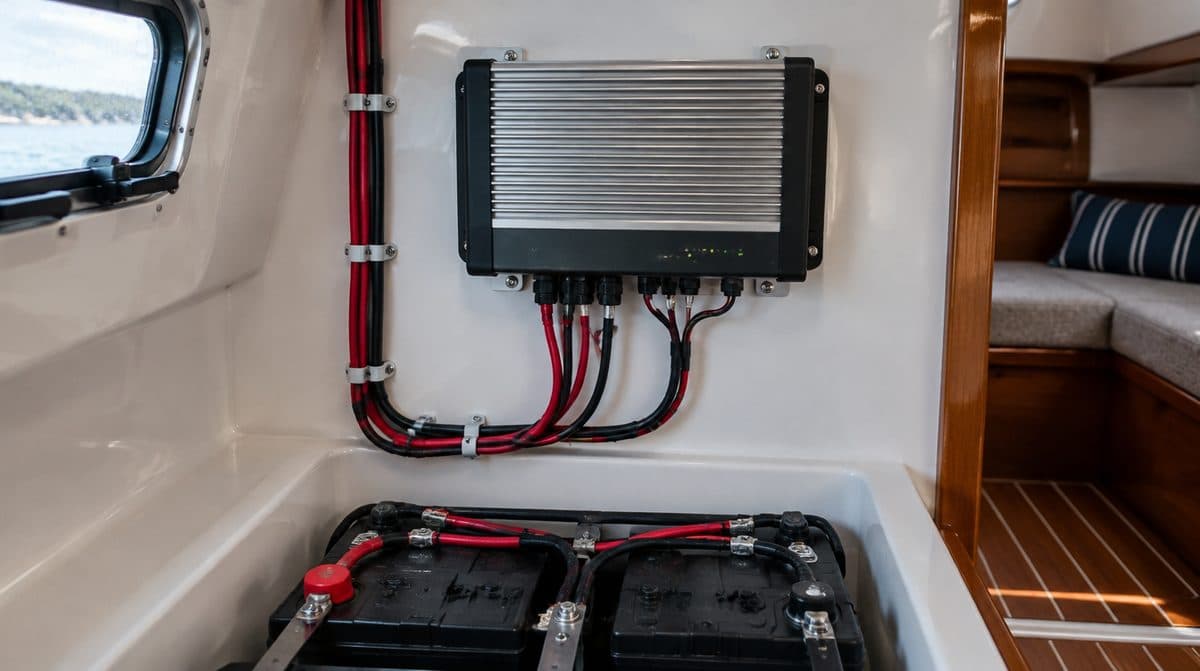
The Onboard Charger: Cheap Insurance for Expensive Batteries
Batteries die young when they sit half-charged. How to size an onboard charger by amps, banks, and chemistry.
Batteries die young when they sit half-charged between trips. An onboard charger fixes that while the boat sits at the dock, quietly doing the one maintenance job that matters most and that almost nobody does by hand. Compared to the cost of replacing a bank of batteries, a good charger is cheap insurance, which is exactly how you should think about it.
Why Half-Charged Kills Batteries
A lead acid battery that sits partially discharged starts growing sulfate crystals on its plates. A little sulfation reverses when you recharge promptly. Leave the battery sitting low for weeks, and those crystals harden into a permanent coating that walls off plate area for good. The battery still looks fine, still reads some voltage, but its capacity quietly shrinks every month. This is the real story behind most batteries that "just went bad" after a couple of seasons. The fix is not a better battery. The fix is never letting a good battery sit low, and that is the entire job description of an onboard charger.
How a Smart Charger Works
Modern marine chargers are multi-stage, which is a fancy way of saying they charge the way a battery actually wants to be charged. First comes a bulk stage, where the charger pushes its full output to bring the bank up quickly. Then an absorption stage, where it holds voltage steady and tapers the current so the battery fills the last portion without overheating or gassing. Finally a float stage, a gentle hold that keeps the battery topped off indefinitely without cooking it. That float stage is why you can leave a quality onboard charger plugged in at the slip without worrying about it. A cheap single-stage charger, by contrast, either undercharges or boils batteries if you forget about it, and everyone forgets about it.
Amps and Bank Count
- Pick total charging amps at roughly 10 percent of your bank's amp-hour capacity for a healthy charge rate.
- Buy a charger with enough independent banks for your number of batteries (2-bank, 3-bank, etc.).
Here is the 10 percent rule worked out. Two deep cycle batteries at 100 amp hours each make a 200 amp-hour bank, which points you to about 20 total charging amps. A boat with one 100 amp-hour trolling battery and a starting battery does fine with a smaller unit, with output split between two banks.
Why not just buy the biggest charger on the shelf? Because charge rate is a balance. Too few amps and the bank never fully recovers between trips, which brings sulfation right back into the picture. Far too many amps for a small flooded bank pushes heat and gassing. The 10 percent guideline keeps you in the comfortable middle, and it is the single most useful number in this whole category.
Bank count matters just as much as amps. Each output on a multi-bank charger is independent, so your starting battery and your trolling batteries each get managed on their own, with no battery stealing charge from another. Count your batteries, and buy at least that many banks.
Match the Chemistry
Your charger must support your battery chemistry (flooded, AGM, or lithium). Charging lithium on the wrong profile damages the pack. The reason is that each chemistry wants different voltages at different stages, and lithium in particular needs a charger that speaks its language rather than a lead acid routine. Most quality chargers have selectable profiles, so this is usually a settings check rather than a dealbreaker, but confirm the profile exists before you buy. If you are not sure what is in your boat now, sort the batteries out first with our marine battery guide, then size the charger to match.
If your bank lives somewhere hot, like a cramped engine compartment, a battery temperature sensor is a worthwhile add. It lets the charger adjust voltage to the battery's actual temperature instead of an assumption, which protects the bank in both summer heat and winter cold.
Onboard vs. Portable
Onboard chargers mount permanently and you just plug in shore power. Portable chargers are cheaper but you handle clips every time. That convenience gap matters more than it sounds. The charger you have to dig out, clip on, and remember is the charger that does not get used by August. The one that works the moment you plug in a shore cord is the one that actually protects your batteries all season. Onboard units are also built for the marine environment: sealed against spray, ignition protected for installation near the batteries, and vibration tested. A garage charger balanced on the gunwale is none of those things.
Installation Realities
Mount the charger on a solid vertical surface in a dry, ventilated spot, close enough to the batteries to keep DC runs short. Chargers shed heat while working, so give the cooling fins room to breathe rather than burying the unit under stowed gear. Use marine-grade tinned wire sized for the run, put each positive output through proper overcurrent protection, and make clean, tight terminations at the battery. None of this is exotic, but it rewards doing it once, correctly. If AC shore power wiring is outside your comfort zone, that is a fair place to bring in a professional, because mistakes on the AC side are the expensive and dangerous kind.
Mistakes to Avoid
- Buying fewer banks than you have batteries, then daisy-chaining outputs and hoping.
- Sizing the charger to the smallest battery instead of the whole bank.
- Setting a flooded profile on AGM or lithium and never checking the settings again.
- Mounting it in a sealed locker where it bakes in its own heat.
- Unplugging the boat for weeks at a time to "save the charger." Float mode exists for exactly this.
From the Water
Plug in every time you're tied up, even for a short stay. Batteries last longest when they're kept topped off, not run down and recharged. Make the shore cord part of your docking routine, right after the lines go on, and the habit takes care of your batteries without another thought.
Where to Get It Everything in this guide is stocked at Boat Supplies Direct, the Nautical Network marine parts store.
In stock as this guide goes up: - ProMariner ProNautic 1210P 10 amp 2-bank charger - Xantrex battery temperature sensor
Browse the full range: - Shop electrical - Read the full buying guide, including FAQs
More from the Wire
 Buying Guides
October 18, 2026
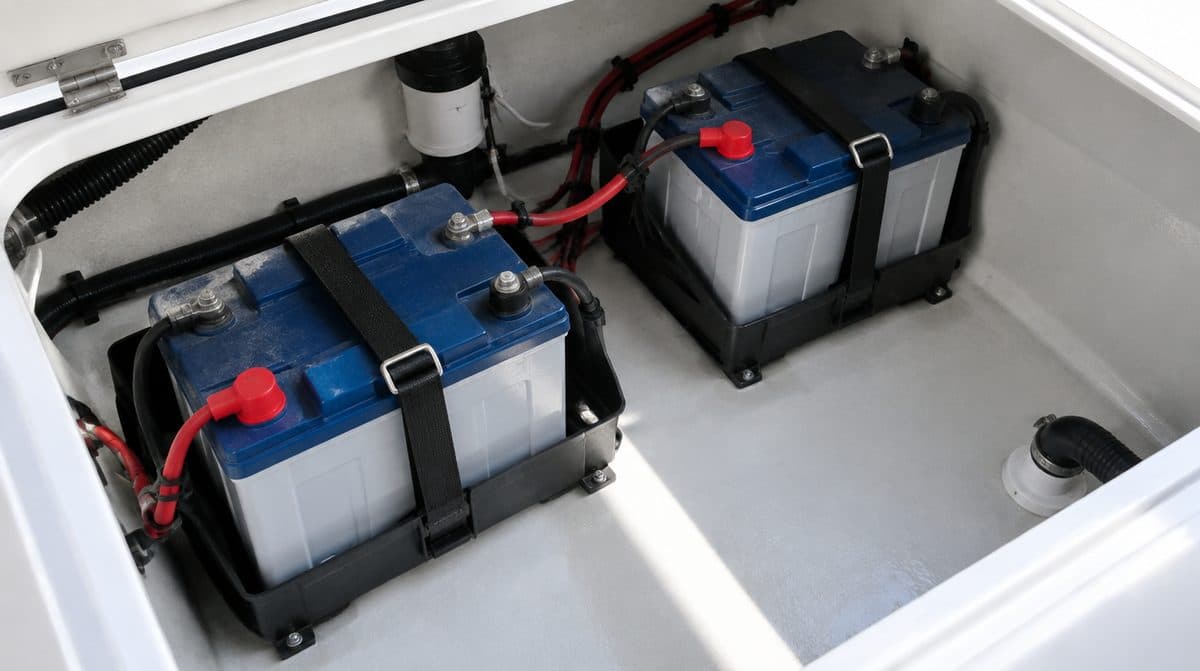
Starting vs. Deep Cycle: The Battery Mistake That Strands Boaters
Starting, deep cycle, or dual purpose, and flooded, AGM, or lithium. How to pick the battery type that will not leave you stranded.
Read more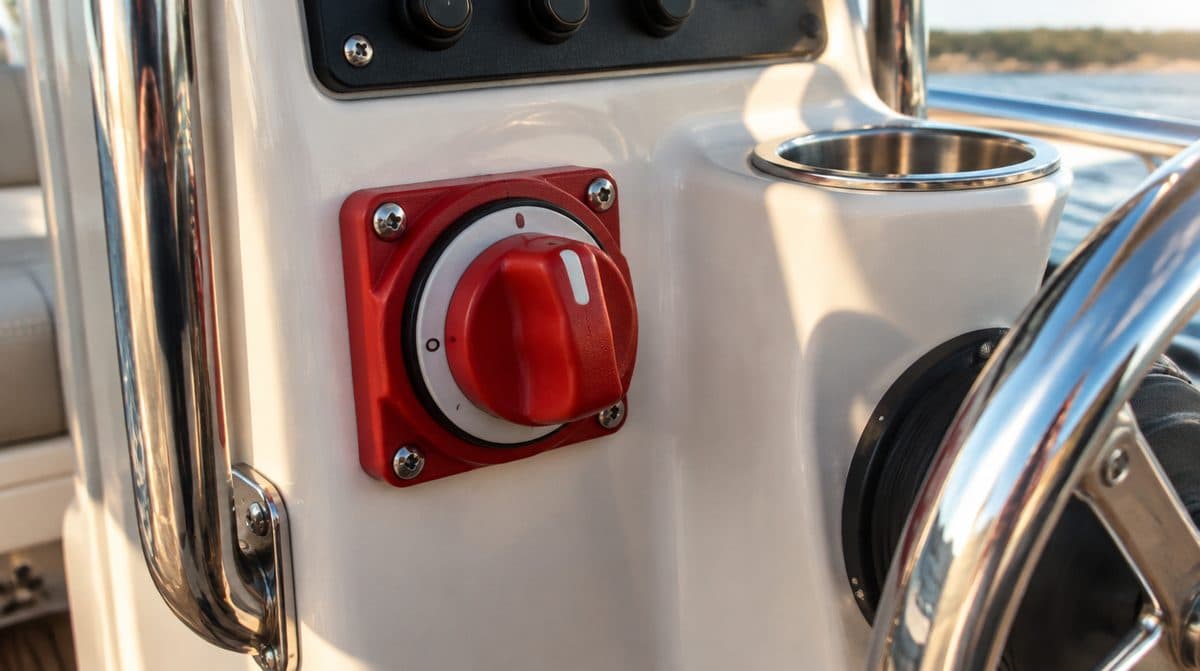 Buying Guides
October 18, 2026
Battery Switches and Isolators: Never Get Stranded by a Dead Battery
The switch and isolator setup that keeps your starting battery ready while the house bank runs your gear.
Read more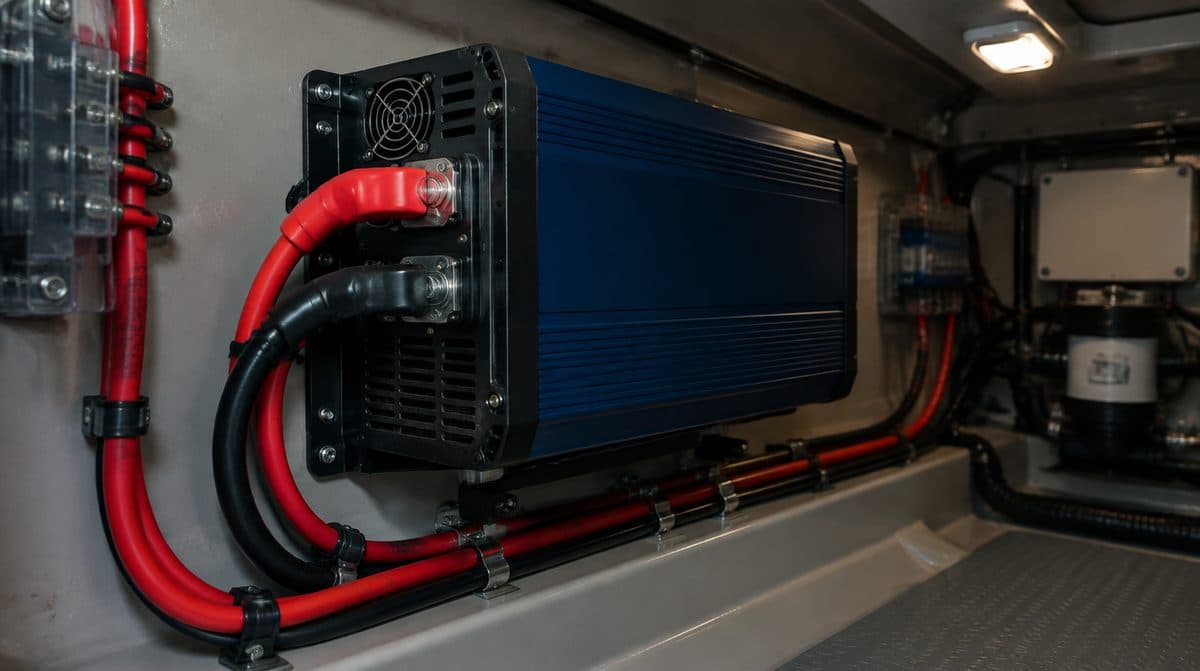 Buying Guides
October 18, 2026
Marine Inverters: Home Power on Battery
Home power on battery: sizing an inverter by watts, choosing pure sine, and wiring it safely.
Read more