Battery Switches and Isolators: Never Get Stranded by a Dead Battery
The switch and isolator setup that keeps your starting battery ready while the house bank runs your gear.
Nothing ends a day on the water like turning the key and hearing a click. Proper battery management makes sure it never happens, and the hardware behind it is simple: a battery switch to control which bank does what, and an isolator or combiner to make sure every bank gets charged without any bank being able to drag the others down. Neither piece is expensive. Both are the kind of gear you install once and quietly rely on for years.
What the Switch Positions Actually Mean
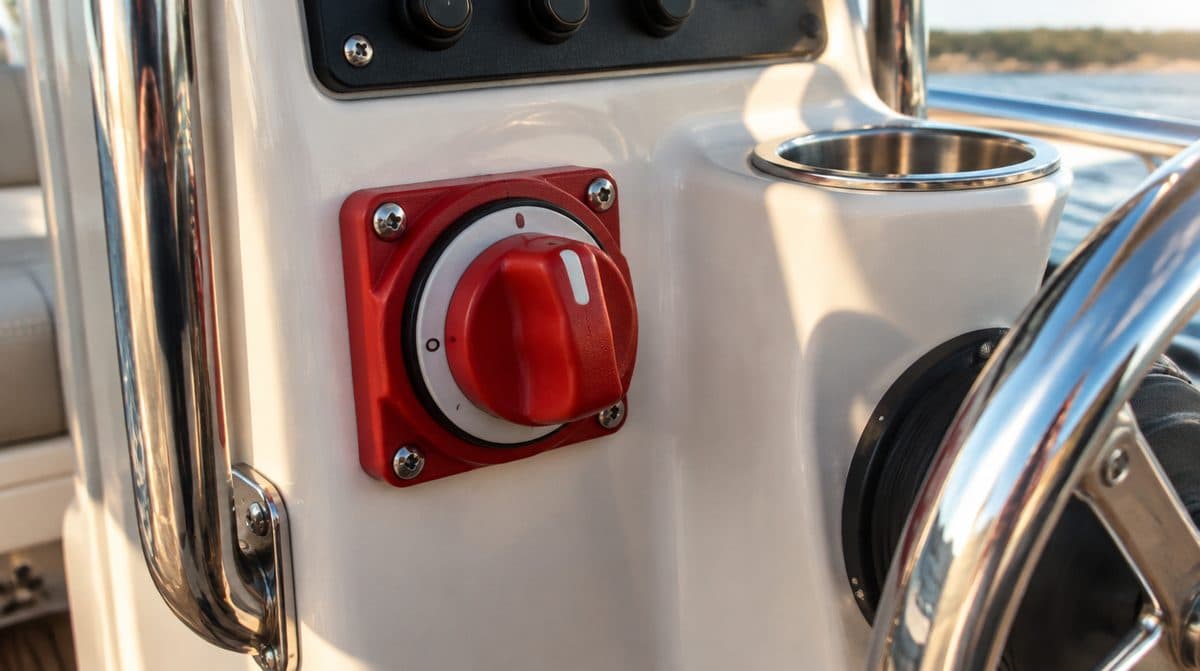
A simple ON/OFF/BOTH/1/2 switch lets you select banks and cut all power. Here is what each position really does. Position 1 connects battery one to your loads and to the engine's charging output. Position 2 does the same for battery two. BOTH parallels the banks, useful for charging both underway or for ganging them together to crank a stubborn engine. OFF disconnects everything, which is how the boat should sit at the dock and on the trailer.
The classic routine on a two-battery boat is to start and run on one bank, swap to the other on alternating trips so both stay exercised, and keep the switch off the moment you step off the boat. OFF is also your safety disconnect: in an electrical emergency, one twist kills power to everything downstream.
Sizing the Switch
Size it above your highest current load, including engine cranking. A battery switch carries every amp your electrical system can ask for, and cranking is the brutal part: a starter motor draws a very large surge for a few seconds. Switches carry two ratings for exactly this reason, a continuous rating for steady loads and an intermittent rating for cranking surges. Check both against your engine, and when in doubt, buy the heavier switch. An undersized switch builds heat at its contacts, and heat in a high-current DC circuit is how melted insulation and dead-in-the-water afternoons begin. Diesel engines crank harder than gas engines, which is why heavy-duty switches exist as their own category.
Isolator vs. Combiner (ACR)
- Diode isolator: charges multiple banks from one source but drops a little voltage.
- Automatic charging relay (ACR) / VSR: combines banks for charging and separates them under load, protecting the starting battery. Usually the better modern choice.
The difference comes down to how each one solves the same problem: one alternator, two banks, and a rule that the banks must never discharge into each other. A diode isolator uses one-way electrical valves. Current flows from the alternator out to each bank but can never flow between banks. It works, it has no moving parts, but diodes eat a little voltage on the way through, so your batteries can end up slightly undercharged, trip after trip.
An ACR (automatic charging relay, also sold as a VSR, voltage sensitive relay) takes a smarter approach. It watches voltage, and when it sees a bank being charged by the engine or a shore charger, it closes a relay and connects the banks so everything charges together. When charging stops and voltage falls, it opens and the banks separate again. Your house loads can run the house bank flat overnight, and the starting battery never knows it happened. Full charging voltage reaches every bank, with no diode loss. That is why the ACR is usually the better modern choice.
Why It Matters
The whole point is to run electronics off a house bank while keeping a charged starting battery, so you can always get home. A switch alone can do this if you are disciplined about positions, but discipline fades on a good day with the livewell running and music on. The switch-plus-ACR combination makes the protection automatic: the ACR handles charging, the switch handles selection and emergencies, and the starting battery stays sacred without anyone having to remember anything.
Installation Realities
Mount the switch somewhere you can actually reach in a hurry, not buried behind a panel in the bilge, because its job as an emergency disconnect only counts if you can get to it. Keep it out of standing water and spray, keep the cable runs between batteries, switch, and engine as short and fat as practical, and make every lug connection clean and torqued. High-current DC circuits are unforgiving of lazy crimps and loose nuts, since every bad connection is a little heater.
Wiring a switch and ACR is a very achievable weekend project for a comfortable DIYer, but there is no shame in handing it off. If you would rather have it done right the first time, find a verified marine electrician and spend your weekend on the water instead.
Maintenance and Signs of Trouble
These are simple devices, so maintenance is mostly inspection. Once a season, look for green corrosion creeping onto the studs, discolored or softened plastic around the terminals (a sign of heat), and a knob that has gotten loose or vague in its detents. A switch that is warm to the touch after normal running is telling you a connection is bad or the switch is undersized. With an ACR, confirm it still combines when the engine is charging and separates when it stops; most have an indicator that makes this a thirty-second check.
Mistakes to Avoid
- Leaving the switch on BOTH all the time. You have just built one big bank, and your house loads can now flatten your starting battery, which defeats the entire system.
- Undersizing the switch for your engine's cranking draw.
- Mounting the switch where you cannot reach it with the boat loaded.
- Running sensitive electronics straight off the cranking circuit instead of the house bank.
- Forgetting the switch exists and leaving it ON at the dock, letting small loads drain everything.
From the Water
Never turn the battery switch through OFF while the engine is running. It can fry your alternator's diodes instantly. Most marine switches are make-before-break, so moving between 1, 2, and BOTH underway is fine; it is that moment of total disconnect that kills alternators, so treat OFF as a position you only visit with the engine shut down.
Where to Get It Everything in this guide is stocked at Boat Supplies Direct, the Nautical Network marine parts store.
In stock as this guide goes up: - Guest 2101 Cruiser Series battery selector switch - Guest 2300A Diesel Power battery selector switch - Guest 2303A heavy-duty battery switch
Browse the full range: - Shop battery isolators - Read the full buying guide, including FAQs
More from the Wire
 Buying Guides
October 18, 2026
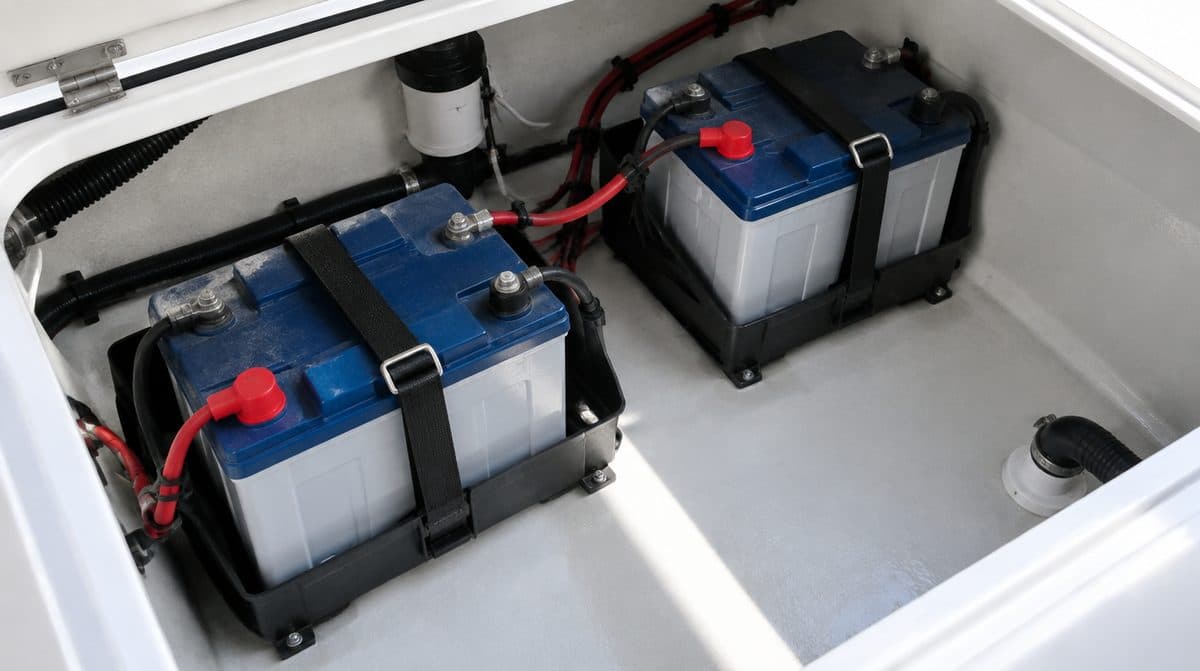
Starting vs. Deep Cycle: The Battery Mistake That Strands Boaters
Starting, deep cycle, or dual purpose, and flooded, AGM, or lithium. How to pick the battery type that will not leave you stranded.
Read more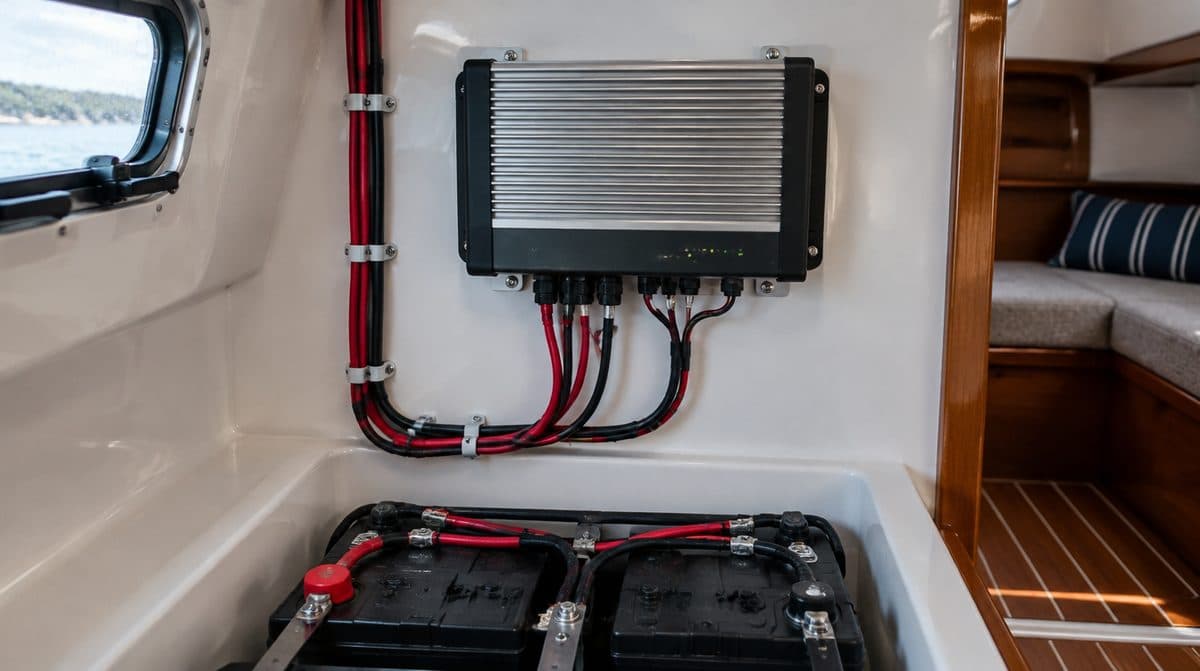 Buying Guides
October 18, 2026
The Onboard Charger: Cheap Insurance for Expensive Batteries
Batteries die young when they sit half-charged. How to size an onboard charger by amps, banks, and chemistry.
Read more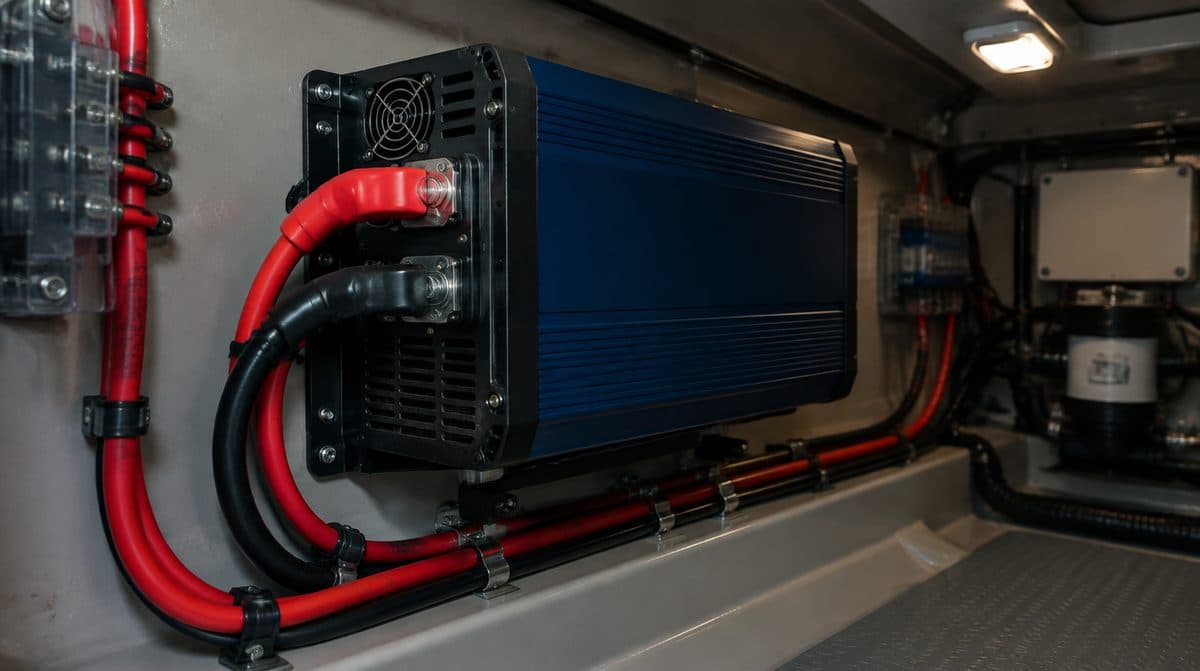 Buying Guides
October 18, 2026
Marine Inverters: Home Power on Battery
Home power on battery: sizing an inverter by watts, choosing pure sine, and wiring it safely.
Read more