Marine Corrosion Basics: Galvanic vs. Stray Current, and When to Call a Pro
Your boat sits in an electrolyte. How galvanic corrosion differs from stray current, what bonding and shore power have to do with it, and the warning signs that mean call a marine electrician.
Salt water is an electrolyte, and a boat is a collection of different metals sitting in it. That makes every boat in a Florida slip a slow-motion battery, whether the owner knows it or not. Corrosion is just that battery doing its work. Understanding the two kinds, and the difference between them, is most of what an owner needs.
Galvanic corrosion: the battery you built by accident
Put two different metals in seawater and connect them electrically, and the less noble one sacrifices itself to protect the other. A bronze prop on a stainless shaft, an aluminum outdrive near anything copper-based: these are galvanic couples, and the aluminum and zinc end of the scale always loses. Galvanic corrosion is slow, steady, and completely normal, which is exactly why boats carry sacrificial anodes. The zincs are the metal you have volunteered to lose. Builder guidance is consistent on the care and feeding: inspect anodes regularly, replace them once they are about half consumed, and expect saltwater boats to go through them faster than freshwater boats. A half-gone zinc is a zinc on notice.
Stray current: the fast one
Stray current corrosion is a different animal. It is not chemistry between metals, it is a DC electrical leak, a chafed wire in the bilge, a bad connection on a pump, somebody's miswired dock pedestal, pushing current through the water with your underwater metal as part of the circuit. Where galvanic corrosion takes seasons, stray current can eat a prop or a through-hull in weeks. The classic early warning is the one builders themselves flag: anodes being consumed unusually fast. If you replaced zincs last month and they already look chewed, stop buying zincs and start looking for the leak.
Bonding, and why shore power matters
A bonding system is the green-wire network that ties a boat's underwater metals together so they share the same electrical potential and the same anode protection, instead of quietly fighting each other. It only works if it is intact, which is why corroded bonding connections are worth attention during any haul-out.
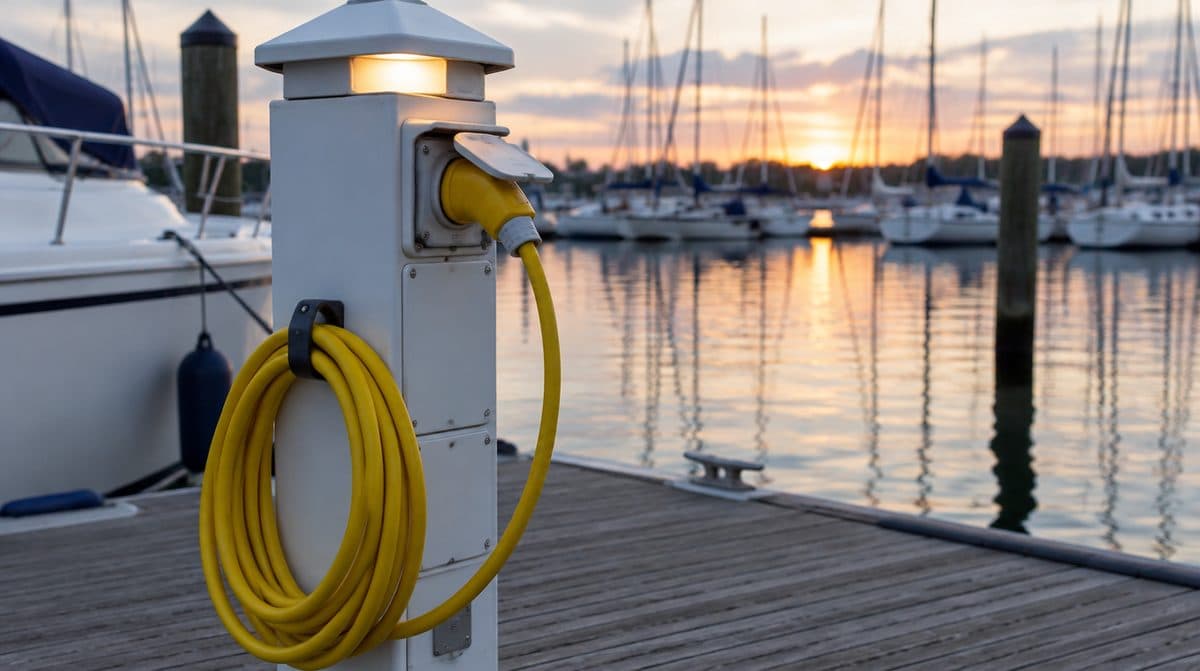
Shore power raises the stakes, because the safety ground connects your boat's underwater metals to every other boat on the dock. Plug in, and your zincs can end up protecting the neighbor's neglected outdrive, which is why marina boats eat anodes faster than mooring boats. The standard defenses are a galvanic isolator or, better, an isolation transformer in the shore power circuit. If your boat lives plugged in and you do not know which one it has, that is worth finding out this week.
The signs that mean call a professional
Some corrosion is an owner job. These signs are not: zincs vanishing in weeks instead of months, new pitting on the prop, shaft, or trim tabs, bottom paint blistering or peeling in a halo around metal fittings, or any tingle felt in the water near the boat, which is an immediate get-out-and-unplug situation. This is work for a qualified marine electrician with ABYC training and a silver chloride reference cell, not a multimeter and optimism. Waypoint lists marine electrical and electronics pros across Florida at nautical.network/directory/browse?category=electronics, and if the boat is actively eating metal, post the problem at nautical.network/help and let matching pros come to you. Corrosion never negotiates, but it always leaves a warning first.
More from the Wire
 Ownership
September 27, 2026
Hurricane Prep for Boat Owners: Write the Plan Before the Cone Shows Up
Haul or stay, doubled lines, stripped canvas, and the insurance fine print: the hurricane decisions Florida boat owners should make in May, not at the storm briefing.
Read more Ownership
September 26, 2026
E10 and Your Marine Engine: Phase Separation, Storage, and Stabilizer Habits
Why the same gas your truck burns happily can wreck a boat engine: what E10 does in a vented marine tank, how phase separation works, and the habits that prevent it.
Read more Ownership
September 25, 2026
Marine Batteries, Explained: Starting vs Deep Cycle, and Why Boats Eat Them
Starting, deep cycle, or dual purpose; flooded, AGM, or lithium. A plain-words guide to picking marine batteries and keeping them alive in Florida heat.
Read more