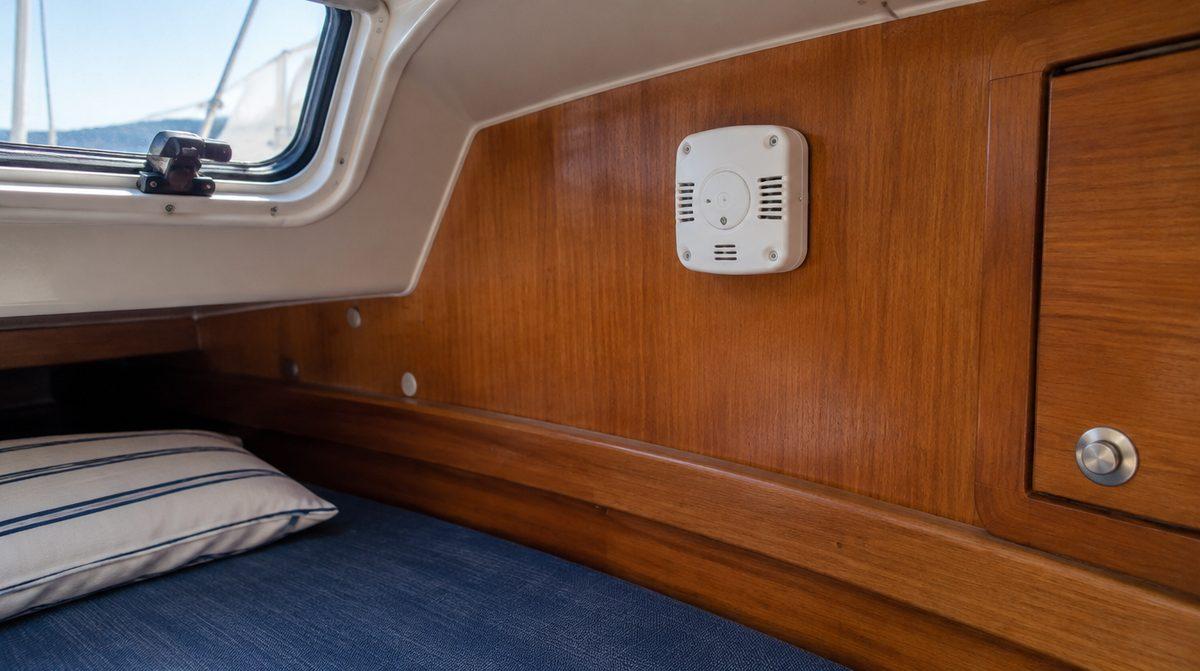
Carbon Monoxide on Boats: The Danger You Can't See or Smell
You cannot smell it, see it, or taste it, and it pools where people sleep and swim. Why a marine CO detector is the only warning you get.
Carbon monoxide has no smell and no color, and it collects in cabins and around the swim platform. It comes from anything aboard that burns fuel: the main engine, a generator, a propane stove, a diesel heater. On a boat, exhaust does not always politely drift away; it pools in enclosed spaces, rides along in the boat's own wind shadow, and settles in exactly the places people sleep and swim. A detector is the only way to know it's there. This guide covers choosing one, mounting it, and the handful of habits that keep CO from ever becoming your problem.
How CO Behaves on a Boat
Carbon monoxide is produced whenever fuel burns with too little oxygen, and every engine and generator aboard makes some. The danger is accumulation. In open air, exhaust dilutes fast. In a closed cabin with a generator running, under a cockpit enclosure buttoned up tight, or in the pocket of still air behind the transom, it builds. The gas binds to your blood in place of oxygen, and the early symptoms (headache, dizziness, nausea, drowsiness) are easy to mistake for seasickness or a long day in the sun, which is exactly what makes it dangerous. People don't ignore CO because they're careless; they ignore it because it feels like something harmless. The detector exists to make the invisible loud.
Marine-Rated, Not Household
Use a marine-rated CO detector built for vibration, humidity, and 12V power. Household detectors are not designed for the boat environment. The difference is real: a boat lives in salt-laden damp air, shakes constantly under way, and bakes and freezes in storage, and a detector built for a hallway can fail quietly or false-alarm constantly in those conditions. Marine units are tested for the motion and moisture, and the alarm thresholds are tuned for a small, enclosed, lived-in space. This is one of those purchases where buying the cheaper landside version misses the entire point of the device, which is that it must work on the one bad day.
Placement
Install detectors in sleeping areas and enclosed spaces where people gather: each cabin where someone sleeps, plus the main salon. Follow the maker's mounting height guidance, because placement is specified by the manufacturer for a reason and getting it wrong changes how quickly the unit sees the gas. Keep detectors away from dead-air corners, direct spray, and spots right beside a hatch or portlight where fresh air will rinse the sensor while the rest of the cabin fills. On a boat with a generator, give the sleeping cabins priority, since the classic bad scenario is a generator running overnight while everyone is unconscious below.
Power and Alarm
Choose hardwired 12V units for always-on protection, test them regularly, and replace per the sensor lifespan (sensors age out). A hardwired detector is always on duty as long as the house bank is up, with no battery to die silently in a drawer. If your unit has a battery backup, change that battery on a schedule. Test with the test button often enough that the crew knows the sound, because an alarm nobody recognizes gets treated like a mystery beep instead of an order to get everyone into fresh air. And take the end-of-life date seriously: the sensing element inside degrades over years, and an aged-out detector can sit there looking ready while sensing nothing.
The Sneaky Ways CO Gets Aboard
A detector covers the cabin, but a little knowledge covers the rest of the boat. Exhaust can ride the boat's own slipstream and curl back into the cockpit or cabin when you run with a bow-high attitude or with canvas up and a hatch cracked, the so-called station wagon effect. Rafting up or anchoring close to another boat puts their generator exhaust near your hatches. Teak surfing or dragging behind the swim platform puts a swimmer directly in the densest exhaust on the boat. Ventilation is the cure for most of it: open things up, change the airflow, and shut down the fuel burner when people are where exhaust goes.
Make It a Habit
Treat the CO detector like the rest of your safety kit: test it on the same routine you use to check your fire extinguishers, and brief guests on what the alarm means. The response is always the same and worth saying out loud: get everyone to fresh air immediately, shut down engines and generators, open the boat up, and do not go back below until the alarm clears and you know why it sounded. An alarm with no obvious cause is a reason to end the trip and find the exhaust leak, not a reason to pull the unit's power because the beeping is annoying.
From the Water
Never let anyone hang on the swim platform while the engine or generator is running. That's where CO concentrates most. The water right at the transom sits in the boat's wind shadow with the exhaust outlets, and a swimmer holding the platform has their face in it. Shut down first; the ladder can wait thirty seconds.
Where to Get It
Everything in this guide is stocked at Boat Supplies Direct, the Nautical Network marine parts store. Orders ship free all year with Dock Pass, the $49 a year shipping pass.
In stock as this guide goes up: - Safe-T-Alert 62 Series marine CO alarm, surface mount - Safe-T-Alert 62 Series marine CO alarm with relay
Browse the full range: - Shop safety - Read the full buying guide, including FAQs
More from the Wire
 Buying Guides
October 19, 2026
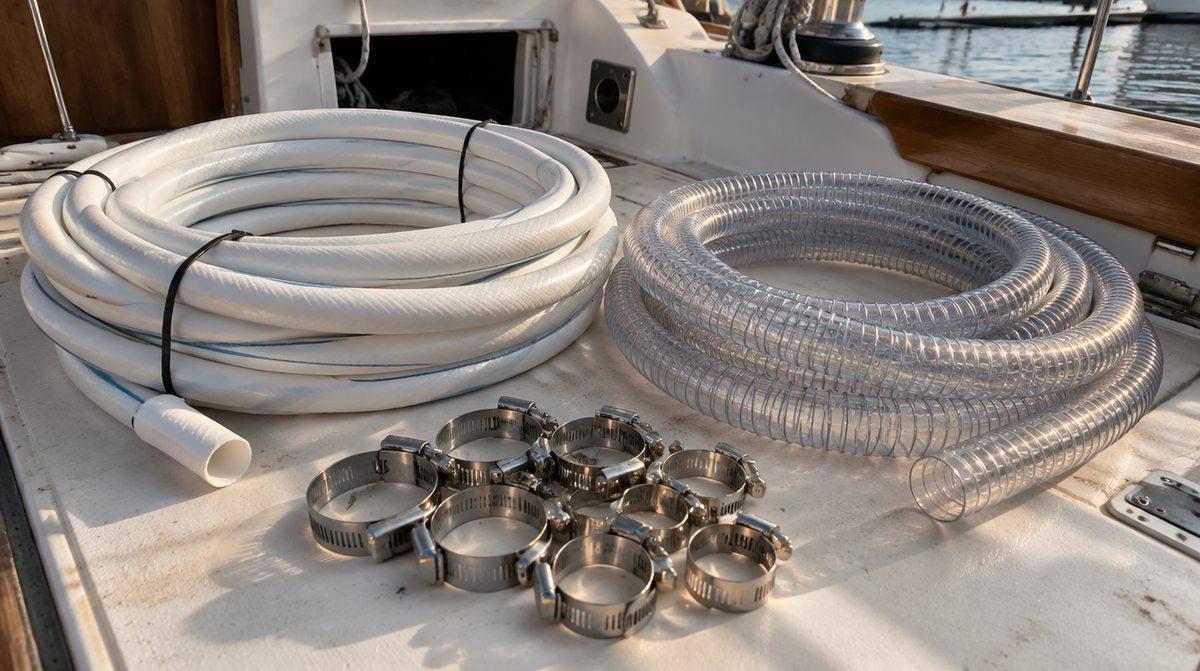
Marine Hose: The Right Hose for Every Job on Board
That head smell you cannot scrub away is probably the hose itself. How to match marine hose to fuel, sanitation, bilge, and freshwater jobs.
Read more Buying Guides
November 6, 2026
Marine First Aid Kits: Ready When Help Is Hours Away
Offshore, the nearest clinic is measured in hours. How to size a first aid kit to your crew and range, and the one tool fishing boats always forget.
Read more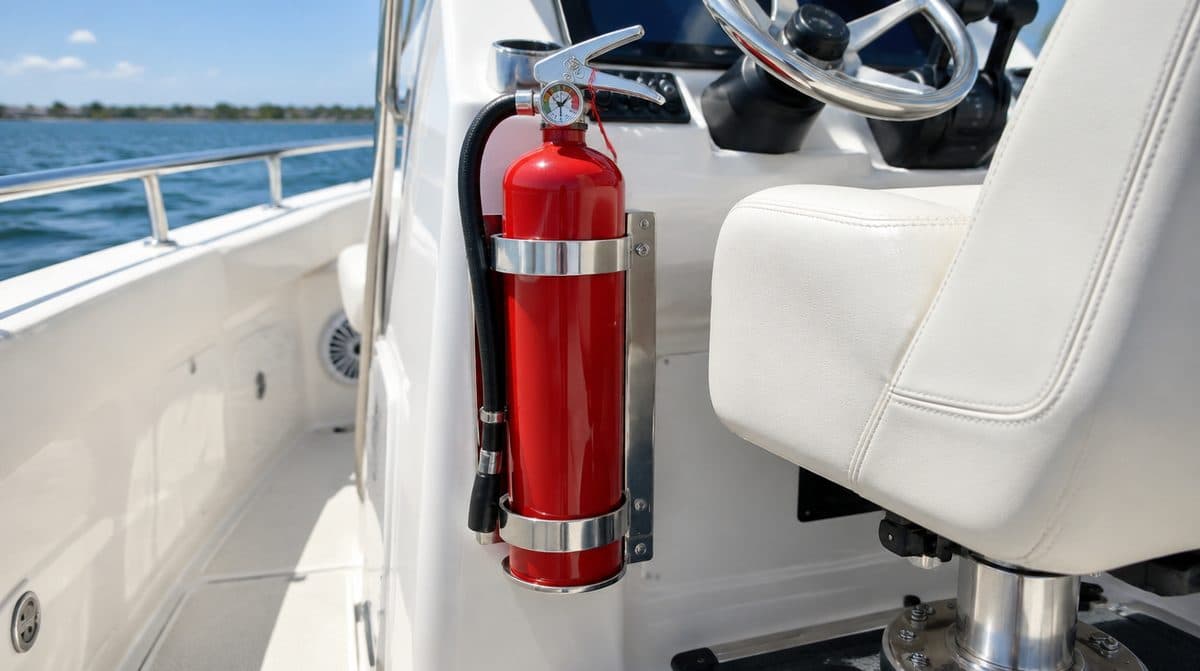 Buying Guides
November 4, 2026
Marine Fire Extinguishers: Required Gear That Saves Lives
A fire on the water leaves you no exit. What the ratings mean, how many extinguishers your boat needs, and where to mount them so you can actually reach one.
Read more