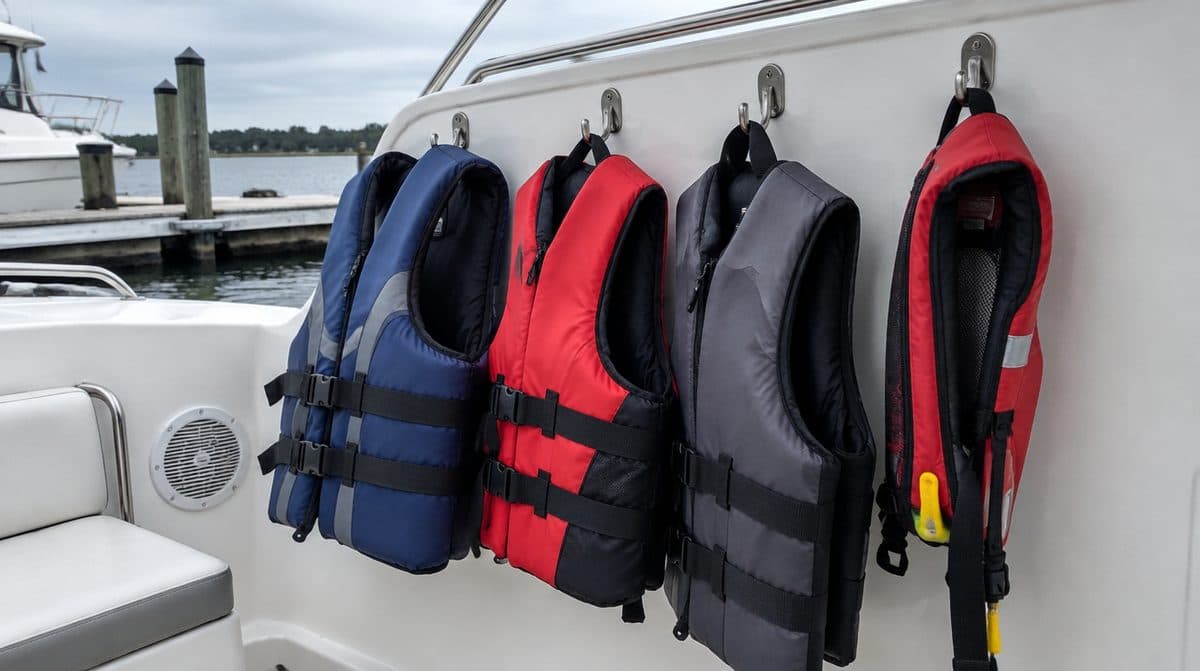
The Best Life Jacket Is the One You'll Actually Wear
Most drownings happen with a life jacket still on the boat. How to match PFD type to the activity and get a fit that stays put in the water.
Most drowning victims had a life jacket on the boat. It just wasn't on them. Comfort and fit are what get people to wear one, and that single fact should drive every PFD purchase you make. The bulky orange horse-collar jacket stuffed under the seat technically satisfies the regulation, but it has never once jumped onto a person in the water. The life jacket conversation is not really about buoyancy ratings or approval labels, though those matter. It is about finding gear comfortable enough that wearing it becomes automatic, the way seatbelts did.
Get the Right Type for the Activity
- Inherently buoyant foam vests: reliable, no maintenance, good all-around.
- Inflatable PFDs: comfortable and low profile so people actually wear them, but require maintenance and are not for non-swimmers or high-impact watersports.
- Specialized vests: for paddling, waterskiing, offshore, etc.
Foam is the default answer. It works wet, dry, conscious, or unconscious, and it works the day you buy it and ten seasons later with zero attention. The trade is bulk and heat, which is exactly why people take them off.
Inflatables solve the comfort problem. A modern inflatable rides like a pair of suspenders or a thin collar, and most people genuinely forget they are wearing one. The trade is that an inflatable is a small machine: a CO2 cylinder, an inflator mechanism, and in automatic models a water-sensing element, all of which need periodic inspection and occasional re-arming. Automatic versions fire when submerged; manual versions fire when you pull the tab, which means a manual inflatable is only appropriate for a strong swimmer who will be conscious when it matters. Neither type is approved for kids below the label's age and weight limits, non-swimmers, or impact sports like skiing and tubing, where you need the flotation already there when you hit the water.
Specialized vests earn their place at the extremes. Paddling vests cut big armholes for stroke clearance. Watersports vests are built to take impact and stay on. High-buoyancy offshore jackets are designed to turn an unconscious wearer face-up in rough water. If your boating leans hard into one activity, buy the vest built for it.
Fit by Weight and Chest Size
Adult PFDs are sized by chest measurement, child PFDs by weight. A PFD that is too loose can slip off in the water. Check the label range and try it on.
The real fit test takes thirty seconds. Put the vest on, buckle and snug every strap, then have someone grab the shoulders and lift straight up. If the vest slides toward your ears, it is too loose or too big; in the water, that same vest rides up over your face while you slide down through it. A properly fitted vest moves with your torso like a piece of clothing. Do this test with kids especially, because a child PFD also needs the crotch strap fastened, and that strap is the difference between a vest that floats the kid and a vest that floats above the kid.
Count and Access
Carry a properly fitting, Coast Guard approved PFD for every person aboard, plus a throwable device where required. Keep them accessible, not buried. Accessible means someone can get a jacket into their hands in seconds while the boat is doing something alarming, not after unloading a locker full of beach gear. A simple habit that solves this: jackets come out of storage when the boat leaves the dock, and anyone who is not wearing one has one staged at their seat.
The throwable deserves the same thinking. A cushion or ring buried in the stern locker is a checkbox, not a rescue tool. Keep it where the person at the helm can reach it with one hand, because the helm is where someone will be when a crew member goes over.
Caring for Inflatables
An inflatable PFD is only as good as its last inspection. A few times a season, open it up and look: the CO2 cylinder should be full, screwed in snug, and free of corrosion, and the inflator's status indicators should show green. Once a year, inflate the vest with the oral tube and leave it overnight; a vest that softens by morning has a leak and needs service or replacement. If the vest ever fires, rearming it is a simple job with the matching re-arm kit for your model, so keep a spare kit aboard. Rinse the vest in fresh water after salty trips and let it dry before repacking. Five minutes of attention a few times a year keeps the comfortable jacket a trustworthy one.
When to Replace a PFD
Foam vests wear out slower but they do wear out. Replace any vest with torn fabric, broken buckles, crushed or hardened foam, or straps that have gone fuzzy and weak from UV exposure. A faded vest has lived a long outdoor life, and fading is a decent proxy for sun damage to the structural stitching. For inflatables, replace the bladder-equipped vest itself per the manufacturer's guidance and replace cylinders and inflator elements on their marked dates. A life jacket is the cheapest piece of survival equipment on the boat; replace it on suspicion, not on proof.
From the Water
Have every kid try on their life jacket at the start of each season. Kids outgrow them faster than you'd think, and a loose one can slip right off in the water. Make it a ritual with the lift test at the shoulders, and let kids pick their own jacket at the store when they size up. A kid who chose the jacket argues a lot less about wearing it.
Where to Get It
Everything in this guide is stocked at Boat Supplies Direct, the Nautical Network marine parts store. Orders ship free all year with Dock Pass, the $49 a year shipping pass.
In stock as this guide goes up: - First Watch Auto/Manual Convertible 38G Inflatable PFD, Black - First Watch AV-800 Four Pocket Flotation Vest, Hi-Vis Yellow, Large to XL - Onyx Re-Arm Kit for A-24 In-Sight Automatic Inflatable Life Jackets
Browse the full range: - Shop PFDs - Read the full buying guide, including FAQs
More from the Wire
 Buying Guides
October 18, 2026
Fender Sizing: Stop Scuffing Your Hull at the Dock
Most hull scrapes happen at the dock. Fender size, count, and type by boat length.
Read more Buying Guides
October 26, 2026
Why Your Anchor Drags (and How to Pick One That Won't)
Most anchors that drag were fighting the wrong bottom from the start. How to match anchor style to the seabed, size up with confidence, and build a rode that actually holds.
Read more Buying Guides
October 19, 2026
Chartplotter and Fishfinder Combos: What Actually Matters on the Water
Screen size, sonar type, and the transducer under the hull matter more than the badge on the box. How to buy a combo you can read in full sun and won't outgrow in two seasons.
Read more