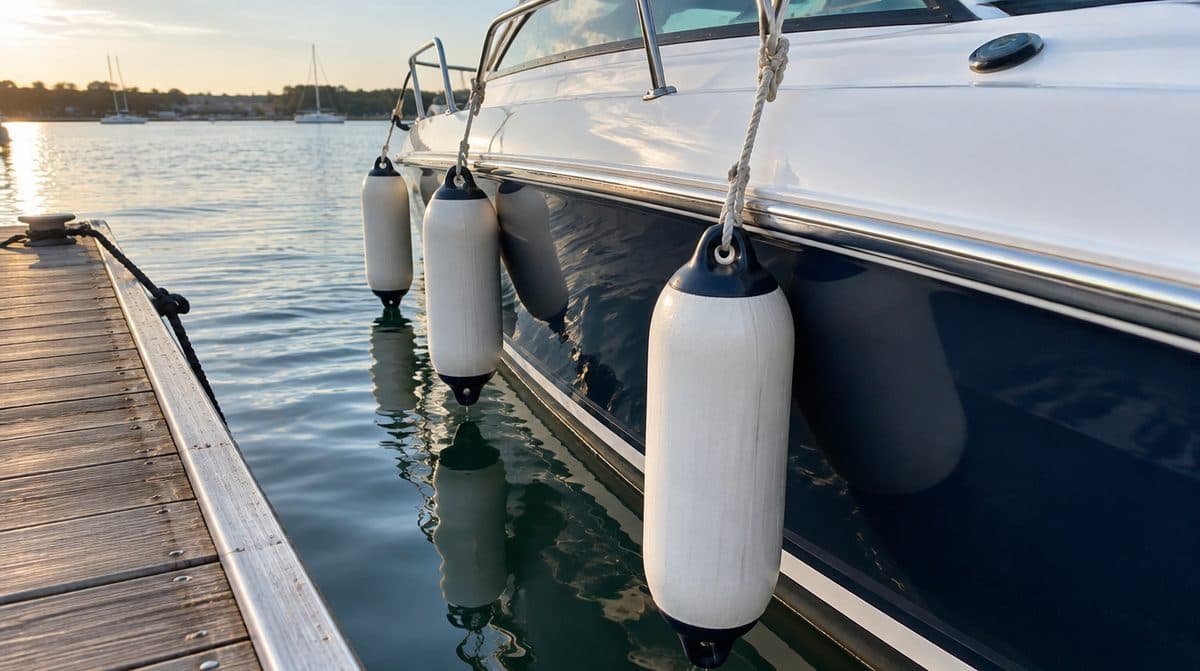
Fender Sizing: Stop Scuffing Your Hull at the Dock
Most hull scrapes happen at the dock. Fender size, count, and type by boat length.
Most hull scrapes don't happen underway. They happen at the fuel dock and the raft-up, when fenders are too small, too few, or hanging at the wrong height. Fenders are the cheapest insurance on the boat, and getting them right costs a minute of math and a little discipline about where they hang.
What a fender actually does A fender is a spring. Its job is to absorb the energy of the boat moving against the dock and spread that load across a patch of hull instead of a single contact point. For that to work, it needs enough diameter to compress under load without bottoming out, and enough body to stay put between the hull and whatever it is protecting.
An undersized fender squeezes flat the first time a wake rolls through the marina, and at that moment your gelcoat is pressing on the dock with nothing but a thin sheet of vinyl in between. That is why fender sizing rules run bigger than most people expect. The fender is not sized for the boat sitting still on a calm day. It is sized for the surge, the wake, and the afternoon chop.
Size by boat length A common rule: 1 inch of fender diameter for every 4 to 5 feet of boat length, and at least 2 inches of fender length per foot of boat. Bigger and heavier boats need bigger fenders.
Work the diameter rule on a 24 foot boat and you land between roughly 5 and 6 inches of diameter. When the math puts you between sizes, round up. Nobody has ever stood at the dock wishing their fenders were smaller.
The length side of the rule scales the same way, and in practice you carry that length spread across several fenders rather than one giant one, because you need protection at more than one point along the hull anyway.
The rule is a floor, not a ceiling. A heavy boat with high freeboard, a slip with pilings, a rough-water marina, or a boat that rafts up regularly all justify going a size bigger than the chart says. Weight matters as much as length: displacement is what the fender has to cushion.
How many Carry at least 3 to 4 fenders per side, more for larger boats or rough docks.
Why per side? Because you do not always get to choose which side goes against the dock, and a raft-up needs both sides working at once. The usual spread is one fender at the widest point of the hull, one forward, and one aft, with a spare left loose as a roving fender for whatever the docking throws at you.
Fenders also fail, walk off at raft-ups, and pop over the rail at the worst moment. A spare or two in the locker is cheap compared to the gelcoat repair it prevents.
Types - Cylindrical: the standard, hang vertically or horizontally. - Round/ball: great for bows, corners, and rafting against pilings. - Flat/freeboard: hug the hull on high-freeboard boats.
Cylindrical fenders come in two builds: a center rope tube you can run a line clean through, or molded eyes at each end. Center-tube fenders are more versatile because you can hang them vertically from one end or horizontally with a line through the middle.
Round and ball fenders put a lot of diameter in one spot, which is exactly what a flared bow, a dock corner, or a piling needs. They are also the raft-up workhorse, because two hulls rolling against each other will spit out a skinny cylindrical and keep a ball pinned.
Flat freeboard-style fenders lie against the hull instead of rolling along it, which suits boats with tall slab sides where a cylindrical tends to swing and wander. Inflatable fenders deserve a mention too: they give you serious diameter when deployed and stow nearly flat, which solves the eternal problem of big-fender storage on a small boat.
Hanging them right Height is everything. The fender has to sit where the contact will happen: at the dock edge on a floating dock, at the rub rail height of the boat next to you in a raft-up. A perfect fender a foot too high is decoration.
Hang fenders vertically against a flat-faced floating dock or another hull. Hang them horizontally against pilings, so the piling cannot slip between two vertical fenders and find your hull. Tie off to a cleat or the base of a rail with a clove hitch finished with a couple of half hitches: fast to adjust, and it stays where you set it.
Do not forget covers and lines Fender covers protect your gelcoat from scuffs and marks. Bare vinyl dragging up and down the topsides all weekend leaves black smudges and, over the years, dulls the finish along the contact strip. A soft cover stops the marking and kills the squeak that keeps you awake in a surgy slip. If your hull already wears old black scuffs, a verified detailer near you can buff them out, and covers keep them from coming back.
Proper fender lines keep them where you need them. Use real fender lines, long enough to reach from the rail to the waterline with knot to spare, with ends that are whipped or pre-spliced. A fender tied with a stray piece of ski rope ends up floating away from the boat it was supposed to protect.
Maintenance and when to replace Wash fenders with boat soap when you wash the boat, because the grime they collect gets ground into your topsides on the next contact. Vinyl chalks and hardens with years of UV, so store fenders out of the sun when you can.
Replace a fender when it is cracked, stays dented after compression, or will not hold pressure. A fender that cannot spring back cannot protect anything. On inflatables, check the valve and the pressure at the start of the season, not at the fuel dock.
Mistakes to avoid - Fenders sized for the boat you used to own. - Hanging everything at one height no matter what the dock looks like. - Vertical fenders against pilings. - Bare fenders grinding grit into the gelcoat for years. - No spare, so one lost fender leaves a gap at the widest part of the hull.
From the Water Set your fenders at the height of the dock or the other boat's rub rail before you come alongside. Adjusting them mid-docking is how fingers get pinched. Keep one fender loose as a rover and put a crew member on it, ready to drop it into whatever gap opens up as you touch.
Where to Get It Everything in this guide is stocked at Boat Supplies Direct, the Nautical Network marine parts store.
In stock as this guide goes up: - Seipel Marine 10 foot inflatable boat bumper - Seipel Marine EVA 2.0 fender - Polyform Elite fender cover
Browse the full range: - Shop fenders - Read the full buying guide, including FAQs
More from the Wire
 Buying Guides
October 18, 2026
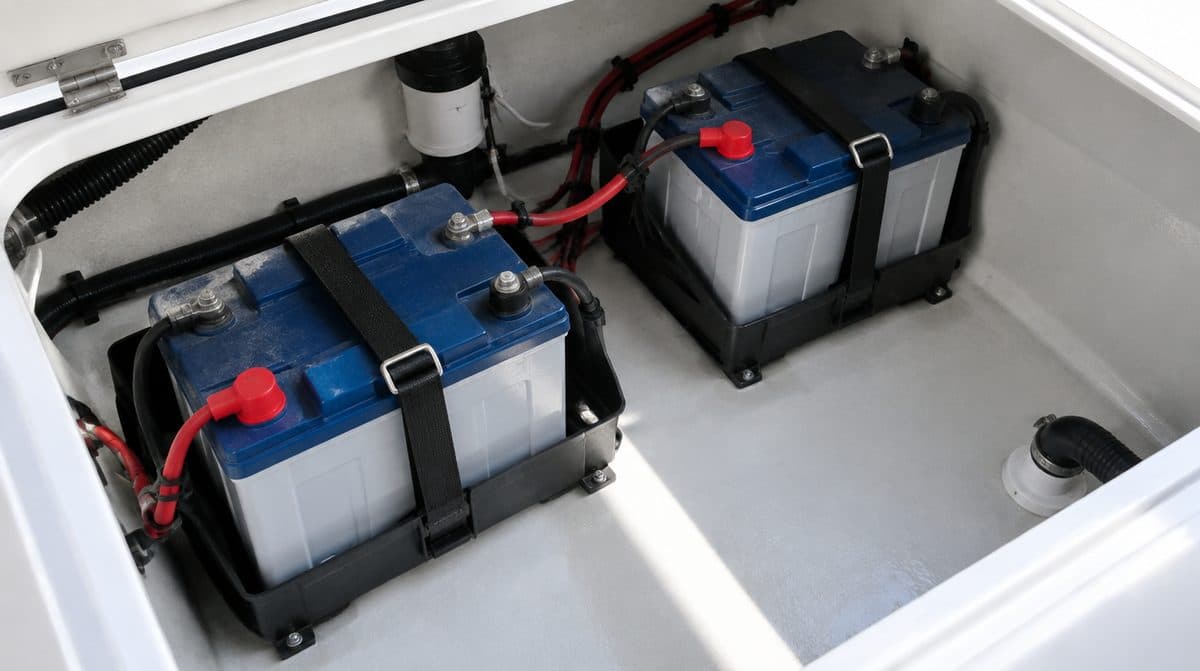
Starting vs. Deep Cycle: The Battery Mistake That Strands Boaters
Starting, deep cycle, or dual purpose, and flooded, AGM, or lithium. How to pick the battery type that will not leave you stranded.
Read more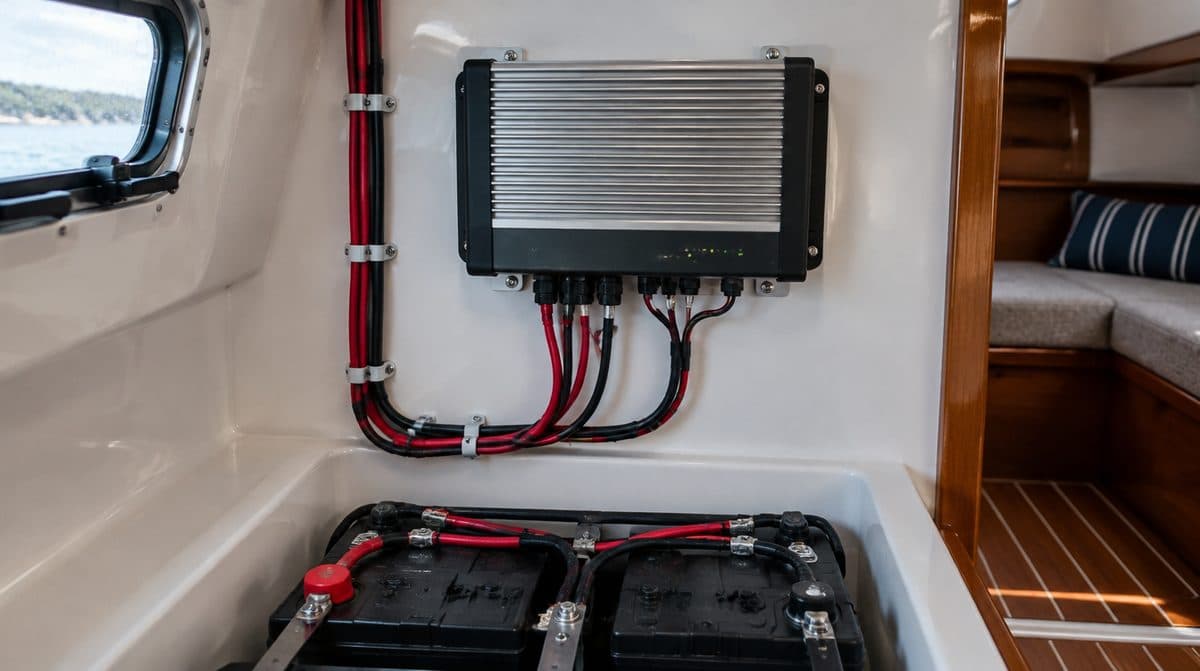 Buying Guides
October 18, 2026
The Onboard Charger: Cheap Insurance for Expensive Batteries
Batteries die young when they sit half-charged. How to size an onboard charger by amps, banks, and chemistry.
Read more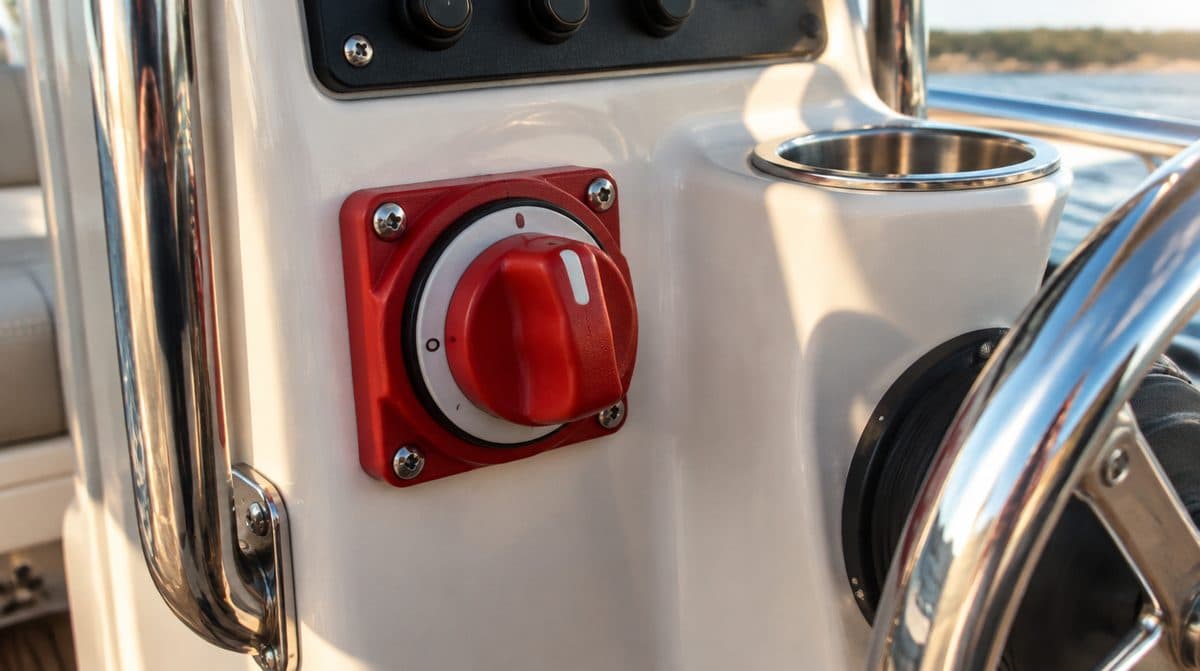 Buying Guides
October 18, 2026
Battery Switches and Isolators: Never Get Stranded by a Dead Battery
The switch and isolator setup that keeps your starting battery ready while the house bank runs your gear.
Read more