Deck Plates and Access Hatches: Easy Access, Dry Compartments
Behind every sealed-off compartment is a pump, a tank, or a wire run you will need to reach someday. How to pick deck plates that open when you want and stay dry when you don't.
Every compartment you can't get into is a problem waiting to be discovered. Somewhere behind your deck and hull liner there are pump connections, steering gear, tank fittings, and wire runs, and the day one of them acts up, you will either unscrew a deck plate or start cutting fiberglass. Deck plates give you access while keeping water out, which makes them one of the best deals in marine hardware.
The trick is picking the right plate for each spot: the right size, the right opening style, and the right level of sealing. Get those three right and you will never think about the plate again, which is exactly what you want.
What a Deck Plate Actually Does
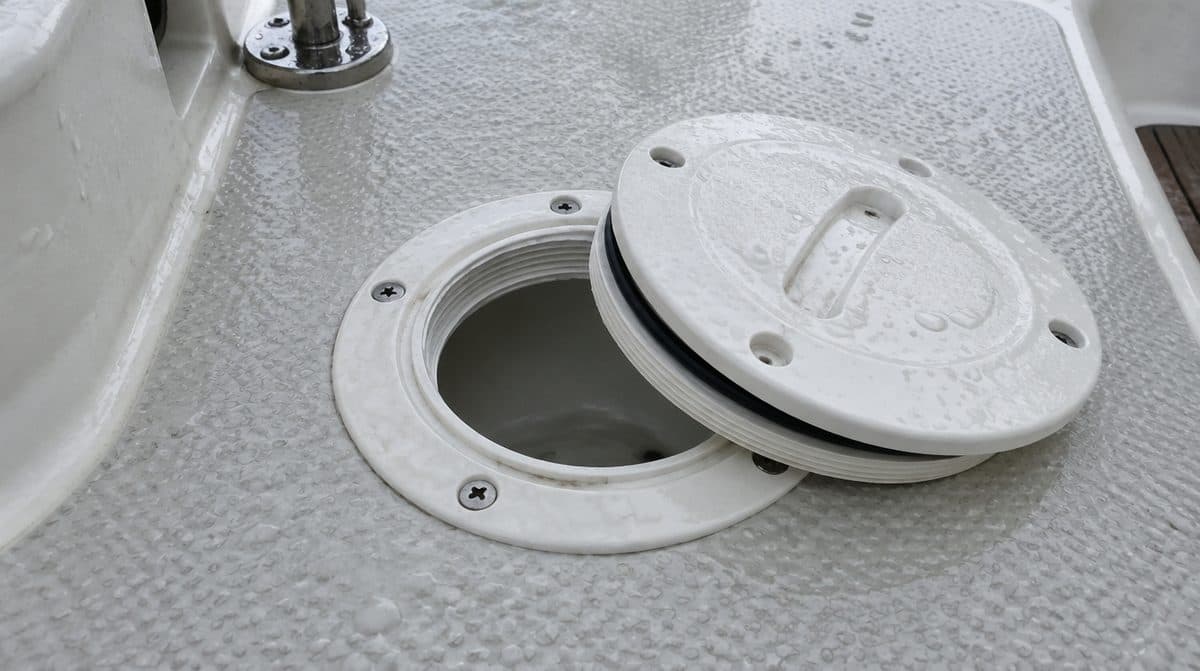
A deck plate is a threaded or bayonet-style ring bedded permanently into the deck, with a removable cover that seals against an O-ring or gasket. The ring takes the abuse and keeps the hole in your boat waterproof at its edges; the cover comes and goes. That separation is the whole genius of the design. The permanent part gets sealed once, properly, and the moving part can be opened a hundred times a season without disturbing the bedding.
Size to the Opening and the Need
Pick a diameter that fits your access needs and the available flat mounting area. Round pry-out and screw-out plates suit small access jobs; step up to larger hatches for storage and full system access.
Think in terms of what has to pass through the hole. A 4 inch plate passes a hand and lets you reach a valve or a wiring connection just inside. A 5 or 6 inch plate passes a hand plus a tool, or a forearm reaching down to a fitting you cannot see. If you will ever need to get your head and a flashlight in there, no deck plate is big enough; that compartment wants a proper access hatch or locker door instead. Measure the flat area available before falling in love with a size, because the flange needs full, flat contact all the way around to seal.
Pry-Out, Screw-Out, and Quarter Turn
- Screw-out plates thread the cover into the ring across fine threads with an O-ring. Best seal for the money, and the standard choice for decks that take spray and wash-downs. The tradeoff is that threads collect grit and need occasional cleaning.
- Pry-out plates pop out with a coin or screwdriver. Quick and cheap, best for vertical surfaces and sheltered spots rather than open deck.
- Quarter turn plates split the difference: a fraction of a turn locks the cover down, easy to open with wet hands, no long threads to foul.
If a plate will be opened every outing, quarter turn earns its keep. If it gets opened twice a year, a screw-out's better sealing wins.
Watertight vs. Non-Watertight
- Watertight and sealed plates are for areas that must stay dry or that take spray: cockpit soles, foredecks, anywhere green water or a hose will reach.
- Non-watertight and vented plates are for ventilation or where water intrusion is not a concern, like inside a console or a vertical bulkhead under cover.
Match the seal level to what is behind the plate. A bilge area that already drains can live with less; a compartment holding electrical connections or dry gear cannot.
Material and UV
Marine-grade polymer resists UV and salt and is what the established brands mold their plates from. Cheap plastic plates crack and yellow in the sun and seize up, usually at the exact moment you need them open. The difference is invisible in a product photo and painfully obvious two summers later. Buy plates from marine brands, not the bargain bin, and in a color that matches the deck so they disappear visually.
Installation Realities
Cut the hole with a hole saw of the specified size, dry fit, then bed the ring in marine sealant and fasten evenly around the flange. If the deck is cored, seal the exposed core with epoxy before the plate goes in; a deck plate is a big hole, and a leaking one feeds water straight into the core. Orient screw-out plates so debris does not sit on the threads, and consider adding a lanyard between cover and ring so the cover cannot skitter overboard when you open it in a seaway. It is a small, cheap insurance policy for the part you cannot buy separately at midnight.
Maintenance and Lifespan
Twice a season, open every plate on the boat, even the ones you never use. Clear grit from the threads with a brush and fresh water, inspect the O-ring for flat spots or cracking, and check the bedding around the ring for gaps. A plate that gets this treatment lasts as long as the boat. One that does not will announce itself with a seized cover or a soft spot in the deck around it.
Replace the cover or O-ring when the seal stops holding, and replace the whole plate when the ring itself is cracked, chalky, or loose in the deck.
Mistakes to Avoid
- Installing a pry-out plate on an open deck that takes spray.
- Buying a size that fits the compartment opening but not the flat area around it.
- Skipping core sealing on a cored deck.
- Forcing a gritty cover with channel locks instead of cleaning the threads.
- Choosing no-name plates because they all look the same online.
From the Water
Put a light coat of silicone grease on deck plate O-rings each season. They seal better and open easier. While you are at it, run the greasy rag around the threads too, and you will never meet the seized-cover problem that sends people to the dock store mid-season.
Where to Get It
Everything in this guide is stocked at Boat Supplies Direct, the Nautical Network marine parts store.
In stock as this guide goes up: - Beckson 4 inch smooth center screw-out deck plate, black - Sea-Dog smooth quarter turn deck plate, white, 5 inch - Sea-Dog deck plate lanyard, 12 inch
Browse the full range: - Shop deck plates - Read the full buying guide, including FAQs
More from the Wire
 Buying Guides
October 18, 2026
Starting vs. Deep Cycle: The Battery Mistake That Strands Boaters
Starting, deep cycle, or dual purpose, and flooded, AGM, or lithium. How to pick the battery type that will not leave you stranded.
Read more Buying Guides
October 18, 2026
The Onboard Charger: Cheap Insurance for Expensive Batteries
Batteries die young when they sit half-charged. How to size an onboard charger by amps, banks, and chemistry.
Read more Buying Guides
October 18, 2026
Battery Switches and Isolators: Never Get Stranded by a Dead Battery
The switch and isolator setup that keeps your starting battery ready while the house bank runs your gear.
Read more