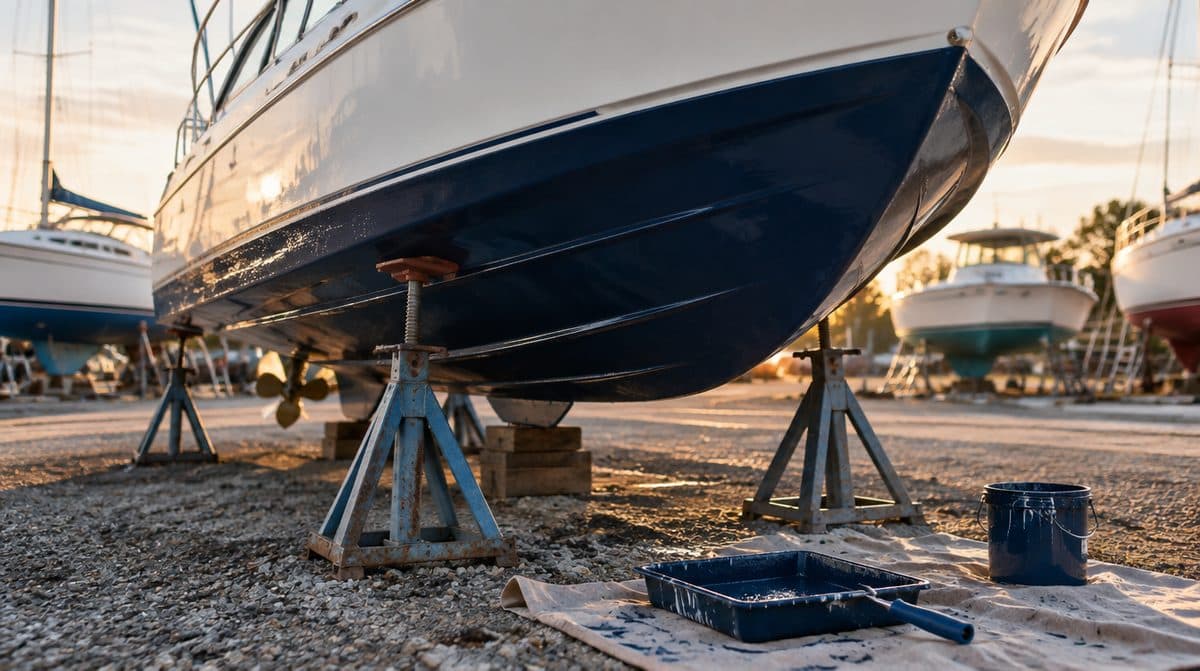
Bottom Paint in Florida Water: Ablative vs Hard, and When to Start Over
How ablative and hard antifouling paints actually work, what Florida water does to both, when a bottom needs stripping and barrier coat, and why your diver's report is gold.
Florida water grows things with real enthusiasm, and bottom paint is the only part of your boat fighting back every hour of every day. The stakes are not cosmetic. US Naval Academy research by Michael Schultz, published in the journal Biofouling in 2007, found heavy barnacle fouling can raise the shaft power a hull needs at cruise by up to 86 percent. Paint is how you avoid paying that tax, so it is worth understanding what you are buying.
Ablative vs hard, in plain words
All antifouling paint works by presenting biocide at the surface. The two families differ in how they keep it there. Ablative paint wears away like a bar of soap: as the boat moves and the diver wipes, spent paint sloughs off and fresh biocide is exposed, so the paint stays active until it is simply gone. Hard paint is a tougher film that holds its biocide in place, stands up to aggressive scrubbing and higher speeds, and does not wear away, which also means dead paint stays on the hull and builds up coat after coat. Broadly, ablatives suit boats that run regularly and owners who hate buildup, while hard paints suit fast boats and hulls that get scrubbed hard, with the caveat that many hard paints lose strength if the boat sits out of the water for a long stretch.
How long paint really lasts here
No laboratory publishes a Florida lifespan, but ask around any yard or dive service and the answers cluster tightly: warm salt water shortens every repaint interval compared to what the can promises up north, and the divers who clean hulls here work a roughly monthly cycle, tighter in summer, to keep soft growth from becoming hard growth. When barnacles do take hold, scraping them off eats paint, which shortens the clock further. The honest way to know where your bottom stands is not the calendar. It is the next section.
When to strip and barrier coat
Repainting over sound paint is normal. Repainting over failing paint is throwing money in the water. When old coats flake off in sheets, when paint has built up thick and crazed, or when a haul-out reveals blisters in the gelcoat, it is time to strip to the hull, fix what is underneath, and roll on an epoxy barrier coat before new antifouling. The barrier coat is the unglamorous hero: it seals the laminate against water intrusion and gives the next decade of paint something solid to hold. It is a bigger bill than a repaint, and it resets the whole cycle.
Why the diver's report matters
Your hull diver sees the bottom of your boat more often than anyone, including you. A good monthly report tells you where paint is thinning, whether growth is coming back faster than it should, and how the running gear looks. Two lines deserve special attention: paint condition, because a diver reporting that growth now wipes off down to gelcoat is telling you the paint is done, and zincs, because builder guidance is to replace sacrificial anodes once they are about half consumed, and zincs vanishing unusually fast point to a stray-current electrical problem worth a professional look.
If you are not on a cleaning schedule yet, Waypoint lists verified hull cleaning divers across Florida, and when a haul-out turns up blisters or tired gelcoat, the fiberglass and gelcoat pros are one tap away. Read the reports, trust the diver, and repaint on evidence instead of habit.
More from the Wire
 Ownership
September 27, 2026
Hurricane Prep for Boat Owners: Write the Plan Before the Cone Shows Up
Haul or stay, doubled lines, stripped canvas, and the insurance fine print: the hurricane decisions Florida boat owners should make in May, not at the storm briefing.
Read more Ownership
September 26, 2026
E10 and Your Marine Engine: Phase Separation, Storage, and Stabilizer Habits
Why the same gas your truck burns happily can wreck a boat engine: what E10 does in a vented marine tank, how phase separation works, and the habits that prevent it.
Read more Ownership
September 25, 2026
Marine Batteries, Explained: Starting vs Deep Cycle, and Why Boats Eat Them
Starting, deep cycle, or dual purpose; flooded, AGM, or lithium. A plain-words guide to picking marine batteries and keeping them alive in Florida heat.
Read more