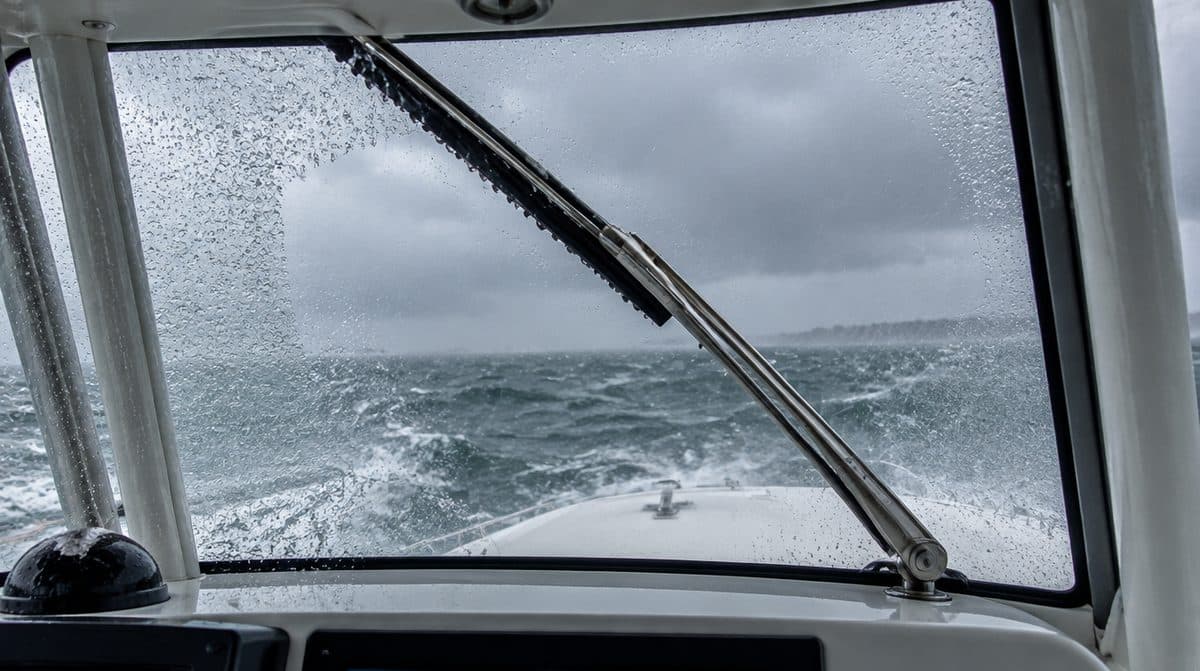
Boat Windshield Wipers: Clear Vision in Spray and Rain
The weather that smears your windshield is exactly the weather where you most need to see. How to match wiper motor, arm, and blade to your boat.
Running home in rain or heavy spray with a blurry windshield is dangerous. You are picking out channel markers, pot buoys, and other boats through smeared glass, usually at the exact moment the weather has everyone else racing for the ramp too. Marine wipers are built exactly for that job, and a system that actually fits your windshield turns a white-knuckle run into a routine one.
Why Car Parts Don't Cut It
It is tempting to grab an automotive blade at the parts store and call it done. Resist. A car wiper lives an easy life: fresh rainwater, a motor tucked inside a dry cowl, and a garage at night. A boat wiper gets salt spray that dries into an abrasive crust, sun on the rubber all day, and a motor living in damp, salty air. Marine systems answer that with stainless steel arms and blade frames, sealed motor housings, and rubber compounds that tolerate UV. An automotive blade will wipe fine for a few outings, then the frame starts bleeding rust streaks down your windshield and the rubber hardens into a squeegee-shaped noisemaker.
Match the System
Wiper motors, arms, and blades are sized to your windshield and must match as a system. Confirm arm length, blade length, and the shaft and mounting that fit your boat before you order anything. There are four things to pin down: the shaft type and size on your motor (that is what the arm grips), the arm length from pivot to tip, the blade length, and the sweep angle the motor delivers. If you are replacing a tired setup, photograph what is there, note the brand, and measure the arm and blade before you pull anything off. Mixing brands is possible but risky, because arm-to-blade connections vary: some arms have flat tips, some have hooks, and the splines that grip the motor shaft differ too. Buying arm and blade from the same maker sidesteps all of it. Adjustable arms help here: an arm that adjusts from 18 to 24 inches covers a lot of windshields with one part.
A Worked Sizing Example
Say your windshield panel is 26 inches wide and 18 inches tall. You want the blade to sweep as much glass as possible without slapping the frame at either end of its travel. A blade roughly 2 inches shorter than the panel height is a sensible starting point, so a 16 inch blade fits that 18 inch panel. Then set the arm length so the blade sweeps the center of the glass: with an adjustable 12 to 17 inch arm you can fine tune it on the boat, running the motor slowly by hand before you lock everything down. Taller panel, longer blade, and a stronger motor to push it. That is the whole logic.
Motor Strength
A marine wiper motor has to push water, heavy spray, and half-dried salt film, not just light rain. Size the motor to the blade length and the windshield: a longer blade drags more rubber across more glass and needs more torque, so do not pair a big blade with a small motor and expect it to survive. Use a sealed, marine-rated motor, full stop. Two features earn their keep fast: a two-speed motor, so you can match the sweep to conditions instead of listening to a frantic wiper in a drizzle, and self-parking, which returns the blade to the edge of the glass when you shut it off instead of leaving it parked mid-windshield.
Wiring It In
Give the wiper its own fused circuit sized to the motor's draw, run tinned-copper marine wire, and use heat-shrink crimp terminals at every connection, because the helm area gets wetter than it looks. Leave a drip loop before the motor housing so water running down the wire falls off instead of following it inside. If crimping is new territory, our marine wire and terminal guide covers the tools and the technique. None of this is hard, but a corroded butt splice behind the dash is the single most common reason a wiper that worked in the spring is dead by August.
Pantograph vs. Standard
A standard single arm pivots from one point and sweeps a simple arc, which suits smaller screens fine. A pantograph arm uses two parallel links so the blade stays upright through the whole sweep, clearing a wider, squarer patch of glass. On a big center-console or pilothouse windshield, that squarer sweep is the difference between a porthole of clear glass and actually seeing the water. Pantograph arms cost more and have more joints to rinse and lubricate, so put them where the glass area justifies it and run standard arms everywhere else.
Maintenance and Lifespan
Rinse the blades and arms with fresh water after salt trips, and wipe the rubber edge with a damp cloth now and then to clear the grit that causes chatter. Blade rubber is a consumable: when it hardens, cracks, or starts leaving ribbons of water, replace the blade or the refill and move on. Run the system for a minute every few weeks in the off season so the motor and linkages stay free, and put a drop of light oil on the arm pivot once a season. Check the arm's spring tension too, because an arm that no longer presses firmly will streak even with brand new rubber.
Signs Yours Is Done
Streaking with fresh rubber points to a tired arm spring. Chatter means hardened rubber or a salt-filmed windshield. A slow sweep, a hum with no motion, or a motor that only works when you wiggle the switch means wiring or motor trouble, and rust weeping from the arm pivots means the stainless plating has given up. Any of those on a boat you run in real weather is worth fixing before the day you genuinely need the wiper.
From the Water
Never run the wiper on a dry, salty windshield. Salt crystals act like sandpaper on the glass, and a hazed windshield is permanent. Hit the glass with the washdown or a bottle of fresh water first; ten seconds of rinsing protects both the glass and the blade.
Where to Get It
Everything in this guide is stocked at Boat Supplies Direct, the Nautical Network marine parts store.
In stock as this guide goes up: - Marinco Deluxe Stainless Steel Wiper Arm, Black, 18-24" - Marinco Deluxe Stainless Steel Wiper Blade, 16" - Marinco Deluxe Pantographic Wiper Arm, Black Stainless Steel, 12-17" Adjustable
Browse the full range: - Shop windshield wipers - Read the full buying guide, including FAQs
More from the Wire
 Buying Guides
October 18, 2026
Starting vs. Deep Cycle: The Battery Mistake That Strands Boaters
Starting, deep cycle, or dual purpose, and flooded, AGM, or lithium. How to pick the battery type that will not leave you stranded.
Read more Buying Guides
October 18, 2026
The Onboard Charger: Cheap Insurance for Expensive Batteries
Batteries die young when they sit half-charged. How to size an onboard charger by amps, banks, and chemistry.
Read more Buying Guides
October 18, 2026
Battery Switches and Isolators: Never Get Stranded by a Dead Battery
The switch and isolator setup that keeps your starting battery ready while the house bank runs your gear.
Read more