Bilge Pumps, Float Switches, and the Coast Guard Safety Short List
Your bilge pump is smaller than you think and your float switch is the weak link. The dewatering setup worth having, plus the USCG-required equipment list, verified.
Here is an uncomfortable truth about the pump keeping your boat afloat at the dock right now: it was never designed to save the boat. A standard bilge pump is built to clear rainwater and packing drips, not to keep up with a real leak, and its advertised capacity shrinks fast once it is lifting water up a hose against gravity through a few feet of head. Treat the bilge system as an early-warning setup and a time-buyer, and build it like you mean it.
The float switch is the weak link
Most bilge failures are not the pump. They are the humble float switch, gummed by oily water, jammed by a stray zip tie or a wandering fishing lure, or simply worn out. It costs little and sits in the nastiest spot on the boat, so test it on a schedule: lift the float by hand, listen for the pump, and watch for discharge overboard. Wire the pump through a three-way switch so it runs automatically on the float but can be forced on manually, and clean the bilge itself, because debris in dirty water is what kills switches.
One pump is none
Serious cruisers rig in layers. The primary pump sits low and handles the everyday trickle. A second, larger pump mounts higher, where it stays dry and unworn until the day water reaches it, ideally paired with a high-water alarm loud enough to hear over the engines, because a pump that quietly cycles all night masks the leak you need to know about. Every pump is only as good as its electricity, so give the system an honest battery budget: a float switch that can run the pump for hours needs a battery bank maintained for it, kept charged between trips, with connections above the water the pump is meant to remove.
What the Coast Guard actually requires
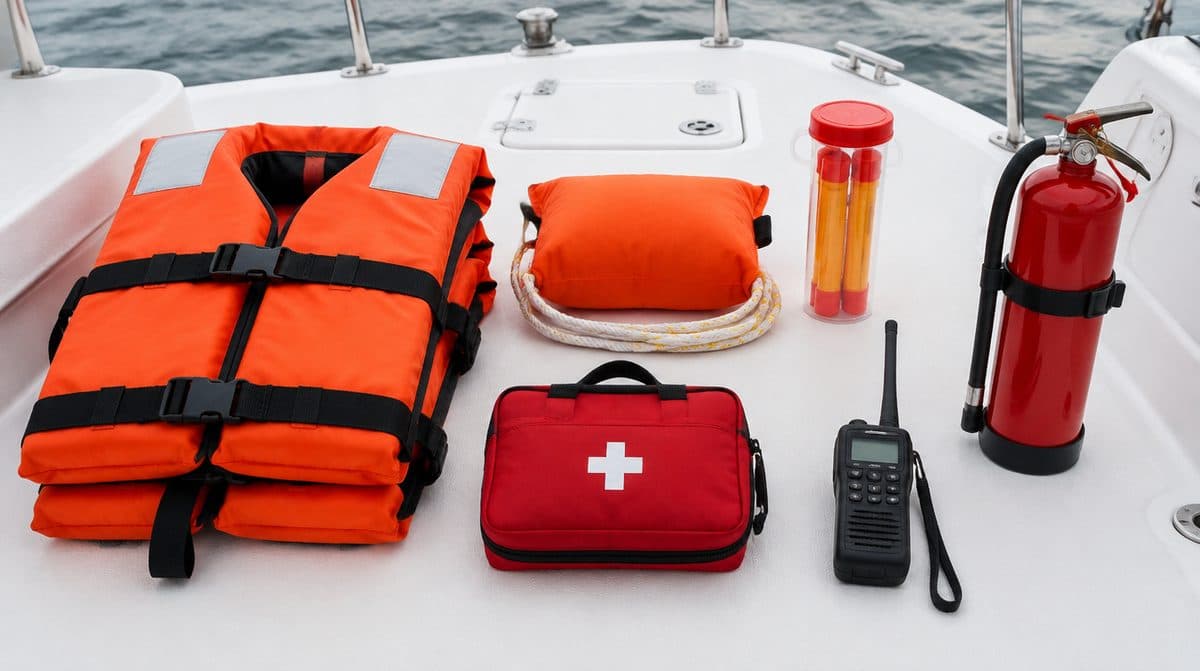
The federal minimums for a typical recreational powerboat are a short list, and worth getting exactly right. Life jackets: a Coast Guard approved wearable for every person aboard, sized for the wearer and readily accessible, not buried in shrink wrap under the bow cushions, plus a throwable device on boats 16 feet and over. Fire extinguishers: most powered boats under 26 feet must carry an approved 5-B extinguisher, boats of model year 2018 or newer must carry units labeled with the newer 5-B, 10-B, or 20-B ratings, and under a Coast Guard rule effective April 2022, disposable extinguishers are considered expired 12 years after the manufacture date stamped on the bottle. Visual distress signals: boats on coastal waters must carry them, with boats 16 feet and over required to have both day and night signals, and flares carry expiration dates the Coast Guard enforces. Round it out with a sound-producing device and working navigation lights for any running after dark. Florida boaters, remember FWC enforces these same minimums at the ramp.
Beyond the minimum
The required list keeps you legal. A few additions keep you found: a registered EPIRB or personal locator beacon for offshore runs, a handheld VHF that works when the house battery does not, and a cutting tool and flashlight mounted where you can find them blind. None of it is expensive against what it buys.
If your float switch is original equipment or your alarm situation is wishful thinking, a verified marine electrician can rewire the whole stack in an afternoon, and a training and safety pro can walk your crew through the gear you hope to never touch. Find both on Waypoint, and stock jackets, flares, and pumps in the shop.
More from the Wire
 Ownership
September 27, 2026
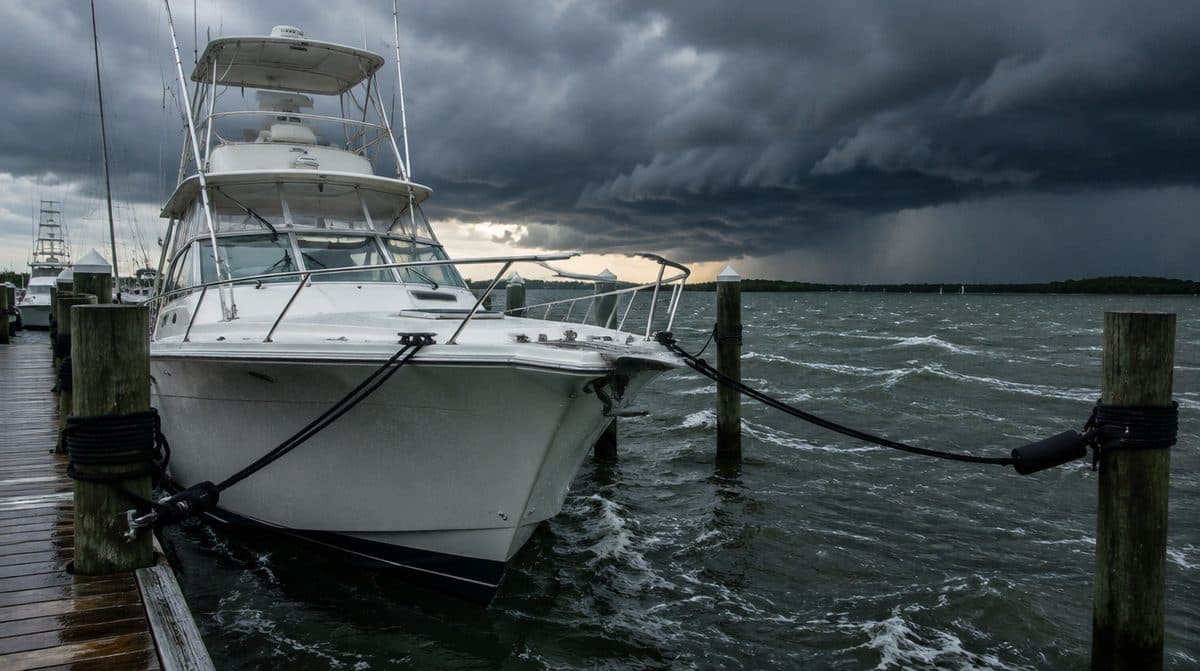
Hurricane Prep for Boat Owners: Write the Plan Before the Cone Shows Up
Haul or stay, doubled lines, stripped canvas, and the insurance fine print: the hurricane decisions Florida boat owners should make in May, not at the storm briefing.
Read more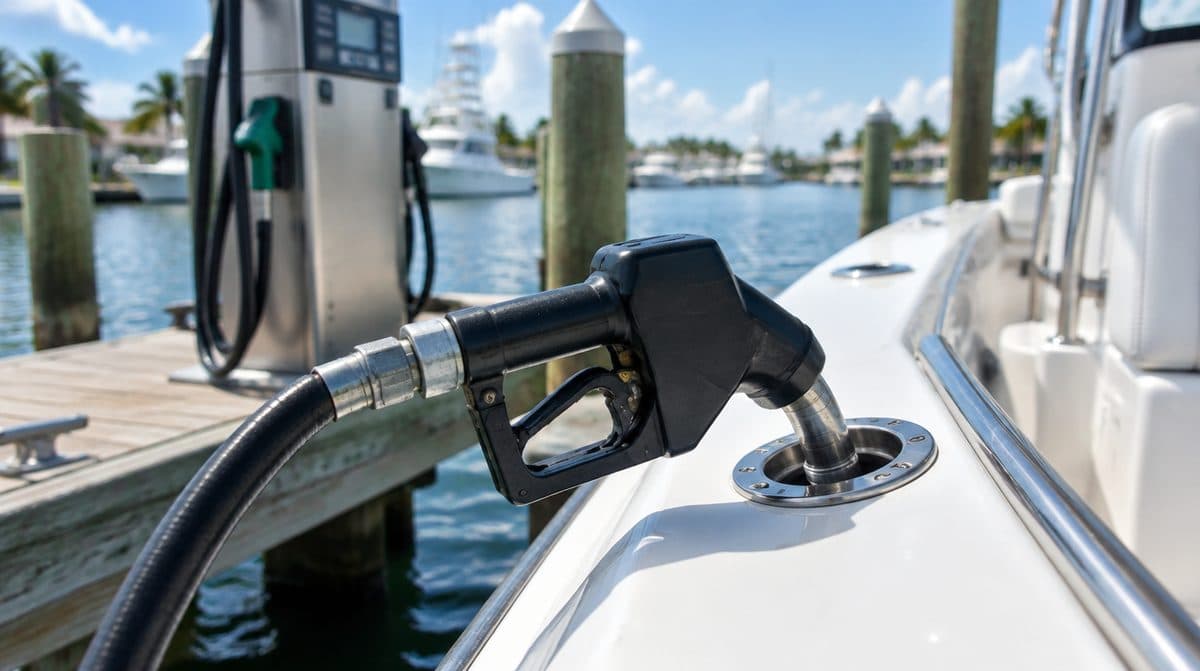 Ownership
September 26, 2026
E10 and Your Marine Engine: Phase Separation, Storage, and Stabilizer Habits
Why the same gas your truck burns happily can wreck a boat engine: what E10 does in a vented marine tank, how phase separation works, and the habits that prevent it.
Read more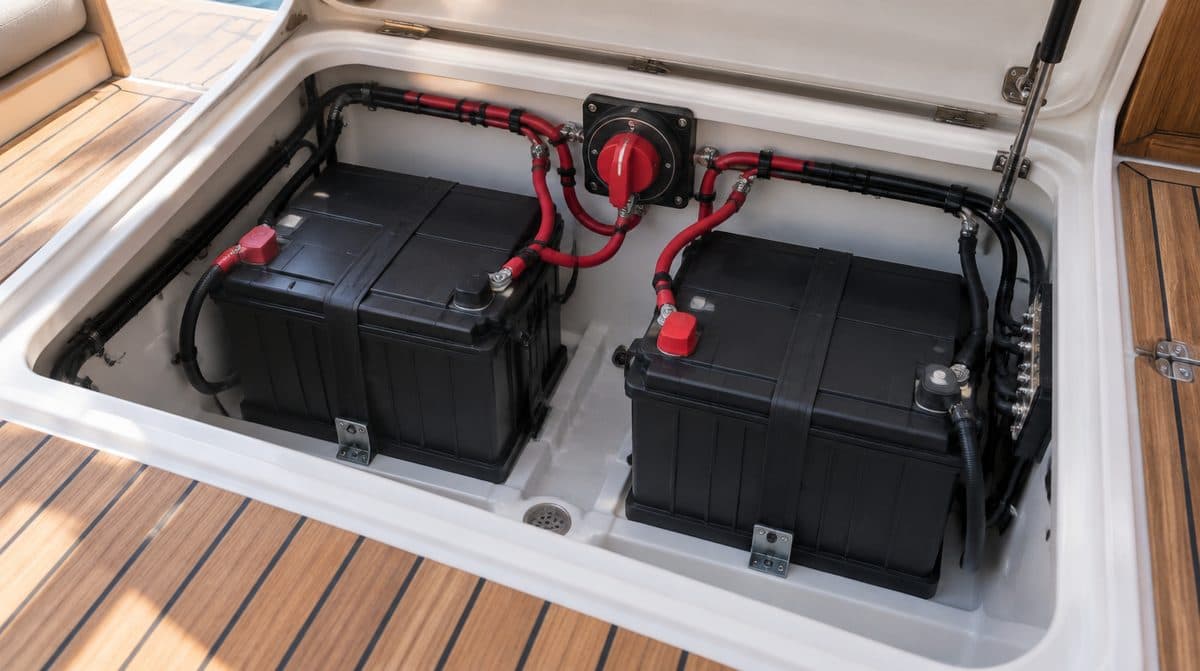 Ownership
September 25, 2026
Marine Batteries, Explained: Starting vs Deep Cycle, and Why Boats Eat Them
Starting, deep cycle, or dual purpose; flooded, AGM, or lithium. A plain-words guide to picking marine batteries and keeping them alive in Florida heat.
Read more