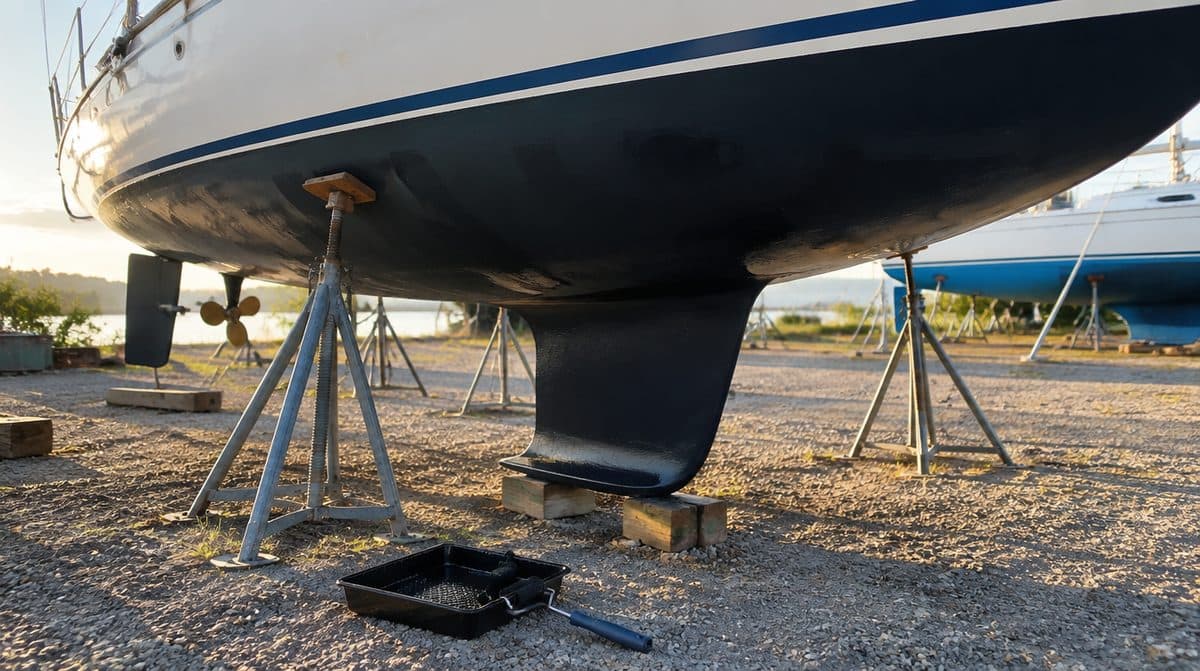
Bottom Paint: Stop Growth Before It Slows You Down
Barnacles do not care what you paid for your boat. How to choose between ablative and hard bottom paint, and what your home water is trying to tell you.
A fouled bottom costs you speed and fuel and can damage the hull over time. Barnacles, slime, and weed turn a slick hull into sandpaper, the engine works harder to push the same boat, and hard growth left long enough can scar gelcoat in ways that outlast any single season. The right bottom paint keeps growth off, but "right" depends entirely on how and where you use the boat. Here is how to sort it out before the yard bill sorts it out for you.
How antifouling actually works
Most bottom paint works the same basic way: the film carries a biocide, typically copper-based, that releases slowly at the surface and makes your hull an unpleasant place for larvae and spores to settle. The difference between paint types is how that biocide reaches the water. Ablative paints wear away in use, constantly exposing fresh biocide the way a bar of soap stays soapy down to the last sliver. Hard paints keep their film and let the biocide leach out through it, which is why a hard paint can look perfectly intact and still be completely spent. Foul-release coatings are the other branch of the family: no biocide at all, just a surface too slick for growth to grip, which is the approach used on props and running gear.
Ablative vs. hard
- Ablative (self-polishing): wears away slowly, releasing fresh biocide, good for boats used regularly and those hauled and relaunched. No heavy buildup, so you are not grinding a decade of dead paint off the hull years from now.
- Hard/modified epoxy: tough film good for high-speed boats and frequent scrubbing, but builds up over years and loses potency out of the water. Once a hard-painted boat has sat hauled and dry for a long stretch, plan on repainting before it goes back in.
Match to how you boat
- Boat sits in the water most of the season: ablative is forgiving. Normal use keeps polishing the surface and refreshing the protection.
- Trailered or frequently hauled: ablative that keeps working after relaunch, since hard paints tend to give up once they have dried out.
- Raced or scrubbed often: hard paint. It stands up to aggressive cleaning and speed without wiping away the film you paid for.
Water type and growth
Choose biocide strength for your water and growth pressure. Warm, high-growth waters need stronger antifouling. A boat in a warm, still canal faces a completely different fouling battle than one on a cool, fast-moving river, and salt, brackish, and fresh water each grow their own mix of trouble. The best intelligence is not on the label, it is on the docks: ask the boats around you and the local yard what actually comes out clean in that specific harbor, because they have already run the experiment for you.
Prep decides the outcome
Bottom paint fails at the prep stage far more often than in the can. The hull needs to be clean, dry, and dull: pressure wash at haul-out, let it dry properly, and scuff sand so the new coat has something to bite. Check compatibility before you roll, because not every paint sticks to every old coating, and an incompatible layer peels in sheets and takes your new paint with it. If the old coating is flaking badly or you are down to bare gelcoat, that is the moment to strip and apply a barrier coat. Tape a clean waterline, roll thin even coats, and respect the recoat and launch windows printed on the can. Those windows are rules, not suggestions.
Do not forget the running gear
Conventional bottom paint does a poor job on props, shafts, and trim tabs, where spinning metal and turbulence strip it quickly. That is the territory of dedicated foul-release coatings: slick systems made to keep barnacles from ever getting a grip on bronze and stainless. Transducers deserve the same thinking, since a fouled transducer reads like a broken one, and there are coatings formulated specifically to keep them clear without harming the element. Some owners add an ultrasonic antifouling system, which uses transducers inside the hull to discourage growth between haul-outs. None of this replaces bottom paint; it covers the spots bottom paint covers worst.
One boundary worth stating plainly: antifouling is for below the waterline only. The shiny side up top wants wax, not biocide, and we cover that in our boat wax and polish guide.
Knowing when it is spent
Growth is the obvious sign, but read it carefully. Soft slime that wipes off easily is normal late-season wear. Barnacles settling across broad areas of the hull mean the biocide is done, not dirty. On ablatives, use the signal coat trick: roll a contrasting color underneath, and when that color starts ghosting through, you are repainting on schedule instead of on faith. On hard paint, heavy buildup, flaking, or cracking means it is time to strip back rather than add another layer to the problem.
Mistakes to avoid
- Buying on price per gallon instead of fit for your water and your usage. The cheap can you have to reapply constantly is not cheap.
- Painting over anodes, transducers, or any fitting that needs to stay bare to do its job.
- Launching outside the paint's window, or letting an ablative-painted boat sit dry for months and expecting full strength on relaunch.
- Skipping the sanding because the old paint "looks fine." Adhesion does not care how it looks.
From the Water
Think about where the boat spends most of its time. A boat sitting in a warm canal needs a different strategy than one trailered every weekend. Be honest about your real usage, not the usage you plan to have, because the paint only knows where the hull actually sits. When in doubt, copy the boat in the next slip that comes out clean every fall.
Where to Get It
Everything in this guide is stocked at Boat Supplies Direct, the Nautical Network marine parts store.
In stock as this guide goes up: - PropGlide Prop and Running Gear Coating Kit, Small (250ml) - Propspeed Foulfree Transducer Coating - BPS Marine BPS-1 Single-Transducer Ultrasonic Antifouling System, 12VDC
Browse the full range: - Shop antifouling - Read the full buying guide, including FAQs
More from the Wire
 Buying Guides
October 18, 2026
Starting vs. Deep Cycle: The Battery Mistake That Strands Boaters
Starting, deep cycle, or dual purpose, and flooded, AGM, or lithium. How to pick the battery type that will not leave you stranded.
Read more Buying Guides
October 18, 2026
The Onboard Charger: Cheap Insurance for Expensive Batteries
Batteries die young when they sit half-charged. How to size an onboard charger by amps, banks, and chemistry.
Read more Buying Guides
October 18, 2026
Battery Switches and Isolators: Never Get Stranded by a Dead Battery
The switch and isolator setup that keeps your starting battery ready while the house bank runs your gear.
Read more