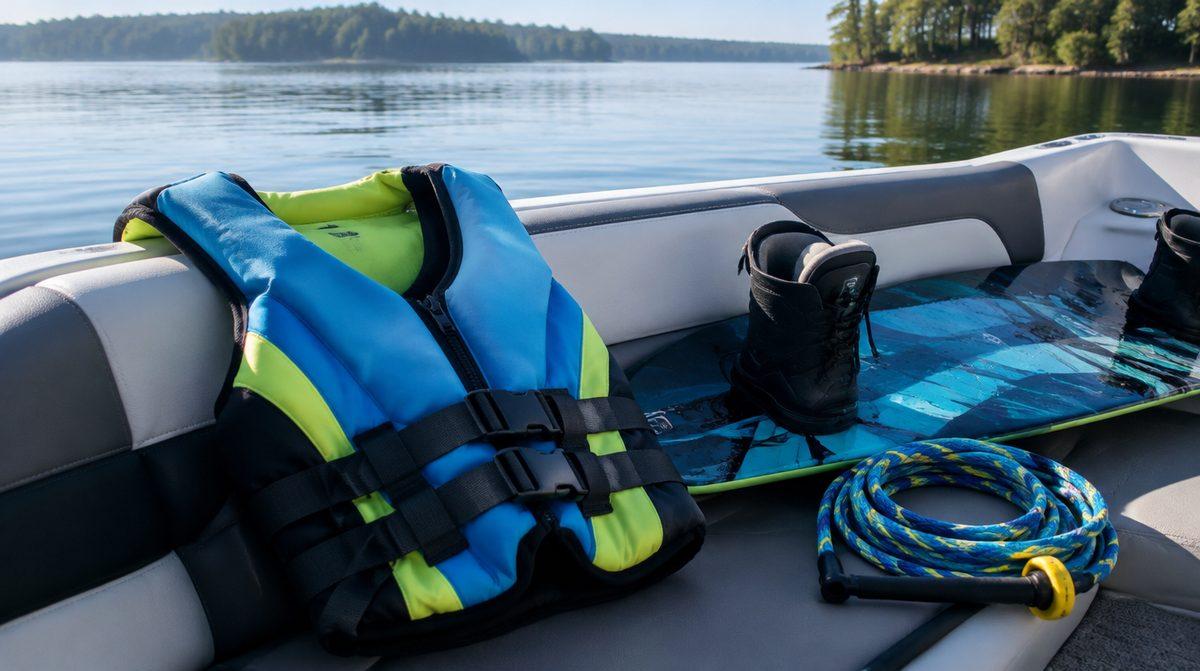
Watersports Life Vests: Protection and Freedom to Move
Impact vests and approved PFDs look nearly identical on the rack, and the difference matters most at the worst moment. How to tell them apart, fit one for hard water, and pick vests your crew will actually wear.
Riders want to move freely, and parents want them safe. Watersports vests are built to do both jobs at once, which is exactly why shopping for one is more confusing than it should be. Half the vests on the rack are legal flotation devices. The other half are padded shirts with buckles. They look nearly identical from ten feet away, and the difference only matters at the worst possible moment.
Here's how to tell them apart, fit one properly, and pick a vest your crew will actually keep zipped.
Impact Vests vs. Approved PFDs
This is the single most important distinction in the category, so let's nail it down first.
- Coast Guard approved vests: provide rated flotation and satisfy carriage requirements. The approval is printed right on the inside label, along with the sizing. If the label doesn't say approved, it isn't.
- Comp/impact vests: low profile for freedom of movement in wakeboarding, but may not be approved flotation. They pad hard water impacts and add some buoyancy, and serious riders love them for exactly that. Know the difference and the rules for your use.
The trap is that a comp vest feels like a life jacket when you put it on. It is not one unless the label says so. A rider who gets knocked silly on a hard landing needs a vest that floats them face up without any help from them, and that is precisely the job approved flotation is designed and tested to do.
For tubing and skiing where the law requires an approved PFD, wear one. No argument, no exceptions for strong swimmers. The tow sports where people hit the water hardest are the last place to go without rated flotation.
How a Vest Actually Keeps You Afloat
A foam vest works by simple displacement. The foam panels are lighter than the water they push aside, and that difference is the lift that holds your head up. More foam means more lift, which is why approved vests feel bulkier than comp vests: the rating requires a minimum amount of buoyancy, and buoyancy takes volume.
Where that foam sits matters as much as how much there is. A well designed vest concentrates flotation around the chest and back so you ride higher and more upright in the water. A vest that fits poorly moves that flotation somewhere useless, usually up around your ears.
Fit for High Speed
A watersports vest must fit snug so it does not ride up on hard water impact. A fall at speed is like hitting the water with a fire hose pointed up your torso. A loose vest slides toward your chin, and suddenly the thing meant to float you is blinding you and climbing off your shoulders.
Size by chest measurement, not by t-shirt size and not by guessing. Wrap a tape around the widest part of the chest and match it to the maker's chart. Then do the tug test: buckle and zip everything, and have someone pull up firmly on the shoulders. If the vest moves more than an inch or two, cinch the straps or go down a size.
Snug does not mean suffocating. You should be able to take a full deep breath with everything buckled. If you can't, it's too small, and it will spend the day unzipped on the deck, which helps nobody.
Freedom of Movement
Segmented foam and flex panels let riders paddle, rotate, and reach. That mobility is why watersports vests differ from bulky boating PFDs. A rider setting up for a toeside cut or climbing back onto a tube needs shoulders that move, and modern vests get there by splitting the foam into articulated blocks instead of one stiff slab.
Try the vest on and swing your arms across your chest, then overhead. A good watersports vest almost disappears. If it bunches under your arms or pins your shoulders, keep looking. Comfort is a safety feature: the vest that feels good is the vest that stays on all day.
Kids and Teens
Kids' vests are sized by the weight range printed on the label, not by age, so weigh the kid before you shop. Look for a grab handle on the collar of small children's vests. It makes plucking a tired swimmer out of the water a one-hand job, and it doubles as a confidence handle for new swimmers at the sandbar.
Teens are the awkward middle: too big for child sizes, often swimming (so to speak) in adult smalls. A dedicated teen vest splits that difference, and a teen who has a vest that fits and doesn't look babyish is a teen who will actually wear it. If you're outfitting the whole boat beyond the tow crew, our life jacket and PFD guide covers the broader flotation picture.
Signs It's Time to Replace
Foam vests age. Sun, salt, and compression slowly cost them buoyancy, and a vest that spent three summers wet under a bow cushion is not the vest it was new. Replace a vest when the foam feels hardened or thin, when seams or straps fray, when buckles crack, or when the fabric has faded badly, since heavy fading usually means heavy UV exposure underneath too. And replace any vest a kid has outgrown the moment the tag's weight range no longer matches the kid. A vest that is too small does not just pinch. It floats them wrong.
Mistakes to Avoid
Buying one size up so a kid can grow into it: a loose vest rides up and can slip off entirely. Buy for the body you have today.
Treating a comp vest as legal flotation: check the label, and keep approved vests aboard for every rider regardless.
Leaving vests compressed under gear all season: stored squashed, foam loses loft. Hang them or lay them flat.
Skipping the zipper and relying on buckles alone: use every closure the vest has. Each one you skip is slack the water will find.
From the Water
Have riders jump in at the dock with the vest on first. It's the fastest way to check fit and make sure it doesn't ride up. If the collar hits their chin or the shoulders climb toward their ears, cinch the straps or swap sizes before the boat ever leaves the slip. Thirty seconds at the dock beats a mid-lake wardrobe crisis every time.
Where to Get It
Everything in this guide is stocked at Boat Supplies Direct, the Nautical Network marine parts store. Orders ship free all year with Dock Pass, the $49 a year shipping pass.
In stock as this guide goes up: - Full Throttle Adult Nylon Life Jacket, Black/Red (S/M) - Full Throttle Youth Rapid-Dry Life Jacket, Aqua - Full Throttle Teen Nylon Life Jacket, Yellow/Black
Browse the full range: - Shop watersports life vests - Read the full buying guide, including FAQs
More from the Wire
 Buying Guides
November 3, 2026
The Best Life Jacket Is the One You'll Actually Wear
Most drownings happen with a life jacket still on the boat. How to match PFD type to the activity and get a fit that stays put in the water.
Read more Buying Guides
November 7, 2026
Man Overboard: The Gear and Plan That Bring Them Back
A head in the waves vanishes faster than you think. The gear that marks, reaches, and recovers, and the one crew job that saves most rescues.
Read more Buying Guides
November 4, 2026
Marine Fire Extinguishers: Required Gear That Saves Lives
A fire on the water leaves you no exit. What the ratings mean, how many extinguishers your boat needs, and where to mount them so you can actually reach one.
Read more