Underwater Lights: The Glow That Draws Fish and Turns Heads
The glow at the transom is not just for looks. How lumens, color, and mounting style decide whether your underwater lights draw a crowd of bait or just drain a battery.
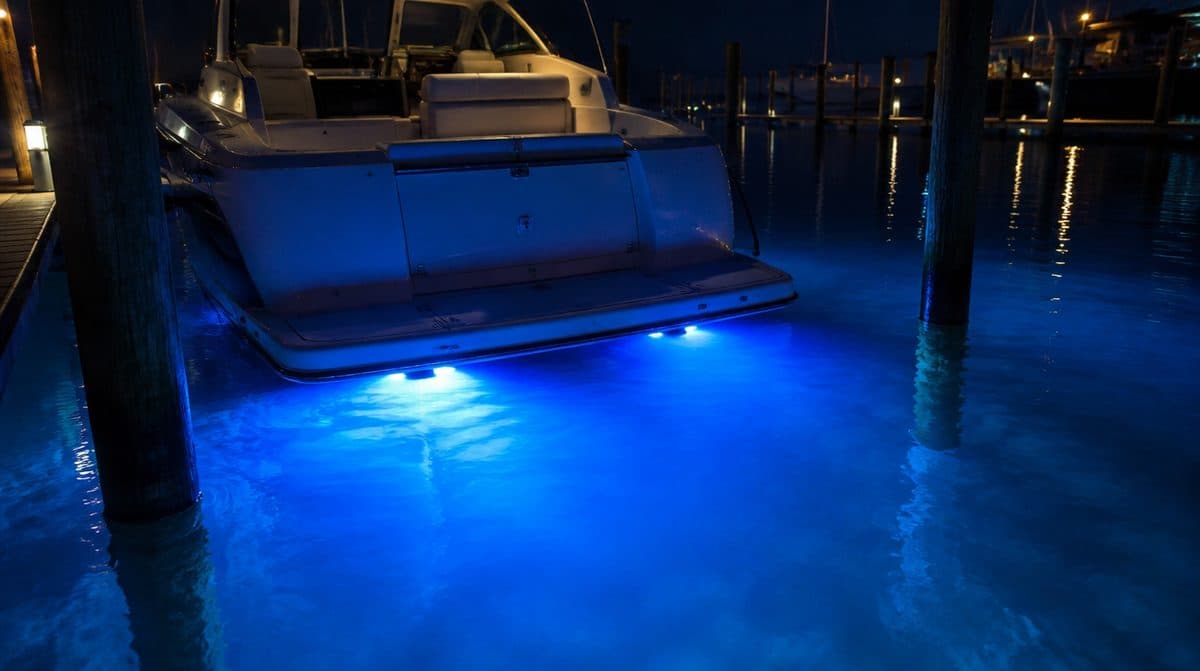
Few things look better at the dock at night than a boat glowing from below the waterline, and the fish like it as much as the guests do. Underwater LEDs went from megayacht flex to common transom upgrade in a hurry, and the good ones are sealed, efficient, and surprisingly simple to install. Here is how to pick the right setup instead of just the brightest listing.
Why light below the waterline works
The glow does two jobs. For looks, light shining through water turns your transom into the best-lit spot in the marina. For fishing, it kicks off a food chain: light in the water draws the tiny stuff, the tiny stuff draws baitfish, and baitfish draw the predators you actually want on the line. That is why underwater lights are standard equipment on serious night-fishing boats and why the dock lights at every fish camp have a crowd of snook or stripers under them.
Brightness and count
Brightness is measured in lumens. Bigger transoms and deeper, murkier water need more lumens and more lights. Space lights evenly across the transom for a smooth glow. One powerful light in the middle of a wide transom gives you a hot spot with dark corners; two or three evenly spaced lights give you the even wall of color that looks intentional. Clear water lets the light travel, so the same fixture that looks spectacular in the Bahamas will look dimmer in a tannic river, and stained water is where extra lumens pay off.
Color
- White: maximum visibility and brightness.
- Blue/green: popular for attracting bait and fish, and for looks.
- Color-changing (RGB): flexibility for looks and fishing.
Green and blue tend to draw bait best in many waters. As a rough habit, blue shows off best in clear water and green keeps its punch in stained or murky water. If you cannot decide, RGB fixtures let you run blue at the dock on Friday and green over the reef on Saturday, and the price gap has narrowed enough that flexibility is usually worth it.
Surface vs. thru-hull
- Surface-mount: easier install on the transom, no hole below the waterline.
- Thru-hull: brightest and best heat dissipation, more involved install.
Surface-mount lights are the sane choice for most trailer boats and DIY installs: they bed to the transom with sealant, and the cable typically enters the hull above the waterline. Thru-hull fixtures are the high-output option for larger boats, but they put a hole below the waterline, which means a haul-out and real consequences for sloppy work.
Before you commit to locations, look at what already lives on your transom. Lights need clear water in front of them, so keep them away from trim tabs, transducers, swim platform brackets, and the outboard's path through its full range of tilt and turn. Mounting a few inches too close to a tab means half your glow lights up the back of a stainless plate instead of the water.
Installation realities
For a surface-mount install, the job is mostly careful sealant work: bed the fixture, route the cable up and over to a dry entry point, and give the sealant its full cure time before the boat goes back in. Wire the circuit through a properly sized fuse and a switch you can reach at night. A thru-hull install is a different weight class: if drilling below the waterline is not your comfort zone, this is exactly the job for a verified marine electrician or installer on Waypoint.
One more wiring note: underwater lights live in the splash zone, so use tinned marine wire and adhesive-lined heat shrink on every connection. When a young light "dies," the corroded butt splice behind the transom is the first suspect to interview.
Maintenance and lifespan
LEDs themselves last a long time; what fails is everything around them. Marine growth on the lens dims the show, so wipe the lenses whenever you clean the bottom or scrub the waterline. Many fixtures rely on surrounding water to carry heat away, so avoid running them for long stretches with the boat on the trailer. Check the sealant bead and cable entry once a season, and look for fogging inside the lens, which means the seal has started to give up and the fixture is on borrowed time.
Mistakes to avoid
- Buying one big light for a wide transom when two or three spaced fixtures would light it evenly.
- Running the lights dry in the driveway to show the neighbors. Brief tests are fine; long dry runtime cooks fixtures that expect water cooling.
- Using cheap non-marine RGB strips below the rub rail. They are not sealed for immersion and the regret arrives quickly.
- Skipping the fuse because "it's just lights." Every circuit that passes through the bilge area deserves protection.
From the Water
Turn the lights on at the dock after dark and give it 20 minutes. Bait usually starts to gather, and the bigger fish follow. Cast to the edges of the glow rather than the bright center; the predators tend to hold just outside the light, picking off whatever drifts past.
Where to Get It
Everything in this guide is stocked at Boat Supplies Direct, the Nautical Network marine parts store.
In stock as this guide goes up: - Underwater lighting and the wiring to install it, in the electrical collection
Browse the full range: - Shop electrical - Read the full buying guide, including FAQs
More from the Wire
 Buying Guides
October 18, 2026
Starting vs. Deep Cycle: The Battery Mistake That Strands Boaters
Starting, deep cycle, or dual purpose, and flooded, AGM, or lithium. How to pick the battery type that will not leave you stranded.
Read more Buying Guides
October 18, 2026
The Onboard Charger: Cheap Insurance for Expensive Batteries
Batteries die young when they sit half-charged. How to size an onboard charger by amps, banks, and chemistry.
Read more Buying Guides
October 18, 2026
Battery Switches and Isolators: Never Get Stranded by a Dead Battery
The switch and isolator setup that keeps your starting battery ready while the house bank runs your gear.
Read more