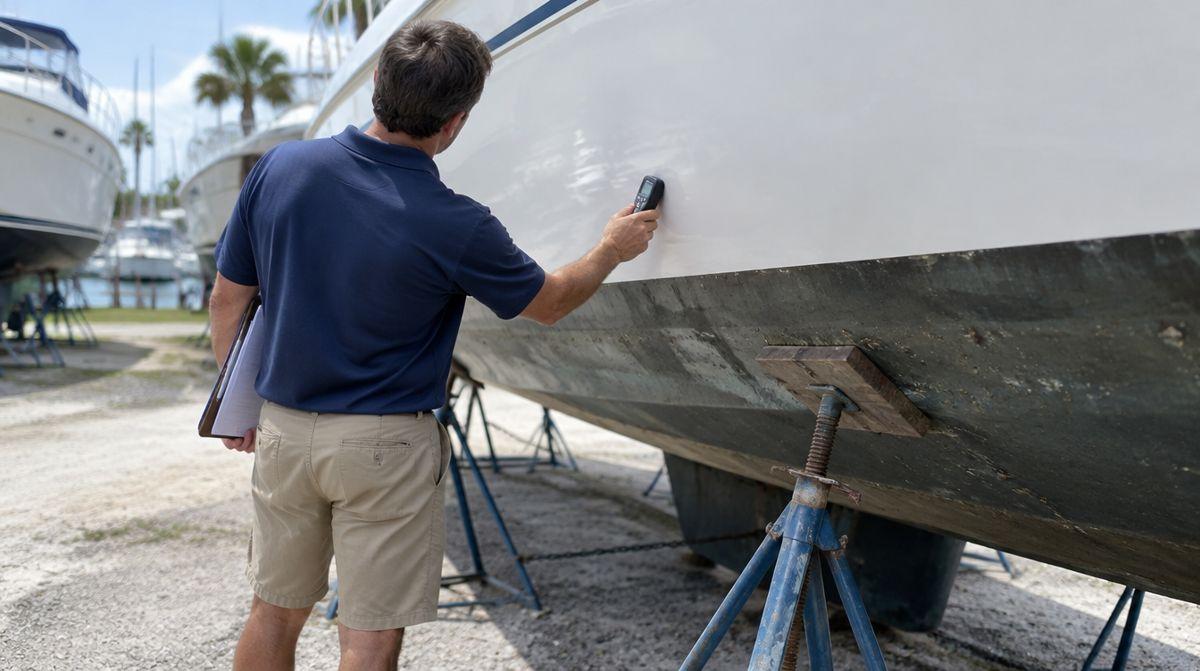
The Spring Damage List: What Winter Actually Breaks on Stored Boats
Spring surveys repeat the same findings every year, and almost none of them are caused by cold. They are caused by what the cold found. Here is the list, in time to prevent it.
Winter gets blamed for a lot of damage it did not cause. Cold does not crack an engine block; the water somebody left in it does. Spring commissioning season repeats the same findings year after year, and nearly every one traces back to a fall shortcut. Here is the list, published in November on purpose.
Water where it should not be
The expensive classics are all trapped water: an engine block or manifold that did not fully drain, a sea strainer left full, a livewell line that held a low spot, a gear case with a compromised seal. Water expands about nine percent when it freezes and it does not negotiate. The fix costs nothing but thoroughness: find every low point, pull every drain, and when in doubt about a sterndrive or inboard, pay a pro for the one job where a missed step costs a block. Milky gear lube at fall drain time is the early warning that a seal needs attention before spring.
The slow leak above the waterline
Covers and wrap fail quietly. A small tear or a pooled low spot lets water in all winter, and a boat stored bow-down collects it in the worst place. Store bow-up with the drain plug out and check the cover after the first heavy snow, not in April. If the boat sits in a yard you cannot visit, this is one of the quiet advantages of indoor storage: nobody has to check a cover inside a building.
Mildew is a winter crop
That musty spring cabin grew all winter in trapped humidity. Prevention is ventilation plus dryness: vented wrap or a breathable cover, cushions stored on edge or taken home, lockers propped open, and a moisture absorber or two in the cabin. Wipe-downs before layup matter more than any product after.
Rodents, the underrated adversary
Mice overwinter beautifully in stored boats: upholstery foam for bedding, wiring insulation for entertainment. Spring wiring repairs from rodent damage are common enough that yards joke about it. Remove every scrap of food, leave lockers open so there are fewer cozy voids, and use deterrents at the jack stands. Check once mid-winter if you can.
The parts that age in place
Some spring failures are just time showing up: sacrificial anodes that were already thin in October, bellows and impellers another winter stiffer, trailer tires flat-spotting under load. Fall is the time to read the anodes, because they read the boat; our anode and zinc guide explains what the wear patterns mean. Impellers and bellows have calendar lives as much as engine-hour lives, and the layup is when the calendar advances unwatched.
The honest conclusion
Nothing on this list is exotic and none of it requires luck to avoid. It requires an afternoon of thoroughness in November and five minutes of checking in January. If you would rather hand the whole checklist to someone who does it a hundred times a season, Waypoint lists mechanics and yards nationwide, and winterization is on nearly every mechanical listing's services. Either way, make the list now. The spring version of you is counting on it.
More from the Wire
 Ownership
September 23, 2026
The Winter Project List: Upgrades Boaters Regret Not Doing
The off-season upgrades owners wish they had done sooner, from an anchor windlass and a lithium house bank to lighting, sound, and new canvas, and why winter is when good shops have time.
Read more Ownership
November 7, 2026
Shrink Wrap, Covered, or Indoor: What Winter Storage Actually Buys You
Every winter storage option is really a moisture-management strategy. Here is what each one does well, where each fails, and how to pick for your boat and your winter.
Read more Ownership
November 5, 2026
Boat Batteries in Winter: Store Them Right or Buy New Ones in Spring
More marine batteries die over the winter than on the water. The difference between four seasons and one is what happens between November and April.
Read more