Tackle Storage That Stays Organized and Rust-Free
Rusty hooks and tangled trays are a storage problem, not a fishing problem. Boxes, bags, and tray systems that keep saltwater away from your tackle.
Open a neglected tackle box after a salty trip or two and you know the smell: trapped moisture, rusted hooks fused to the tray, and a jig you liked welded to three you never used. Replacing tackle you already owned is the most annoying money in fishing. Good storage fixes it, keeps rigging time short, and means the lure you want is actually where your hand goes looking for it.
Boxes, Bags, or a Built-In System
Tackle boxes are the classic: rigid, stackable, and protective, with a lid that doubles as a seat in a pinch. They shine when the gear lives in one place and comes out as a unit.
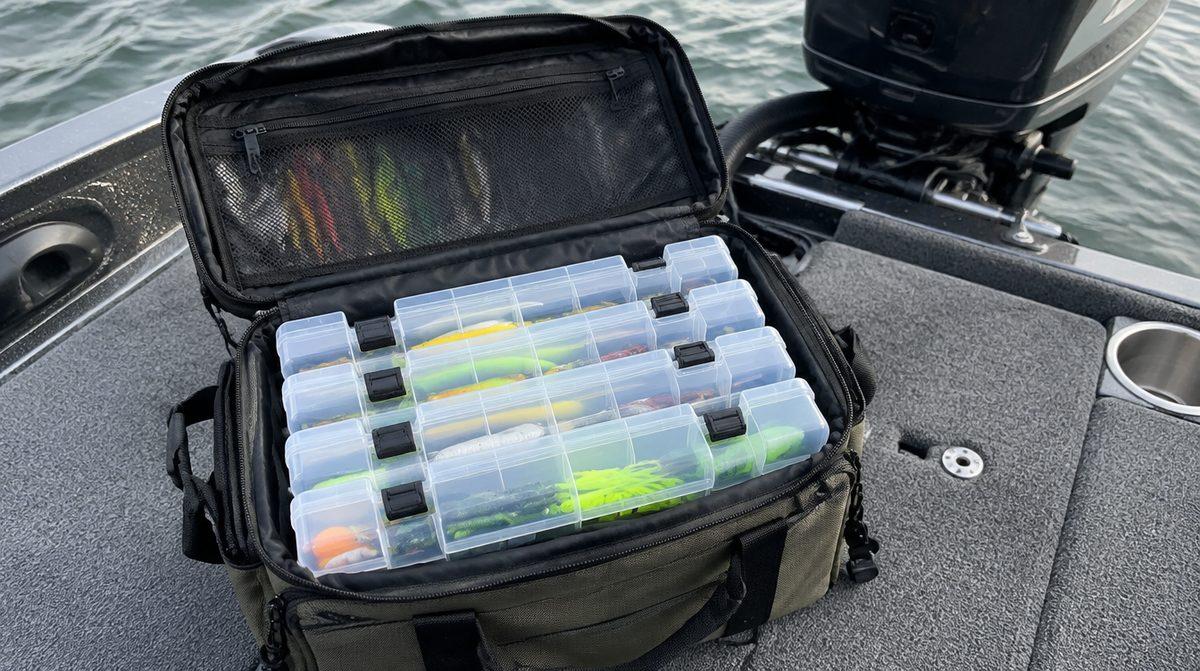
Tackle bags are soft-sided carriers built around removable utility trays, with pockets for pliers, leader spools, and all the loose stuff that never fits anywhere else. They are light, easy to sling over a shoulder, and easy to reconfigure, which makes them the pick for anglers who fish from different boats or walk the dock.
Onboard systems are the end game: tackle stations, dedicated drawers, and under-gunwale racks built into the boat itself, usually sized around standard trays. Nothing beats them for a boat you fish hard, because the storage never has to come aboard or go home.
Standardize on a Tray Size
Utility trays are the common currency of modern tackle storage, and the two sizes you will see everywhere are the 3600 and 3700 series. The 3700 has the bigger footprint, with room for larger plugs and long soft plastic bags. The 3600 packs smaller and lighter for inshore and finesse gear. Either works. What matters is picking one and standardizing, because when every bag, boat slot, and garage shelf takes the same tray, you can swap loadouts for a trip in seconds. Mixing sizes is a lifelong headache: some trays fit some slots, nothing stacks square, and you end up buying storage for your storage.
Waterproof or Water Resistant
Read the seals, not just the label. A waterproof tray has a gasketed lid and positive latches that keep spray and rain out even when it rides on deck all day. Water-resistant boxes shrug off splash but will not survive sitting in a puddle of washdown water. Match the protection to where the tray actually lives: the ones in the console can be ordinary, while the ones riding in the open or holding your expensive hardbaits deserve real gaskets.
Winning the Rust War
Saltwater destroys cheap boxes and rusts hooks fast, and rust spreads tray to tray once it starts. Look for corrosion-resistant hardware, because a stainless hinge pin outlives a mild steel one by years in salt air. Some premium trays go further and build corrosion inhibitors into the plastic itself, which is worth the upcharge for the trays holding treble-hooked baits. Your habits matter just as much: rinse lures that got wet, let everything dry before the lid closes, and never shut damp gear into a sealed box, because a waterproof seal keeps moisture in exactly as well as it keeps it out.
Organize by Trip, Not by Collection
The tidiest system is one tray per technique or target: a tray for jigs, a tray for topwater, a tray for the bottom rig hardware. Then packing for a trip is grabbing trays, not sorting a pile. Label the ends so you can read them edge-on in a stack, and keep one mostly empty tray as the day box, loaded with just what the day calls for.
Onboard Storage Realities
Gear that lives on the boat faces a different fight than gear that rides home in the truck. Compartments trap humidity, hatches leak a little more every year, and sun cooks anything left on deck. Favor compartments that drain, crack sealed boxes open in the garage now and then to let them breathe, and give anything stored aboard a once-over for rust before it spreads. If your boat has a built-in tackle station, treat its drawers like trays: same standard sizes, same rinse-and-dry habits, same silica packs.
Signs It Is Time to Replace
Hinges crack, latches lose their snap, and lids warp until the seal is a suggestion. A tray that will not stay shut in a bouncing boat is done, and a box with rust stains in the wells will keep seeding rust into new hooks. Trays are the cheap part of the system. Retire them early.
Mistakes to Avoid
- Buying bags and boxes first and discovering they take different tray sizes.
- Storing damp lures in a sealed waterproof tray.
- Leaving the whole collection aboard in the sun when you fish twice a month.
- Loose hooks rattling in a pocket instead of clipped into foam or a tray well.
- Ignoring a little rust on one hook, which never stays on one hook.
From the Water
Drop a few silica gel packs into each tray. They pull moisture out of the air and slow rust dramatically. Save the packs that come in shoe boxes and electronics packaging, or buy the rechargeable kind you can dry in a low oven and use again. Swap them when they feel heavy, because a saturated pack is just a passenger.
Where to Get It
Everything in this guide is stocked at Boat Supplies Direct, the Nautical Network marine parts store. Orders ship free all year with Dock Pass, the $49 a year shipping pass.
In stock as this guide goes up: - Plano Waterproof Stowaway 3600 - Rapala RapStack 3700 Deep Tackle Tray - Rapala Venture 8 Sling Pack
Browse the full range: - Shop tackle storage - Read the full buying guide, including FAQs
More from the Wire
 Buying Guides
October 19, 2026
Battery Boxes and Trays: Keep Your Battery Locked Down
A loose battery in a chop is a projectile, a short circuit, and an acid leak waiting to happen. How to match a box or tray to your battery group and lock it down properly.
Read more Buying Guides
November 22, 2026
Keep Your Bait Kicking: The Livewell Pump Guide
Lively bait catches fish, and the pump decides whether it stays lively. GPH sizing with the math shown, fill versus recirculate, and the wiring details that keep a well full of bait alive all day.
Read more Buying Guides
November 20, 2026
Gift Guide for the Angler: What to Buy the Person Who Is Always Fishing
Fillet knives, shears, cutting boards, dry boxes, and coolers: practical gifts for anglers that get used every single trip.
Read more