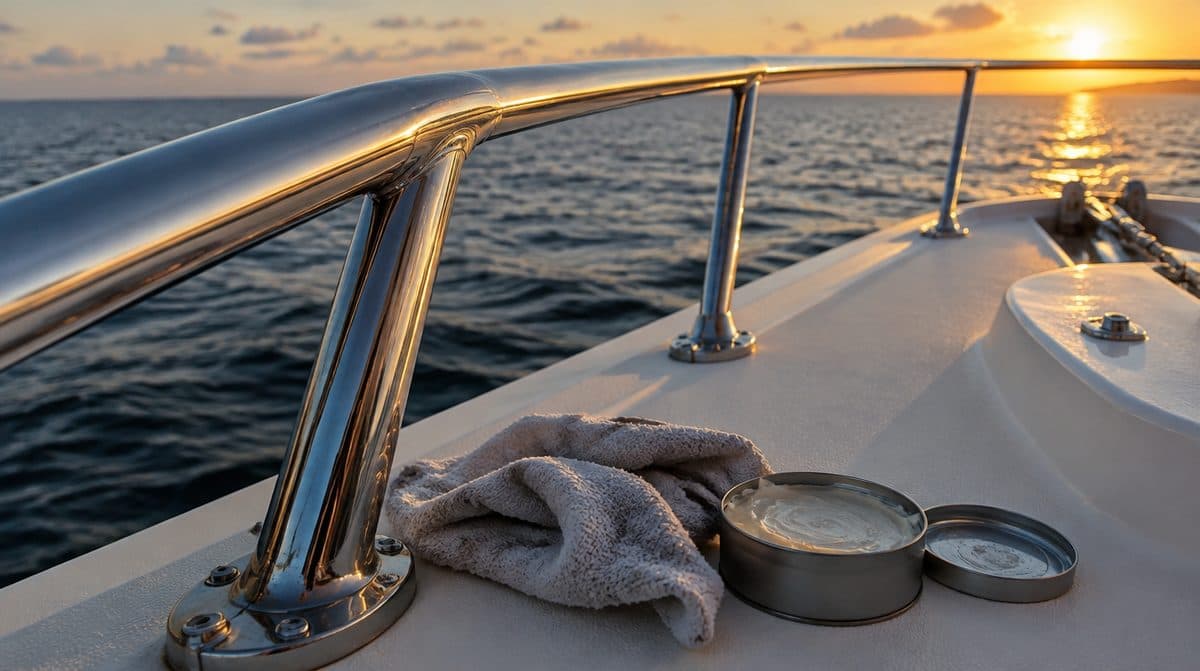
Marine Metal Polish: Keeping Stainless Bright in Salt Air
Stainless really means stains less, especially in salt air. How to match polish to metal, erase tea staining, and keep the rust bloom from coming back.
Even good stainless picks up rusty brown staining in salt air. The rails were mirror-bright when you bought the boat, and now they're freckled with little rust blooms and a tea-colored haze. The metal isn't failing; it's just doing what stainless does in a marine environment. The right polish brings it back and, more importantly, slows its return.
Why Stainless Stains Anyway
Stainless steel resists rust because of an invisible, self-healing layer of chromium oxide on its surface. Salt is that layer's natural enemy. Chloride ions attack the oxide film faster than it can repair itself, especially in crevices, around welds, and under dried salt crystals where oxygen can't reach the metal. The result is the brown speckling and streaking boaters call tea staining, plus the angrier rust blooms around fittings and fastener heads.
So "stainless" really means "stains less." It needs maintenance like everything else on a boat; it's just more forgiving about how often it gets it.
Match to the Metal
- Stainless steel: a stainless polish removes rust bloom and tea staining.
- Aluminum: an aluminum-safe polish for rails and trim.
- Chrome and brass: dedicated polishes to avoid clouding.
The matching matters because polishes are mild abrasives with chemistry tuned to a specific metal. A polish aggressive enough to clean stainless can haze chrome plating, and anodized aluminum is its own special case: polish will cut right through the anodized layer, leaving a bright spot that corrodes faster than everything around it. If the aluminum on your boat has that satin, uniform factory finish, clean it, protect it, and keep abrasives away from it entirely.
Polish Plus Protect
The best products clean, polish, and leave a protective coating that slows the return of staining. In salt air, protection is what buys you time between polishes. Polishing bare metal and walking away is like washing a hull and skipping the wax: it looks great for a week, then the environment picks up right where it left off.
A dedicated protectant or corrosion inhibitor applied after polishing keeps a sacrificial film between the chlorides and the metal. Reapply it every few washes, since it wipes and weathers away long before the polish work does.
How to Actually Polish
Work one section at a time with a soft cloth or microfiber, a dab of polish, and moderate pressure. You'll see the cloth turn gray or black almost immediately; that's oxidation and a little metal coming off, which is the polish doing its job. Buff with a clean section of cloth to a bright finish before the residue dries hard.
For heavy tea staining, start with the gentlest product that works and escalate only if you have to. Never use steel wool or generic scouring pads on stainless: they leave behind carbon steel particles that rust in place, and you'll have manufactured a whole new staining problem. Get into the crevice spots where staining starts, including the base of stanchions, around welds, and under rail fittings. A cotton swab or a cloth over a screwdriver tip reaches what fingers can't.
Rust Stains on Gelcoat
Rust that bleeds from hardware onto gelcoat needs a rust stain remover, separate from polishing the metal itself. Metal polish is formulated for metal and does an unimpressive job on fiberglass, while gelcoat-safe rust removers dissolve the stain chemically without abrading the surface. And if the same fitting keeps crying rust down the hull, the streak is a message: water is getting into the fastener or the fitting is corroding from underneath, and rebedding it is the real repair.
When Polish Isn't Enough
Polish removes surface staining. It does not fill pits. If the stainless is pitted, meaning you can feel tiny craters with a fingernail, the corrosion has gotten past the surface, and while polishing will brighten what's left, the pits will keep collecting salt and re-staining from the inside. Pitted hardware in load-bearing jobs like bow rails, ladder brackets, and anchor rollers deserves a close inspection, because crevice corrosion hides its worst work out of sight at the welds and under the base flanges. Bright is nice; sound is what matters.
Make It Last
Fresh water is the cheapest metal polish there is. A thorough rinse after every saltwater outing removes the chlorides before they can get to work, and it's the single biggest factor in how often you'll be back out there with the polish rag. Beyond that: keep protectant on the metal, wipe down the stainless when you wipe down everything else, and give covered boats some ventilation, because trapped salty condensation stains metal even when the boat never leaves the slip.
Polished and protected stainless shrugs off a season. Neglected stainless becomes a winter project.
From the Water
Rinse stainless with fresh water after every saltwater trip. Salt drying on the metal is what starts tea staining. Pay extra attention to the spots spray reaches but rain doesn't, like the underside of rails and the aft faces of fittings, because those are always the first to freckle.
Where to Get It
Everything in this guide is stocked at Boat Supplies Direct, the Nautical Network marine parts store.
In stock as this guide goes up: - Super Lube Food Grade Metal Protectant and Corrosion Inhibitor 11oz, Case of 12 for the protective film that keeps freshly polished metal bright - Gtechniq Marine Ceramic Top 50ml for a long-lasting sealed finish over clean, polished surfaces - Gtechniq Marine MF2 Zero Scratch Microfiber Drying Towel for buffing polish residue off without scratching
Browse the full range: - Shop cleaning and care - Read the full buying guide, including FAQs
More from the Wire
 Buying Guides
October 18, 2026
Starting vs. Deep Cycle: The Battery Mistake That Strands Boaters
Starting, deep cycle, or dual purpose, and flooded, AGM, or lithium. How to pick the battery type that will not leave you stranded.
Read more Buying Guides
October 18, 2026
The Onboard Charger: Cheap Insurance for Expensive Batteries
Batteries die young when they sit half-charged. How to size an onboard charger by amps, banks, and chemistry.
Read more Buying Guides
October 18, 2026
Battery Switches and Isolators: Never Get Stranded by a Dead Battery
The switch and isolator setup that keeps your starting battery ready while the house bank runs your gear.
Read more