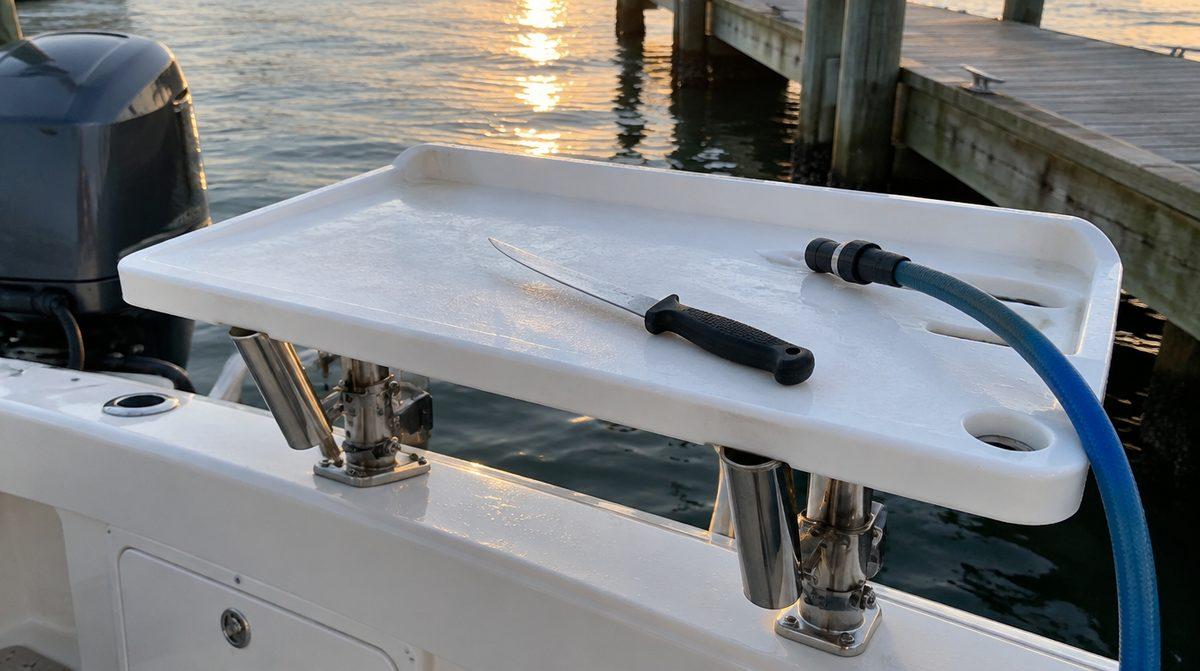
Fillet Tables: A Clean Station for Cleaning Your Catch
Cleaning fish on a cooler lid is how knives slip and fillets get ragged. Mount types, board sizes, and the features that make a fillet table worth the space.
Cleaning fish on a cooler lid works right up until the lid flexes, the knife slips, and dinner slides into the scuppers. A fillet table gives you a flat, stable, easy-to-rinse workspace at a height your back can live with, and it keeps the mess in one place instead of ground into the non-skid. For the money, it is one of the most used upgrades on any boat that keeps fish.
Mount Types
Rail mount tables clamp to a bow or cockpit rail and come off when you do not need them. They suit pontoon rails, dock rails, and boats with sturdy railing at a workable height. Check the clamp against your rail shape, because round tube and square tube rails take different mounts.
Rod holder mount tables drop a gimbal post into an existing gunwale rod holder, which makes them the easiest upgrade on most fishing boats: no new holes, on and off in seconds, and stowed flat in a locker the rest of the time.
Fixed and pedestal mounts make a permanent cleaning station, usually at the dock or on bigger boats with the space to dedicate. If you clean fish nearly every trip, permanence beats rigging the table each time.
Size the Board to the Fish
The tables in this range commonly come in 20 and 30 inch widths. A 20 inch board handles panfish and average inshore fare without hogging cockpit space. Step up to the 30 inch board if your usual catch runs longer, because a fish hanging off both ends of the board is how fillets get ragged and knives find knuckles. A quick sanity check: picture the biggest fish you cleaned in the last year lying flat with room for the knife hand to work. That is your minimum.
Features Worth Having
A drain or a cutout keeps rinse water and slime moving off the surface instead of pooling under the fish. Molded slots for a knife, pliers, and a sharpener keep the tools from skating around between fish. A non-slip surface earns its keep the first time a fish tail flips mid-cut. Rounded corners and a lip help contain the mess, and some boards include a hose clip so your rinse water is always in reach.
Material and Cleanup
Marine-grade polymer is the standard for good reasons: it does not absorb odors, it wipes clean, it resists staining, and it is kind to knife edges. Wood looks great and belongs in the galley, not at the cleaning station. Whatever the material, rinse the board the moment you finish, before sun bakes the mess on, and give it an occasional scrub with soapy water so the surface stays sanitary. Deep knife scars hold residue, so a board that has gone from scored to shredded is due for replacement.
Stability Is Everything
The table has to stay planted while you drive a knife through a fish that may still disagree with the plan. For rod holder mounts, the gimbal pin should seat firmly with no slop, and the board should sit level without rocking. For rail mounts, the clamp needs to grip the full rail without flexing it. Confirm the mount is rated for the board size you choose, because a wide board on a wobbly post is a flexing lever with a blade on top. If you can wiggle the installed table by hand, fix that before the first fish.
Set the Station Up Right
A good table deserves a good workflow. Keep the fillet knife, a sharpener, pliers, and a bag or bucket for fillets within arm's reach before the first cut, and park the hose or a bucket of rinse water next to the board. Work with the drain side downhill so the mess runs away from your cutting hand. The whole point of the table is to make cleaning fish quick and controlled, and a staged station is half of that.
On the Boat or On the Dock
A rod holder table in the cockpit lets you clean the catch on the ride in, with the carcasses going back to the water where regulations allow. A dock station means a steadier platform, no mess aboard, and a hose right there. Plenty of anglers end up with both: a compact board on the boat and a bigger surface at the slip. If the table lives outside at the dock, keep it covered or stowed out of the sun, because UV is what ages polymer and hardware fastest.
Mistakes to Avoid
- Buying a board bigger than its mount can honestly support.
- A gimbal mount dropped into a rod holder that is itself loose in the gunwale.
- Cleaning fish on the cooler lid one more season.
- Leaving scales and slime to dry on the board until they need a chisel.
- Working with a dull knife because the sharpener is in the garage.
From the Water
Keep a sharp knife and a sharpener at the station. A dull blade slips, and slips are how anglers end up in the first aid kit. A pull-through sharpener or honing rod clipped next to the board takes ten seconds between fish, and your knife, your fingers, and your fillets all come out better for it.
Where to Get It
Everything in this guide is stocked at Boat Supplies Direct, the Nautical Network marine parts store. Orders ship free all year with Dock Pass, the $49 a year shipping pass.
In stock as this guide goes up: - Sea-Dog Rod Holder Gimbal Mount Fillet Table, 30" - Sea-Dog Round Tube Rail Mount Fillet Table, 30" - Sea-Dog Square Tube Rail Mount Fillet Table, 20"
Browse the full range: - Shop fillet tables - Read the full buying guide, including FAQs
More from the Wire
 Buying Guides
November 24, 2026
Downriggers: Put Your Bait Exactly Where the Fish Are
When fish hold deep, surface trolling just drags bait over empty water. How downriggers work, when electric beats manual, and the boom, ball, and counter details that make depth repeatable.
Read more Buying Guides
November 23, 2026
Rod Holders: Stay Organized and Stop Losing Rods Overboard
Most rods go over the side at idle, not on a strike. Flush mount, clamp-on, rocket launcher, or adjustable, and how to place and back each one so it holds when a fish tests it.
Read more Buying Guides
November 21, 2026
Marine Coolers: Ice That Lasts and Drinks That Stay Cold
A boat is the worst place on earth to keep ice. How to size a cooler by trip, when rotomolded is worth the weight, and why electric coolers skip the ice run entirely.
Read more