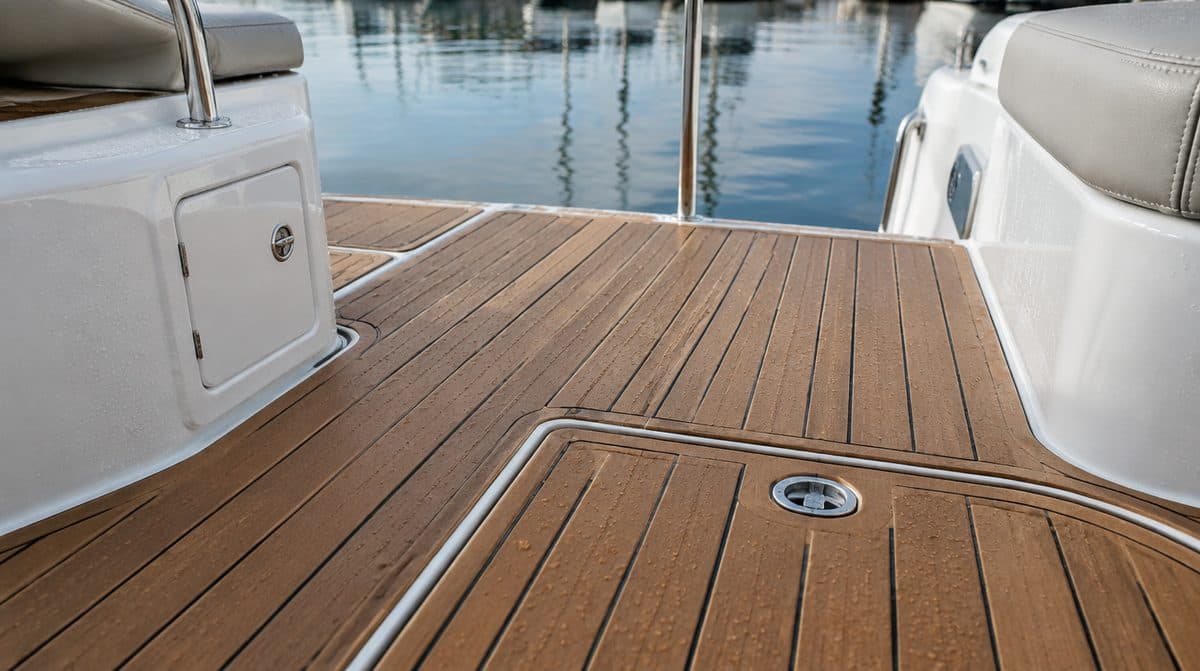
Boat Flooring: Better Grip, More Comfort, Fresh Look
A slippery, tired deck is one weekend away from grippy and new. EVA foam, vinyl, or carpet, and how to template a fit that looks factory.
Slippery decks cause falls, and tired flooring makes a boat look older than it is. New flooring fixes both in a weekend, and it is one of the few upgrades you feel with your whole body every minute you are aboard: underfoot on a wet morning, under your knees when you are leaning over the gunwale, and in your lower back at the end of a long day standing at the helm.
The Three Main Types
EVA foam decking is the soft, grippy sheet material you see on everything from flats skiffs to wake boats. It is non-slip wet or dry, comfortable enough to kneel on, and DIY-friendly in peel-and-stick form. Marine vinyl flooring is the durable, easy-to-clean choice with a traditional look; it shrugs off fish blood, mud, and spilled drinks, and a hose handles cleanup. Woven and marine carpet is soft and warm underfoot, which is why pontoon and family boats love it, but it holds moisture, dries slowly, and asks for more care in boats that stay wet.
Grip and Comfort
EVA foam gives the best grip and cushioning for standing and fishing all day. It is kind to bare feet, quiets the deck (dropped pliers thud instead of clatter, which the fish appreciate), and insulates against a sun-baked sole. For a classic look with easy cleanup, marine vinyl is popular, and it is the better pick in spots that see constant abuse, like under a cooler that gets dragged. Carpet wins on cozy and loses on wet: if your boat lives on a trailer and dries out between trips, it is fine; if it lives in a slip, think hard.
Measure and Template
Accurate measurement or a template is key for a clean fit, especially for peel-and-stick EVA. Rough out your deck spaces and add up the square footage so you order enough material in one batch, then template before any blade touches foam. Kraft paper or rosin paper taped together in place captures every curve, hatch, and console base exactly as they are, not as you remember them. Trace, label which side faces up, mark fore and aft, and transfer to the sheet. Boats are full of curves that look straight and corners that look square until you measure them.
Prep Decides Whether It Sticks
Peel-and-stick adhesive is only as good as the surface under it. Clean the deck thoroughly, degrease it, and get every trace of old adhesive, silicone, or wax off, because adhesive will not bond to any of them. Let it dry completely. Work in warm weather if you can, since adhesive bonds better on a warm surface than a cold one, and dry-fit every piece before pulling any backing. Once a big sheet of EVA commits to the deck, repositioning it is somewhere between difficult and destructive.
Laying It Down
Start with the biggest, most visible panel while your patience is fresh. Peel the backing in stages rather than all at once, working from one edge and smoothing outward so you are not chasing air bubbles across six feet of foam. Press the whole surface down firmly, edges and corners twice. Trim in place carefully around hatches and hardware with a fresh blade, and leave small, even gaps at panel joints rather than forcing pieces tight and buckling them. Save the fiddly little pieces around cleats and latches for last, when you have learned how the material cuts, and keep the offcuts: they make perfect patches the day a gaff or a dropped anchor takes a bite out of the deck.
Living With It
Soap, water, and a soft deck brush handle routine cleaning for all three materials; our boat cleaning tools guide covers the brushes that will not chew the surface. Skip harsh solvents on EVA, since they attack both the foam and the adhesive under it. Vinyl likes a rinse before grit gets ground in, and carpet wants to dry fully before the cover goes on. Expect EVA to show gaff nicks and gouges as character over the years; expect vinyl to show its age with cracking in sun-baked areas; expect carpet to tell you plainly when it is done, with flattening and a mildew smell no cleaner can argue with.
When It's Time to Replace
Lifting edges and corners that will not stick back down, foam that has compressed shiny and slick in the spots where you always stand, cracked or chalky vinyl, and carpet that stays musty: all of those are the flooring telling you it is finished. Flooring is grip, and grip is safety equipment. When the grip is gone, the fresh look is just a bonus reason to do the job.
Mistakes to Avoid
Cutting foam from measurements instead of a template. Sticking any flooring to a deck that was wiped rather than actually cleaned. Putting carpet in a boat that never fully dries. And buying bargain non-marine foam that fades, hardens, and peels in one season, which converts a weekend job into an annual tradition.
From the Water
Make a kraft paper template before you cut EVA foam. Mistakes on paper are free. Mistakes on foam are not. Trace every hatch, cleat base, and drain while the paper is taped down, and mark which way is forward before you pull it up.
Where to Get It
Everything in this guide is stocked at Boat Supplies Direct, the Nautical Network marine parts store.
In stock as this guide goes up: - Browse the full boat outfitting collection
Browse the full range: - Shop boat outfitting - Read the full buying guide, including FAQs
More from the Wire
 Buying Guides
October 18, 2026
Starting vs. Deep Cycle: The Battery Mistake That Strands Boaters
Starting, deep cycle, or dual purpose, and flooded, AGM, or lithium. How to pick the battery type that will not leave you stranded.
Read more Buying Guides
October 18, 2026
The Onboard Charger: Cheap Insurance for Expensive Batteries
Batteries die young when they sit half-charged. How to size an onboard charger by amps, banks, and chemistry.
Read more Buying Guides
October 18, 2026
Battery Switches and Isolators: Never Get Stranded by a Dead Battery
The switch and isolator setup that keeps your starting battery ready while the house bank runs your gear.
Read more