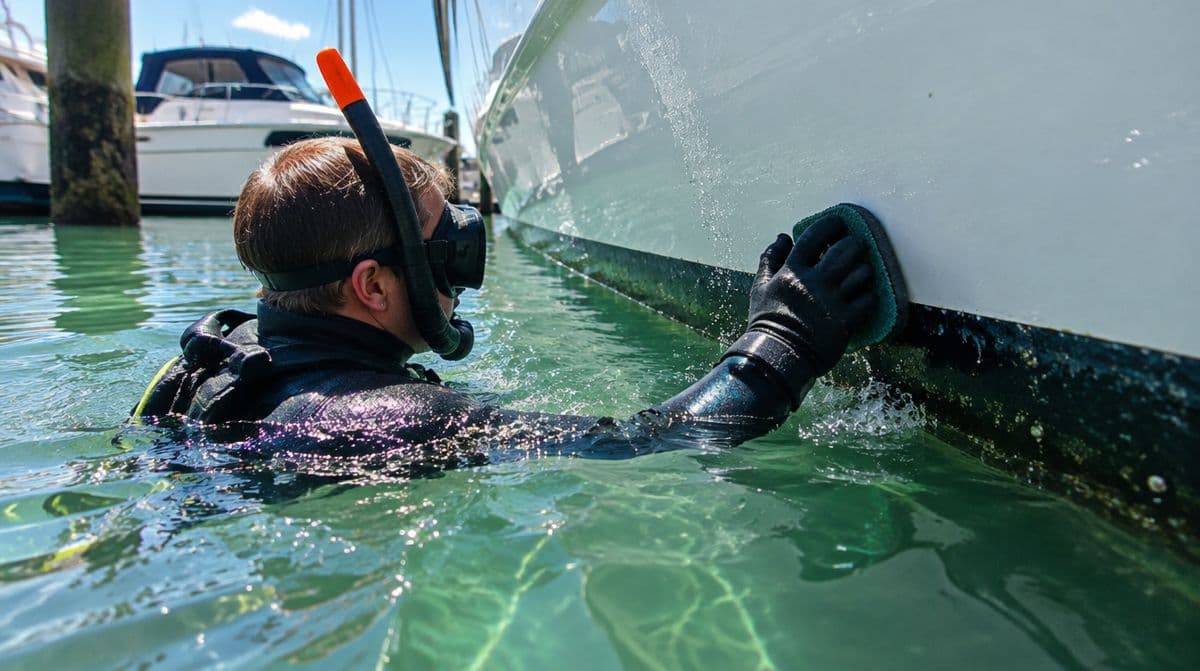
Zinc Anodes and Your Hull Diver: The Cheapest Insurance on Your Boat
What sacrificial anodes actually do, the half-gone replacement rule, why fast-vanishing zincs are a warning sign, and what a monthly dive visit should cover.
Somewhere below your waterline, a small gray lump of metal is slowly giving its life for your boat. Sacrificial anodes, the zincs, are the cheapest parts on the whole vessel and they protect some of the most expensive: props, shafts, struts, trim tabs, and outdrives. Understanding them takes five minutes, and it is five minutes that saves running gear.
What anodes actually do
Put two different metals in salt water and connect them, and you have built a weak battery. One metal becomes the anode and corrodes; the other is protected. Your underwater hardware is a mix of bronze, stainless, and aluminum sitting in an electrolyte, so without help, something you care about volunteers to corrode. An anode is a piece of metal chosen to be more eager to corrode than anything else on the boat. It takes the hit so your prop does not. Zinc is the classic choice for salt water, aluminum anodes work in salt and brackish water, and magnesium is for fresh water only.
The half-gone rule
Anodes only work while there is enough of them left. The standard guidance from boat builders, Axopar's owner manual among them, is to inspect anodes regularly and replace them once they are roughly 50 percent consumed, because a mostly eaten anode no longer provides proper protection. Builder guidance also says to expect faster consumption in salt water than fresh. Do not wait for the zinc to disappear. By the time it is gone, the next most willing metal on your boat has already started paying the bill.
Fast-vanishing zincs are a message
Here is the part too many owners miss. If your diver reports that zincs that used to last six months are now gone in six weeks, that is not a zinc problem. Unusually fast anode consumption is a classic warning sign of stray electrical current, and builder guidance says exactly that. The culprit might be a wiring fault on your own boat, a problem with shore power, or even a neighboring boat sharing your dock's water. That is your cue to call a marine electrician, ask about a galvanic isolator if you do not have one, and treat it as urgent. Stray current can destroy running gear in weeks, not seasons.
What a monthly dive visit covers
In Florida's warm salt water, most hull-cleaning services and experienced owners work on a roughly monthly dive cycle, tightening up in the heat of summer when growth is fastest. A good visit is more than a scrub. Your diver should clean the hull and running gear, inspect every anode and replace the ones past half, check props for dings and fishing line at the shaft seal, confirm through-hulls and intakes are clear, and send you a short report, ideally with photos, telling you what they saw. That report is your early warning system for everything from a failing cutless bearing to the stray-current problem above.
The whole package, a clean bottom and fresh zincs on a schedule, is the least glamorous money you will spend on the boat and some of the best. Waypoint lists hull-cleaning divers across Florida, from Pensacola to Key West, every listing checked against the business's own website and Verified badges on the ones that claimed their profiles. Find your diver at nautical.network/directory, get on the monthly schedule, and let a small gray lump of metal keep doing its quiet, heroic work.
More from the Wire
 Waypoint
October 13, 2026
The Runaround Problem: Why Finding a Good Marine Pro Is the Hardest Part of Owning a Boat
America has 11.6 million registered boats and a documented shortage of the people who service them. Here is what the numbers say about the runaround, and how we are fixing it.
Read more Waypoint
October 13, 2026
One Search, Whole Boat Day: How to Build a Service Plan in Minutes
Transport Thursday, bottom clean Friday, A/C fixed before guests land Saturday. Here is how Waypoint turns one sentence into a full lineup of vetted pros.
Read more Waypoint
October 13, 2026
In a Pinch Before the Boat Day? Here Is the Playbook
Dead A/C on Wednesday, guests arriving Saturday. The playbook for getting a marine pro moving fast, and what to have ready so they can say yes.
Read more