On-Water Towing: How It Works and Whether a Membership Is Worth It
What towing companies actually do, the real math on membership versus paying per incident, and the difference between a soft ungrounding and salvage.
Every boater meets the towboat eventually. A dead battery at the sandbar, a fuel problem halfway home, a prop that found the one rock in the bay. On-water towing companies exist for exactly that moment, and the only real question is whether you pay for them before you need them or after.
What towing companies actually do
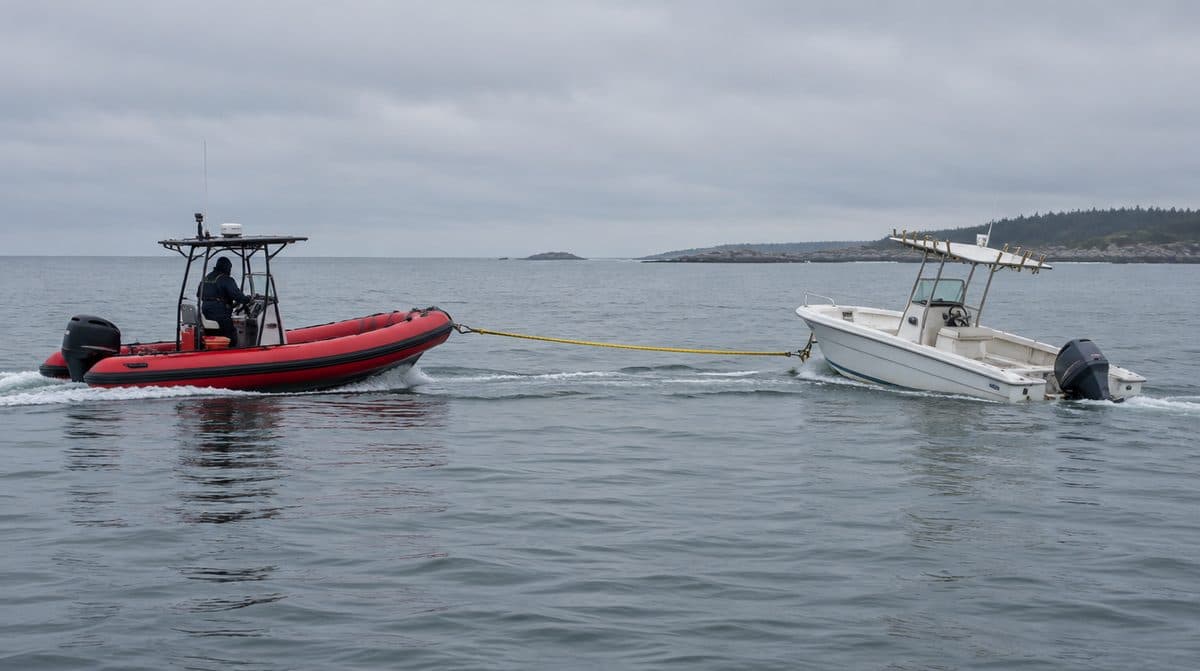
The core service is simple: a response boat comes to you and tows you to the nearest repair facility or your home dock. Around that core sits a family of small rescues, jump starts, fuel drops, ungroundings from soft bottom, and in some cases dock-to-dock tows when the engine dies at the slip. What they are not is a repair shop. The towboat captain gets you and the boat somewhere safe; fixing the problem is the next phone call. And none of this replaces the Coast Guard: if anyone aboard is in danger, that is VHF channel 16 first, towing company second.
The membership math
Here is why memberships exist. BoatUS states on its own site that the average daytime hourly rate for a commercial towing company is around 300 dollars, and a tow is billed portal to portal, from the moment the response boat leaves until it returns. A routine assist can run several hours of billing. Against that, BoatUS currently lists its unlimited saltwater towing membership at 215 dollars per year and freshwater at 130, and Sea Tow lists its Gold Card at 249 dollars per year, both per their own sites as of this writing. One ordinary tow costs more than several years of membership. If your boat is older, if you run far from the dock, or if you simply boat a lot, the membership logic is hard to argue with. If you run a nearly new boat two miles from the ramp a few times a year, pay-per-incident might genuinely be the cheaper bet. Just make that choice on purpose, with the hourly number in mind, not in the moment with the tide falling.
Two details worth checking in any plan: whether your home waters are covered, since some freshwater plans exclude Florida entirely, and whether the plan covers every boat you operate or just the one listed.
Soft ungrounding or salvage: know the difference
This is the distinction that surprises people. A soft ungrounding, where you have slid onto sand or mud, the boat is undamaged, and one towboat can pull you free, is generally treated as routine towing and is covered by towing memberships. Salvage is different: when the boat is in peril, taking on water, hard aground in surf, or requiring special equipment like pumps or airbags, the job can become a salvage claim, which is a marine insurance matter and can be dramatically more expensive. The practical advice: when a towboat arrives, ask directly whether the operator considers this a tow or salvage before the line goes over, and call your insurer early if there is any doubt. Honest operators will tell you straight.
Before you need the number
The best time to sort out towing is a calm Tuesday, not a sandbar Saturday. Decide on membership or not, save the dispatch number in your phone, and know your position well enough to describe it. And for everything that comes after the tow, the mechanic, the prop shop, the fiberglass repair, Waypoint lists hundreds of verified Florida marine pros in one place at nautical.network/directory. If the clock is tight, post what you need at nautical.network/help and matching pros get it instantly. The tow gets you home. The directory gets you back on the water.
More from the Wire
 Waypoint
October 13, 2026
The Runaround Problem: Why Finding a Good Marine Pro Is the Hardest Part of Owning a Boat
America has 11.6 million registered boats and a documented shortage of the people who service them. Here is what the numbers say about the runaround, and how we are fixing it.
Read more Waypoint
October 13, 2026
One Search, Whole Boat Day: How to Build a Service Plan in Minutes
Transport Thursday, bottom clean Friday, A/C fixed before guests land Saturday. Here is how Waypoint turns one sentence into a full lineup of vetted pros.
Read more Waypoint
October 13, 2026
In a Pinch Before the Boat Day? Here Is the Playbook
Dead A/C on Wednesday, guests arriving Saturday. The playbook for getting a marine pro moving fast, and what to have ready so they can say yes.
Read more