Planning a Marine Electronics Refit: Chartplotter, Radar, VHF, and the Backbone
How a modern electronics refit fits together, from the NMEA 2000 backbone to radar and a DSC-equipped VHF, and why the installation matters as much as the gear.
Electronics are the one part of a boat where ten years is a lifetime. If your helm still runs on gear from the last decade, a refit buys you clearer charts, better situational awareness, and a genuinely important safety upgrade. But a refit done in the wrong order, or installed badly, buys you gremlins. Here is how the pieces fit.
Start with the backbone
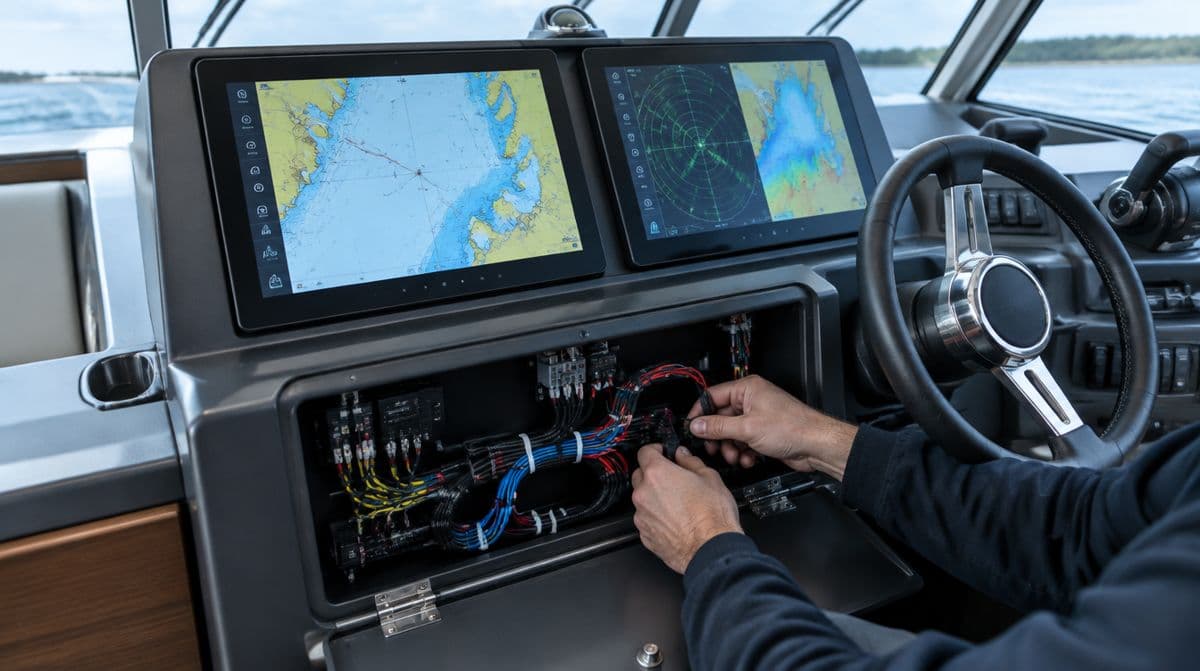
Modern marine electronics talk to each other over NMEA 2000, a standardized network that is less exotic than it sounds: one powered trunk cable runs through the boat, and each device, the chartplotter, the GPS, the engine gateway, the VHF, the autopilot, connects to it with a drop cable and a tee. A terminator caps each end of the trunk. That is the whole concept. Once the backbone exists, every device can share data, so your engine instruments appear on the plotter and your GPS position feeds the radio. A good installer builds the backbone first, labels every drop, and leaves room for whatever you add next year. Skipping the backbone and point-to-point wiring everything is how helms become archaeology sites.
The chartplotter and radar
The multifunction display is the hub, and the practical advice is simple: buy the screen size you can afford, because every year of squinting costs more than the next size up would have, and make sure it has the network ports to grow. Radar earns its keep in Florida more than most owners expect. It is not just for night running; it is for the summer squall line that turns a clear afternoon into a half-mile of visibility, and modern solid-state domes are light, low-power, and far easier to use than the gear they replace.
The VHF is a safety device, not a radio
A modern VHF with Digital Selective Calling deserves special attention. Connected to GPS, a DSC radio has a distress function that broadcasts who you are and exactly where you are at the push of one button, which is a different universe from trying to read coordinates over a crackling channel. To work, it needs an MMSI number programmed in. For recreational boats that do not need an FCC license, BoatUS is authorized to issue MMSIs, charges 25 dollars with the fee waived for members, and feeds your vessel and contact details into the Coast Guard's national distress database so rescuers know what they are looking for. Register it, keep the details current, and wire the radio to the network so the position data is always there.
Why installation quality matters
Here is the part the catalog does not show. The difference between a professional install and a parking-lot install is crimped and sealed connections on tinned wire, correct fuse sizing, drip loops so water follows the cable away from the gear, an antenna mounted high and clear, transducers placed where they see clean water, and a network properly terminated and labeled. Electronics problems on boats are overwhelmingly connection problems, and every corner cut during installation is a future afternoon of intermittent faults that no warranty covers. Good installers also commission the system before they leave: radio check, radar test, engine data confirmed, alarms set.
Waypoint lists marine electronics and rigging pros across Florida, every listing checked against the business's own website, with Verified badges on the businesses that claimed and confirmed their profiles. Browse electronics installers near you, and if you are planning the refit alongside other off-season work, build the whole lineup at nautical.network/directory. Buy good gear once, have it installed right once, and the helm will take care of you for the next decade.
More from the Wire
 Waypoint
October 13, 2026
The Runaround Problem: Why Finding a Good Marine Pro Is the Hardest Part of Owning a Boat
America has 11.6 million registered boats and a documented shortage of the people who service them. Here is what the numbers say about the runaround, and how we are fixing it.
Read more Waypoint
October 13, 2026
One Search, Whole Boat Day: How to Build a Service Plan in Minutes
Transport Thursday, bottom clean Friday, A/C fixed before guests land Saturday. Here is how Waypoint turns one sentence into a full lineup of vetted pros.
Read more Waypoint
October 13, 2026
In a Pinch Before the Boat Day? Here Is the Playbook
Dead A/C on Wednesday, guests arriving Saturday. The playbook for getting a marine pro moving fast, and what to have ready so they can say yes.
Read more