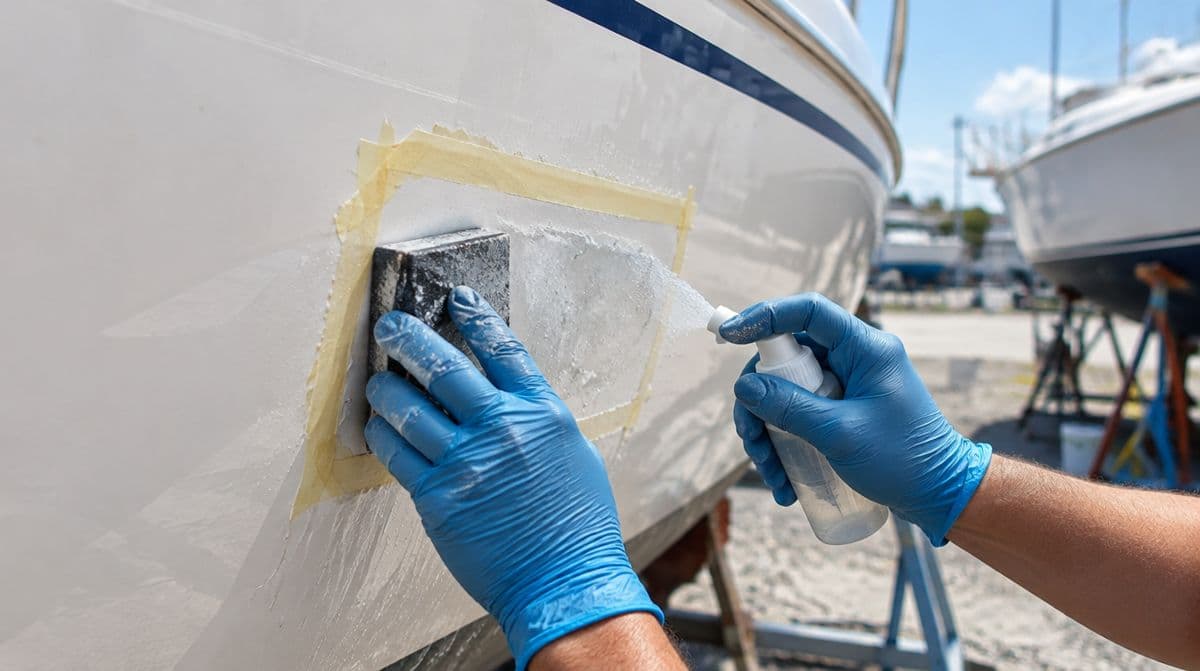
Fiberglass and Gelcoat Repair: Spider Cracks, Blisters, and the Signs That Matter
How to tell cosmetic gelcoat crazing from structural trouble, what hull blisters really mean, the wet transom warning signs, and why moisture readings matter.
Fiberglass is why boats last fifty years, and also why problems hide so well. Gelcoat covers everything in the same glossy skin, whether what is underneath is fine, cosmetic, or quietly rotting. Knowing which cracks matter, what blisters mean, and when to insist on moisture readings is the difference between a polishing bill and a structural one.
Spider cracks vs structural damage
Spider cracks, the fine crazing that webs out across gelcoat, are the most common blemish on any older boat. Gelcoat is more brittle than the laminate beneath it, so it cracks first: around deck hardware, at sharp corners, anywhere the surface flexes or took a dropped anchor. Random crazing confined to the gelcoat is cosmetic, and a fiberglass shop can grind it out and refinish it.
The cracks that deserve respect are the ones with a pattern. Parallel cracks radiating from a bulkhead or stringer, cracks that reappear after repair, cracks at the corners of the transom or around engine mounts, or any crack you can catch a fingernail in that keeps going: those suggest the laminate underneath is flexing or has broken, and that is a structural conversation, not a cosmetic one.
Blisters, honestly
Hull blisters form when water migrates through gelcoat and reacts with uncured chemicals in the laminate, creating pockets of acidic fluid. The tell is a raised bump below the waterline that, when punctured, weeps liquid with a sharp vinegar smell. A few isolated blisters on an older hull are common and repairable one at a time. A bottom peppered with them is a different problem, potentially calling for peeling the gelcoat, drying the hull, and barrier coating, which is real money and real yard time. Either way, blisters found at haul-out should be opened, dried, and properly filled, not just faired over, because a blister painted over is a blister with a head start.
The wet transom warning signs
The transom deserves its own paragraph because it holds up the most expensive thing on the boat. Many transoms are cored with wood, and once water finds its way in through unsealed bolt holes or drain fittings, the core rots in silence. The warning signs: flexing when you push down on the lower unit, brown or rust-colored streaks weeping from screw holes and drain fittings, cracked gelcoat radiating from the motor mounts, and a dull, dead thud instead of a sharp knock when you tap the surface. Any of those on a boat you own, or a boat you are about to buy, is a stop-and-investigate signal.
Why moisture readings matter
This is where professionals separate from guessers. A moisture meter lets a repair shop or surveyor map how far water has traveled inside a laminate before anyone cuts, and it is the reason a good repair starts with measurement and documentation rather than a grinder. Laminating new glass over wet core is the repair that fails, because the moisture stays trapped and keeps working. A shop that takes readings, shows you the map, dries the structure, and then repairs it is a shop doing it right. A quote that skips that step on a suspected wet area is a quote worth questioning.
Waypoint lists fiberglass and gelcoat specialists across Florida, every listing checked against the business's own website, with Verified badges on the shops that claimed and confirmed their profiles. Browse fiberglass and gelcoat pros near you, and if the question is about a boat you have not bought yet, a proper survey comes first: find one under surveys and inspection. Catch it while it is a patch, not a project.
More from the Wire
 Waypoint
October 13, 2026
The Runaround Problem: Why Finding a Good Marine Pro Is the Hardest Part of Owning a Boat
America has 11.6 million registered boats and a documented shortage of the people who service them. Here is what the numbers say about the runaround, and how we are fixing it.
Read more Waypoint
October 13, 2026
One Search, Whole Boat Day: How to Build a Service Plan in Minutes
Transport Thursday, bottom clean Friday, A/C fixed before guests land Saturday. Here is how Waypoint turns one sentence into a full lineup of vetted pros.
Read more Waypoint
October 13, 2026
In a Pinch Before the Boat Day? Here Is the Playbook
Dead A/C on Wednesday, guests arriving Saturday. The playbook for getting a marine pro moving fast, and what to have ready so they can say yes.
Read more