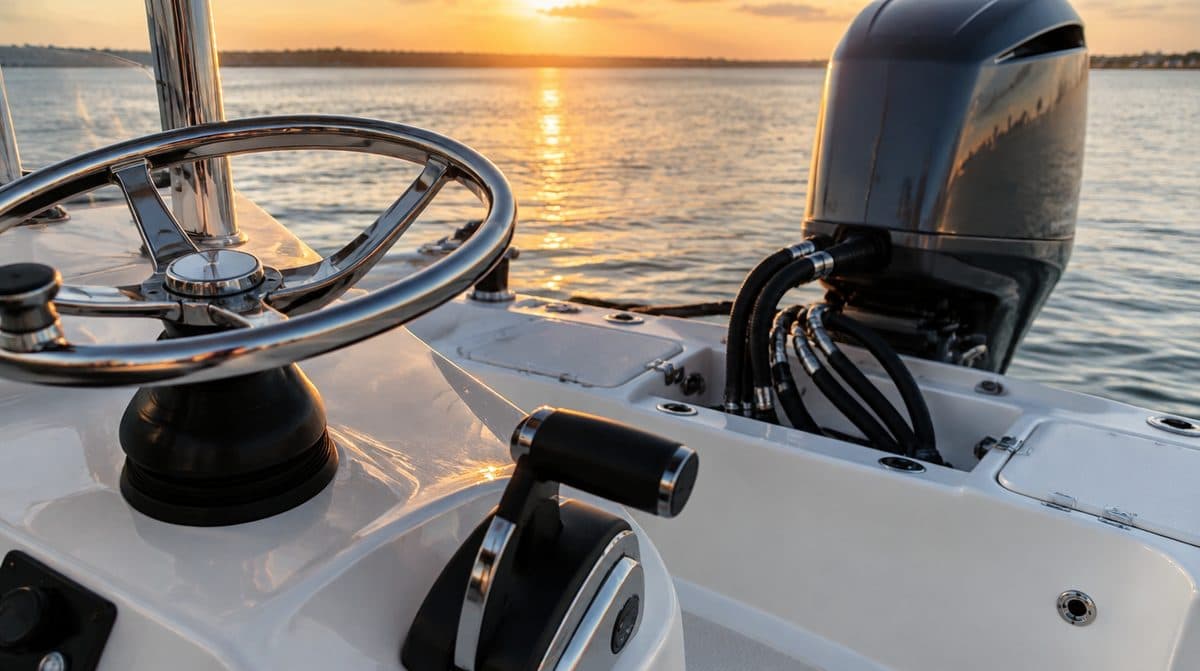
Hydraulic vs. Cable Steering: Which One Your Boat Needs
A wheel that fights you at speed is a warning, not a quirk. When cable steering is plenty, when hydraulic is mandatory, and how to tell your system is wearing out.
Fighting a heavy, stiff wheel all day isn't just tiring. It can mean your steering doesn't match your boat's power, and that mismatch gets dangerous the moment you need a quick course change in a following sea.
Steering is one of those systems nobody thinks about until it fights back. Here is how the two main types work, which one your boat actually needs, and what to look for when yours is due for replacement.
How each system works Cable (mechanical) steering is a direct connection. The helm behind your wheel converts rotation into push-pull movement on a cable that runs back to the engine or rudder. Turn the wheel, the cable moves, the engine pivots. Simple, cheap to maintain, and easy to diagnose.
Hydraulic steering replaces the cable with fluid. The helm is a small pump: turning the wheel pushes hydraulic fluid through hoses to a cylinder mounted at the engine, and the cylinder does the muscle work. Because fluid does not stretch or bind, the wheel stays light no matter how much engine is hanging on the transom, and engine torque cannot kick back through the system to fight your grip.
Cable (mechanical) vs. hydraulic - Cable/mechanical: simple and affordable, good for lower-horsepower single engines and smaller boats. Fewer parts, quick installs, and a replacement cable is a manageable weekend job. - Hydraulic: smooth, low effort, handles high horsepower and multiple engines. Standard above a certain power level.
Higher horsepower and twin engines need hydraulic steering. That is not a style preference, it is physics. A big outboard at speed generates steering loads that will wear you out through a cable helm and can snatch the wheel in a hard turn. If your boat came with hydraulic steering from the factory, replace it with hydraulic.
Rotary vs. rack and pinion Within mechanical steering there are two helm styles. Rotary helms wrap the cable around a geared drum, tuck into tight dashes, and handle tilt wheels well. Rack and pinion helms drive the cable through a straight rack, which gives a solid, precise feel many drivers prefer, but the long rack housing needs room behind the dash. Either works; your dash space and feel preference decide. If the boat has no-feedback steering, stay with a no-feedback replacement so the wheel keeps holding course against engine torque without constant hand pressure.
Match to horsepower and engine count Size the system to your total horsepower and number of engines. Undersized steering is heavy and unsafe at speed. Every helm, cylinder, and cable kit lists a maximum horsepower rating and the engine styles it supports, and those ratings assume the whole system matches. Check your engine's spec sheet, add up total power on multi-engine boats, and buy a system rated at or above that number. When you are between options, go up, never down.
Power assist Power-assist and electric-hydraulic options reduce effort further on big setups. They put an electrically driven pump in the circuit so the wheel needs only fingertip pressure, the same idea as power steering in your truck. On heavy boats with big twins, or for anyone who spends long days at the wheel, assist turns steering from a workout into an afterthought.
Measuring for a replacement Cable length is measured along the actual routing path: helm, around the console, through the gunnel, back to the engine. Measure the old cable if you can, or run a tape along the route and round up. Hydraulic hose kits work the same way. For cylinders, confirm the mounting style matches your engine, splashwell clearance included. The product page lists what fits; your job is knowing your engine model and the measurement.
Installation realities A cable swap is mostly patience: feeding the new cable through the boat, seating it in the helm, and connecting the engine end with the hardware torqued and pinned. Hydraulic installs add hose routing and bleeding, which means filling the system with fluid and purging every air bubble out of the lines. Bleeding is not hard, but it is a two-person job done slowly, and a sloppy bleed gives you the exact spongy wheel you were trying to cure. If you would rather hand that off, a verified marine rigger on Waypoint does this for a living.
Maintenance and lifespan Cable systems want grease: the output end at the engine, the support tube, and the helm, checked each season. Hydraulic systems want fluid: check the helm reservoir level, look for weeping at hose fittings and cylinder seals, and wipe the cylinder shaft clean so grit does not chew the seals. Both types die early on neglected boats and last impressively on maintained ones, so the maintenance habit is the real purchase decision.
Signs yours is due - Stiff or notchy spots as you sweep the wheel lock to lock. - Play at the wheel: you turn and the engine waits before responding. - A cable that creaks, grinds, or weeps rust at the engine end. - Hydraulic fluid stains below the helm or cylinder, or a reservoir that keeps needing top-offs. - The wheel turns but the lock-to-lock count has changed. Air or wear is in the system.
Mistakes to avoid - Putting a cable system behind more horsepower than it is rated for because it was cheaper. - Replacing a worn cable but reusing a corroded support tube that binds the new one. - Topping off hydraulic fluid forever instead of fixing the leaking seal. - Ignoring the engine end. Half of all stiff steering lives in a seized tilt tube, not the cable itself.
From the Water If the wheel feels spongy or has extra play, check the fluid and bleed the system. Air in the lines is the usual cause. Fix the leak that let the air in at the same time, because air does not invite itself into a sealed system; low fluid and a weeping fitting are usually standing right behind it.
Where to Get It Everything in this guide is stocked at Boat Supplies Direct, the Nautical Network marine parts store.
In stock as this guide goes up: - UFlex Rotech 11 ft rotary steering package with cable, bezel, and helm - Uflex Racktech 2.0 high efficiency rack and pinion system kit, 20 ft cable - UFlex M66 11 ft fast connect universal rotary steering cable
Browse the full range: - Shop steering systems - Read the full buying guide, including FAQs
More from the Wire
 Buying Guides
October 18, 2026
Starting vs. Deep Cycle: The Battery Mistake That Strands Boaters
Starting, deep cycle, or dual purpose, and flooded, AGM, or lithium. How to pick the battery type that will not leave you stranded.
Read more Buying Guides
October 18, 2026
The Onboard Charger: Cheap Insurance for Expensive Batteries
Batteries die young when they sit half-charged. How to size an onboard charger by amps, banks, and chemistry.
Read more Buying Guides
October 18, 2026
Battery Switches and Isolators: Never Get Stranded by a Dead Battery
The switch and isolator setup that keeps your starting battery ready while the house bank runs your gear.
Read more