Boat Detailing in Florida: What a Pro Detail Includes, and Wax vs Ceramic
What separates a professional boat detail from a wash, how wax and ceramic coatings really compare, and why Florida sun and salt set the maintenance schedule.
Florida is the hardest place in America to keep a boat looking new. The sun is stronger, the salt never takes a day off, and the season never ends. The Florida Fish and Wildlife Conservation Commission itself says the state's boating season never really ends, which is great for your weekends and brutal for your gelcoat. That is the backdrop for every detailing decision you will make.
What a professional detail actually includes
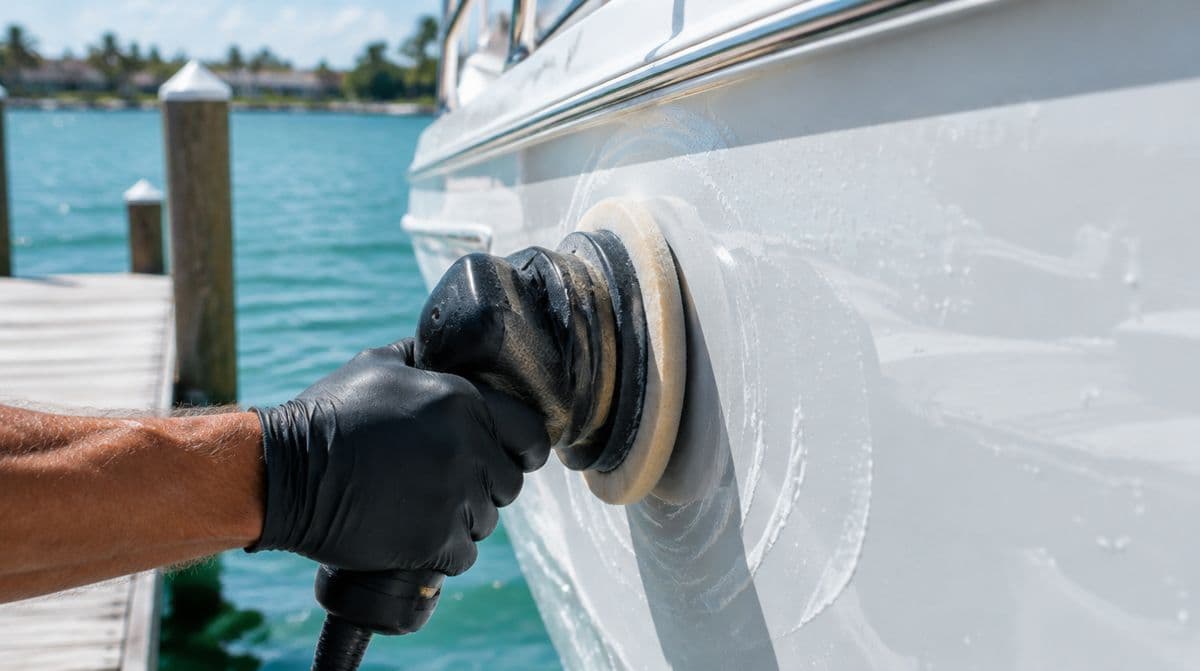
A real detail is not a wash with a nicer invoice. The full treatment runs in stages: a wash with marine-safe soap, a chemical decontamination to pull salt, water spots, and rust staining out of the surface, then compounding and polishing to cut away oxidized gelcoat and bring the shine back, and finally a protective layer, whether that is wax, a polymer sealant, or a ceramic coating. Good crews also handle the rest of the boat: vinyl cleaned and dressed with UV protectant, clear enclosure panels cleaned the gentle way, metal polished, and non-skid scrubbed without burnishing it smooth.
If a quote does not distinguish between a wash, a single-stage polish, and a full compound-and-protect job, ask. The difference in labor, and in what your boat looks like after, is enormous.
Wax vs ceramic, honestly
Traditional carnauba wax gives a warm gloss and costs the least, but it is the shortest-lived protection you can buy, and Florida sun eats it fastest of all. Polymer sealants are synthetic waxes that hold on longer. Ceramic coatings are the step change: they bond chemically to prepped gelcoat instead of sitting on top of it, so they last far longer, bead water hard, and make every wash easier.
Two honest caveats on ceramic. First, the prep is everything, because the coating locks in whatever is under it, which is why pros compound and polish before they coat. Second, ceramic is not armor. It still needs regular washing, it will not stop dock rash, and it eventually wears like everything else in this climate. It buys you time and easier upkeep, not immunity.
How often in Florida sun and salt
The non-negotiable habit is the freshwater rinse after every saltwater trip, including the hardware, the trailer, and the enclosure zippers. Beyond that, think of protection as something you renew, not something you did once. Wax in Florida is a repeat appointment measured in months, not years, and detailers here will tell you that a boat that lives uncovered on a lift or in a wet slip needs attention noticeably more often than one under a roof. Ceramic stretches the interval but still wants periodic maintenance washes and an occasional inspection to catch wear before the coating fails in patches.
Oxidation is the tell. When white gelcoat starts looking chalky and your hand drags on the hull instead of gliding, you have moved from maintenance work into restoration work, and the price moves with it. Catching it early is the whole game.
Picking the right detailer
Ask what products and process they use, whether they are insured to work in your marina, and what prep is included if you are buying a ceramic job. Ask to see a boat they coated a year ago, not last week. And get the maintenance plan in writing, because the detailer who talks honestly about upkeep is the one planning to still be your detailer next season.
Waypoint lists detailing and cleaning pros across Florida, each listing checked against the business's own website, with Verified badges on the shops that claimed and confirmed their profiles. Find yours at nautical.network/directory, get on a schedule, and let the sun fight somebody who does this for a living.
More from the Wire
 Waypoint
October 13, 2026
The Runaround Problem: Why Finding a Good Marine Pro Is the Hardest Part of Owning a Boat
America has 11.6 million registered boats and a documented shortage of the people who service them. Here is what the numbers say about the runaround, and how we are fixing it.
Read more Waypoint
October 13, 2026
One Search, Whole Boat Day: How to Build a Service Plan in Minutes
Transport Thursday, bottom clean Friday, A/C fixed before guests land Saturday. Here is how Waypoint turns one sentence into a full lineup of vetted pros.
Read more Waypoint
October 13, 2026
In a Pinch Before the Boat Day? Here Is the Playbook
Dead A/C on Wednesday, guests arriving Saturday. The playbook for getting a marine pro moving fast, and what to have ready so they can say yes.
Read more