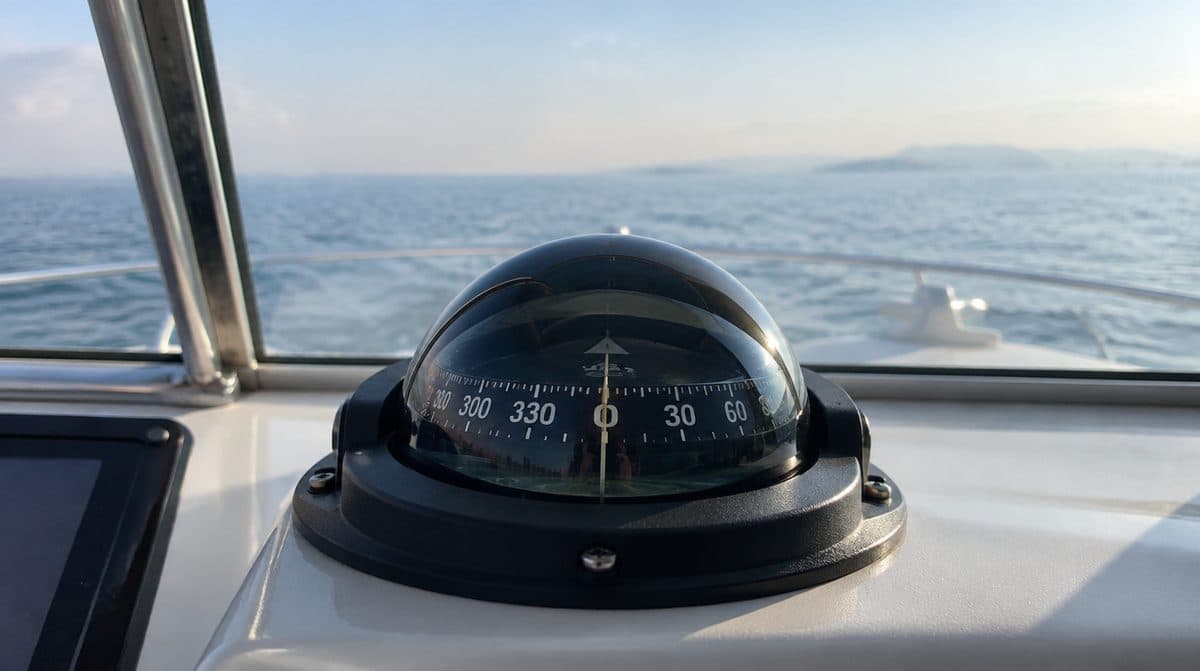
Why Every Boat Still Needs a Magnetic Compass
Every screen at the helm can go dark at once. A good magnetic compass cannot, if you size it, mount it, and swing it right.
GPS is incredible until the screen goes dark. A dead battery, a blown fuse, a software update gone sideways, or plain old water intrusion, and suddenly the magic box is a mirror. A magnetic compass never needs power, never loses signal, and never asks you to accept new terms of service. That is why every serious boat still carries one at the helm.
A compass is also not a commodity. Card style, size, mounting, and compensation decide whether yours is a trusted instrument or dashboard jewelry. Here is what to look for.
Why It Still Earns the Spot
Everything else at the helm depends on the boat's electrical system, and the electrical system is the most common thing on a boat to act up. The compass sits apart from all of it. It also gives you something electronics cannot: an instant, glanceable sense of heading that works in fog, at night, in spray, and in the exact moment the chartplotter decides to reboot. Steering a compass course toward a known shoreline is the oldest trick in boating, and it still gets people home every season.
Size and Card
Bigger boats and higher helms want a larger card that is easy to read at a glance. Flat-card and conical-card styles read differently, so pick what is clear to you.
A flat card is read from above, like a traditional hand compass, and suits lower mounting angles. A conical or direct-read card presents your heading on its side, facing you, which is easier to read when the compass sits at eye level on a console. Card diameter matters more than almost any other spec: a larger card swings more steadily and reads faster from a distance. If you run an open boat that pounds, a bigger, well-damped card stays readable where a small one turns into a blur.
Mount Type
- Flush/dash mount: built into the console.
- Bracket mount: surface-mounted, adjustable angle.
- Binnacle: for wheels and larger helms.
Flush mounts look clean but commit you to a hole in the console, so confirm there is depth behind the dash before you cut. Bracket mounts are the flexible choice: easy to install, easy to angle toward the helm seat, and easy to relocate if your first spot turns out to be magnetically noisy. Binnacle mounts stand proud on a pedestal or flat surface and give sailboats and larger helms the classic big-card readout.
Compensation and the Swing
A quality compass has built-in compensators to correct for onboard magnetic interference. Mount it away from speakers, electronics, and metal, then swing and adjust it.
Every boat has its own magnetic personality, from the engine block to the wiring harness to the pile of tools living under the console. Compensators are small adjustable magnets inside the compass that cancel the boat's own field. The ritual is called swinging the compass: run the boat down known headings, compare what the card says to what the chart says, and turn the adjusting screws until they agree. Do it on a calm day, with the boat loaded the way you normally run it and the electronics switched on, because that is the environment the compass actually lives in. Note any leftover error on a small deviation card kept at the helm.
Where to Mount It
Centered in your natural sight line at the helm, and as far from magnetic troublemakers as the console allows. The usual offenders are speakers, wiper motors, radios, and whatever steel hardware has migrated into the console over the years. Remember that interference is invisible until you test for it, so check the card every time something new gets mounted or stowed near the helm.
Night Use and Lighting
If you run at dawn, dusk, or after dark, get a lighted compass wired into the helm's instrument lighting circuit. Compass lights are dim and usually red or amber on purpose: enough glow to read the card without wrecking your night vision. Tie it to the same switch as the rest of your instrument lights so it comes on with the helm.
Maintenance and When to Replace
Compasses are sealed, fluid filled, and close to maintenance free. Keep a cover on the dome when the boat is parked, since sunlight is the main thing that ages them. Watch for three signs of a compass at the end of its life: a bubble in the fluid, a card that sticks or swings lazily instead of settling smoothly, and markings faded past easy reading. A bubble means the seal has let go, and with it the damping that keeps the card readable in chop. At that point, replace it. A compass you cannot trust is worse than no compass, because you will trust it anyway.
From the Water
Hold your phone near the compass and watch the card swing. That's why phones, speakers, and electronics need to stay well away from it. The compass will never announce that it is lying to you; it will just quietly read a heading that is a few degrees of trouble, so make that quick phone test part of your routine whenever the helm layout changes.
Where to Get It
Everything in this guide is stocked at Boat Supplies Direct, the Nautical Network marine parts store.
In stock as this guide goes up: - Shop the instruments collection
Browse the full range: - Shop instruments - Read the full buying guide, including FAQs
More from the Wire
 Buying Guides
October 18, 2026
Starting vs. Deep Cycle: The Battery Mistake That Strands Boaters
Starting, deep cycle, or dual purpose, and flooded, AGM, or lithium. How to pick the battery type that will not leave you stranded.
Read more Buying Guides
October 18, 2026
The Onboard Charger: Cheap Insurance for Expensive Batteries
Batteries die young when they sit half-charged. How to size an onboard charger by amps, banks, and chemistry.
Read more Buying Guides
October 18, 2026
Battery Switches and Isolators: Never Get Stranded by a Dead Battery
The switch and isolator setup that keeps your starting battery ready while the house bank runs your gear.
Read more